


This factsheet explores Madhya Pradesh’s economy, contributing 4% to the national GDP with a GSDP of Rs. 8.1 lakh crores. Despite its natural resources, the state ranks among the bottom ten in per capita GSDP. With nearly 20% of the population being Scheduled Tribes, districts like Barwani, Damoh, and Guna experience higher poverty rates, highlighting the challenges faced by MP’s large tribal population.
Publications
Publications
Category
Year
Learning note
Women’s Workforce Participation In India: Statewise Trends
- November , 2020
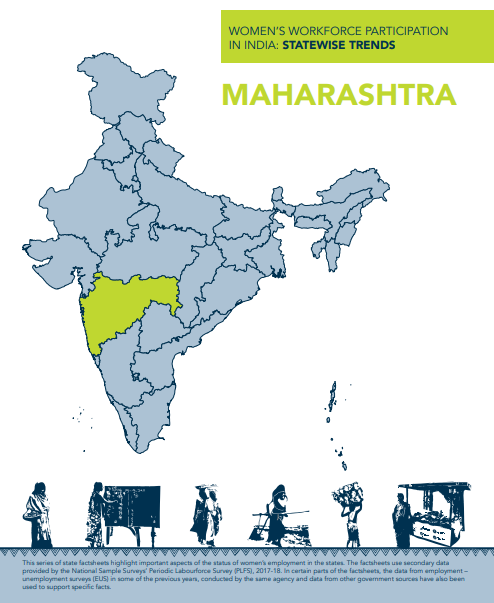
Women’s labourforce participation rates (LFPR) reveals some interesting trends for Maharashtra. As per the figures from the labourforce surveys, the LFPR is significantly higher than the all-India figures, largely driven by higher than average rural employment. The state also shares a decline in self-employment and casual employment and a shift towards regular wage work for both rural and urban women. In Maharashtra the urban areas witnessed a consistent rise in regular wage work of women since 2004-05. More than 60 percent of women are employed as regular workers 70 percent of which is concentrated in the services sector such as education, health and retail. In rural areas, the share of casual workers is considerably higher at around 42 percent, followed by 52 percent in self-employment. The incidence of unpaid family workers among self-employed women exceed 80 percent. While the urban areas show considerable diversity of women workers across occupations and sectors, women in the rural areas remain concentrated as manual workers in agriculture or within construction work.
Women’s labourforce participation rates (LFPR) reveals some interesting trends for Maharashtra. As per the figures from the labourforce surveys, the LFPR is significantly higher than the all-India figures, largely driven by higher than average rural employment. The state also shares a decline in self-employment and casual employment and a shift towards regular wage work for both rural and urban women. In Maharashtra the urban areas witnessed a consistent rise in regular wage work of women since 2004-05. More than 60 percent of women are employed as regular workers 70 percent of which is concentrated in the services sector such as education, health and retail. In rural areas, the share of casual workers is considerably higher at around 42 percent, followed by 52 percent in self-employment. The incidence of unpaid family workers among self-employed women exceed 80 percent. While the urban areas show considerable diversity of women workers across occupations and sectors, women in the rural areas remain concentrated as manual workers in agriculture or within construction work.
Newsletter (Gender In Focus)
Gender in Focus
- November , 2020
- IWWAGE
During COVID-19, women’s Self-Help Groups (SHGs) under DAY-NRLM played a critical role due to their deep rural reach and strong social capital. SHGs emerged as frontline actors in crisis response, leveraging trust and local networks to support communities. To recognise this contribution, IWWAGE’s report documents the good practices, strategies, and innovations led by SHGs in partnership with State Rural Livelihoods Missions during the pandemic.
During COVID-19, women’s Self-Help Groups (SHGs) under DAY-NRLM played a critical role due to their deep rural reach and strong social capital. SHGs emerged as frontline actors in crisis response, leveraging trust and local networks to support communities. To recognise this contribution, IWWAGE’s report documents the good practices, strategies, and innovations led by SHGs in partnership with State Rural Livelihoods Missions during the pandemic.
Learning note
Women’s Workforce Participation in India: Statewise Trends
- November , 2020
- Nidhi Gyan Pandey , Sona Mitra
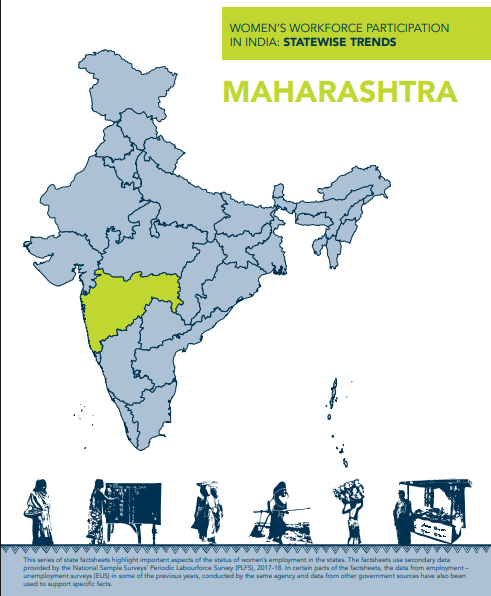
Maharashtra, one of India’s most prosperous and industrially advanced states, has the highest Gross State Domestic Product (GSDP) among all states, amounting to Rs. 19,400 billion in 2017-18. Despite its economic strength, Maharashtra ranks lower on gender indicators, with a sex ratio of 958 females per 1,000 males and a child sex ratio of 894. Female labour force participation (FLFPR) in Maharashtra is significantly higher than the national average at 31%, driven by rural participation. However, urban FLFPR remains low at 16.8%, highlighting gender disparities in urban employment. This factsheet explores key socio-economic and gender trends in the state.
Maharashtra, one of India’s most prosperous and industrially advanced states, has the highest Gross State Domestic Product (GSDP) among all states, amounting to Rs. 19,400 billion in 2017-18. Despite its economic strength, Maharashtra ranks lower on gender indicators, with a sex ratio of 958 females per 1,000 males and a child sex ratio of 894. Female labour force participation (FLFPR) in Maharashtra is significantly higher than the national average at 31%, driven by rural participation. However, urban FLFPR remains low at 16.8%, highlighting gender disparities in urban employment. This factsheet explores key socio-economic and gender trends in the state.
Learning note
Women’s Workforce Participation in India: Statewise Trends
- November , 2020
- Sona Mitra , Hiya Singh Rajput
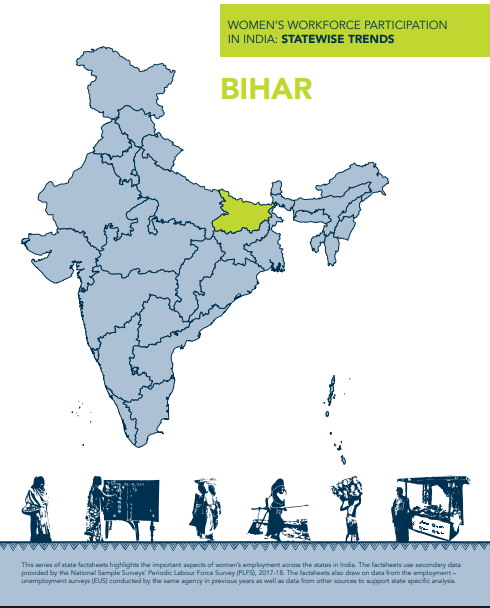
Bihar, one of India’s poorest states, faces significant challenges in development across key areas such as education, health, and nutrition, while also lagging in gender development. With the lowest female workforce participation rate (WPR) in the country at just 2.8%, Bihar’s economic empowerment of women is a critical concern. This factsheet highlights the stark disparities in women’s employment in the state and calls for urgent policy action to address these issues, offering a comparison with national averages.
Bihar, one of India’s poorest states, faces significant challenges in development across key areas such as education, health, and nutrition, while also lagging in gender development. With the lowest female workforce participation rate (WPR) in the country at just 2.8%, Bihar’s economic empowerment of women is a critical concern. This factsheet highlights the stark disparities in women’s employment in the state and calls for urgent policy action to address these issues, offering a comparison with national averages.
Learning note
Women’s Workforce Participation in India: Statewise Trends
- November , 2020
- Nidhi Gyan Pandey , Sona Mitra
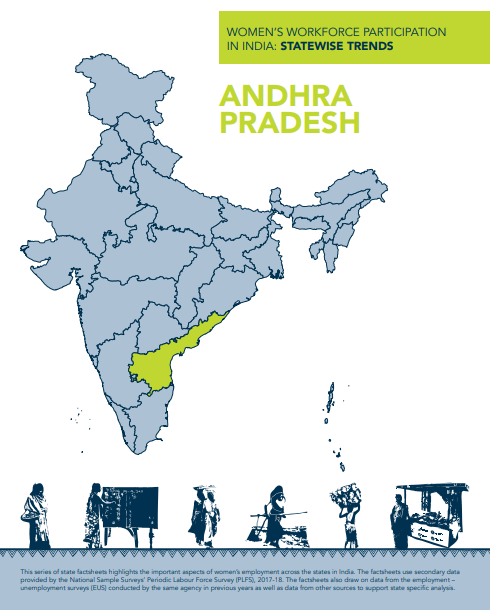
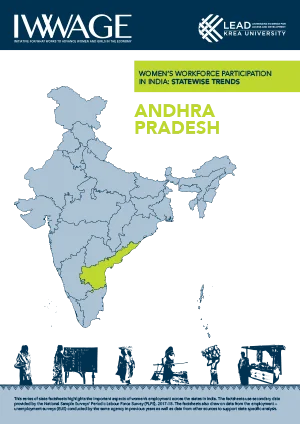
Located on the southeastern coast of India, Andhra Pradesh is the eighth largest state by area, with 23.5% forest cover and 50.5% land under cultivation. While agriculture employs 60% of the population, it contributes only 32% to the state’s GSDP. Andhra Pradesh is a middle-income state with a high growth rate of 11% in 2018-19. The state’s female labour force participation rate (FLFPR) is significantly higher than the national average, with rural FLFPR at 39% and urban FLFPR at 25.1%. The high rural FLFPR is partly attributed to women’s participation in the MGNREGA programme.
Located on the southeastern coast of India, Andhra Pradesh is the eighth largest state by area, with 23.5% forest cover and 50.5% land under cultivation. While agriculture employs 60% of the population, it contributes only 32% to the state’s GSDP. Andhra Pradesh is a middle-income state with a high growth rate of 11% in 2018-19. The state’s female labour force participation rate (FLFPR) is significantly higher than the national average, with rural FLFPR at 39% and urban FLFPR at 25.1%. The high rural FLFPR is partly attributed to women’s participation in the MGNREGA programme.
Learning note
Women’s Workforce Participation in India: Statewise Trends
- November , 2020
- Sona Mitra , Hiya Singh Rajput
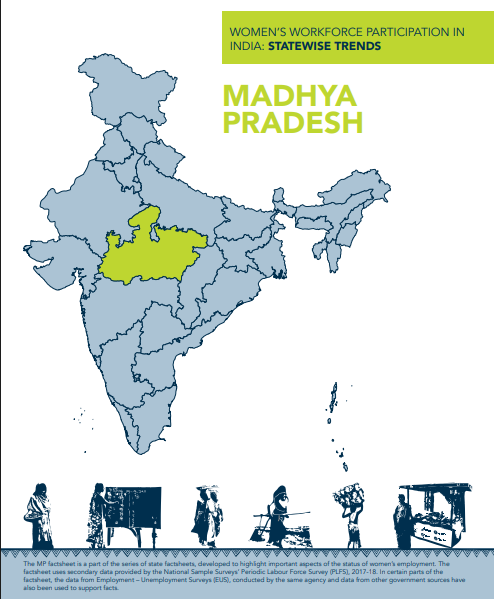
Madhya Pradesh, known as the heart of India, is the second-largest state by area and rich in natural resources. With a Gross State Domestic Product (GSDP) of Rs. 8.1 lakh crores, MP contributes around 4% to the national GDP. However, the state faces significant challenges, ranking among the bottom ten states in per capita GSDP. Nearly 20% of MP’s population comprises Scheduled Tribes (STs), and districts like Barwani, Damoh, and Guna are among the poorest in the country, reflecting higher poverty rates among the state’s large tribal population.
Madhya Pradesh, known as the heart of India, is the second-largest state by area and rich in natural resources. With a Gross State Domestic Product (GSDP) of Rs. 8.1 lakh crores, MP contributes around 4% to the national GDP. However, the state faces significant challenges, ranking among the bottom ten states in per capita GSDP. Nearly 20% of MP’s population comprises Scheduled Tribes (STs), and districts like Barwani, Damoh, and Guna are among the poorest in the country, reflecting higher poverty rates among the state’s large tribal population.
Working Paper
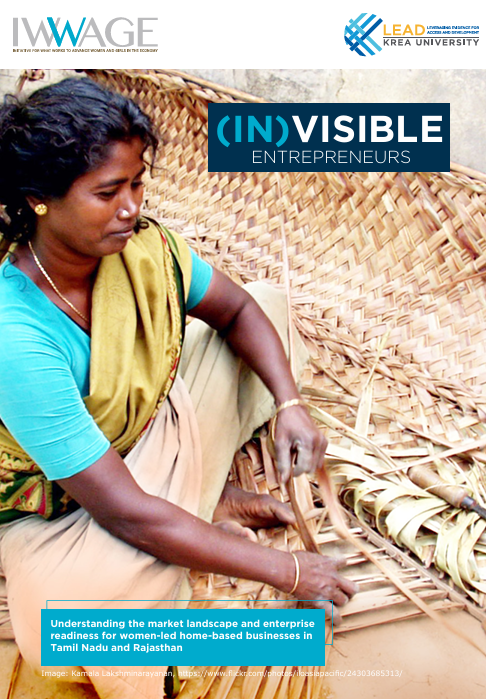
Understanding the Market Landscape and Enterprise Readiness for Women-led Home-based Businesses in Tamil Nadu and Rajasthan
- November , 2020
- RIGZOM WANGCHUK, RIA DUTTA
This document is not a priced publication. Copyright @ 2020 Initiative for What Works to Advance Women and Girls in the Economy (IWWAGE), an initiative of LEAD at Krea University. Reproduction of this publication for educational or other non-commercial purpose is authorised, without prior written permission, provided the source is fully acknowledged. For further information, please write to communications@iwwage. org. This publication was possible with the generous support of the Bill & Melinda Gates Foundation. The findings and conclusions in this publication are those of the authors and do not necessarily represent the views of the Bill & Melinda Gates Foundation
This document is not a priced publication. Copyright @ 2020 Initiative for What Works to Advance Women and Girls in the Economy (IWWAGE), an initiative of LEAD at Krea University. Reproduction of this publication for educational or other non-commercial purpose is authorised, without prior written permission, provided the source is fully acknowledged. For further information, please write to communications@iwwage. org. This publication was possible with the generous support of the Bill & Melinda Gates Foundation. The findings and conclusions in this publication are those of the authors and do not necessarily represent the views of the Bill & Melinda Gates Foundation
Factsheet
Women’s Workforce Participation in India: Statewise Trends
- November , 2020
- Sona Mitra, Hiya Singh Rajput
In urban areas of Madhya Pradesh, while the rise of women in regular wage work appears to be a positive trend, more in-depth analyses is required on the nature of employment contracts for women. On the positive side, the share of women in own account enterprises is substantially high in MP, more so in urban parts of the state
In urban areas of Madhya Pradesh, while the rise of women in regular wage work appears to be a positive trend, more in-depth analyses is required on the nature of employment contracts for women. On the positive side, the share of women in own account enterprises is substantially high in MP, more so in urban parts of the state

Factsheet
Women’s Workforce Participation in India: Statewise Trends
- November , 2020
- Nidhi Gyan Pandey, Sona Mitra
This factsheet examines Maharashtra’s socio-economic landscape, highlighting its strong economic performance with the highest GSDP in India. Despite this, the state faces gender disparities, with a sex ratio of 958 females per 1,000 males and an urban female labour force participation rate (FLFPR) of just 16.8%. Rural FLFPR is higher, driving the state’s overall rate to 31%, but urban gender inequalities in employment persist.
This factsheet examines Maharashtra’s socio-economic landscape, highlighting its strong economic performance with the highest GSDP in India. Despite this, the state faces gender disparities, with a sex ratio of 958 females per 1,000 males and an urban female labour force participation rate (FLFPR) of just 16.8%. Rural FLFPR is higher, driving the state’s overall rate to 31%, but urban gender inequalities in employment persist.
Factsheet
Women’s Workforce Participation in India: Statewise Trends
- November , 2020
- Nidhi Gyan Pandey, Sona Mitra
This factsheet provides an overview of Andhra Pradesh’s economy, where agriculture employs 60% of the population but contributes 32% to the GSDP. The state’s female labour force participation rate (FLFPR) is notably higher than the national average, with rural FLFPR at 39% and urban at 25.1%, driven in part by women’s participation in the MGNREGA programme.
This factsheet provides an overview of Andhra Pradesh’s economy, where agriculture employs 60% of the population but contributes 32% to the GSDP. The state’s female labour force participation rate (FLFPR) is notably higher than the national average, with rural FLFPR at 39% and urban at 25.1%, driven in part by women’s participation in the MGNREGA programme.
Factsheet
Trends in Female Labour Force Participation in Karnataka
- October , 2026
- Vidhi, Bidisha Mondal
Karnataka occupies a distinctive position in India’s economic landscape, driven by rapid growth in services, technology, and manufacturing sectors.This factsheet examines key trends in women’s labour force participation in Karnataka using PLFS data, with a focus on employment composition, sectoral and occupational distribution, quality of work, and barriers to women’s participation in the labour market.
Karnataka occupies a distinctive position in India’s economic landscape, driven by rapid growth in services, technology, and manufacturing sectors.This factsheet examines key trends in women’s labour force participation in Karnataka using PLFS data, with a focus on employment composition, sectoral and occupational distribution, quality of work, and barriers to women’s participation in the labour market.
Brief
Deconstructing the Care Economy: Measurement, Gendered Outcomes, and Macroeconomic Policy
- September , 2026
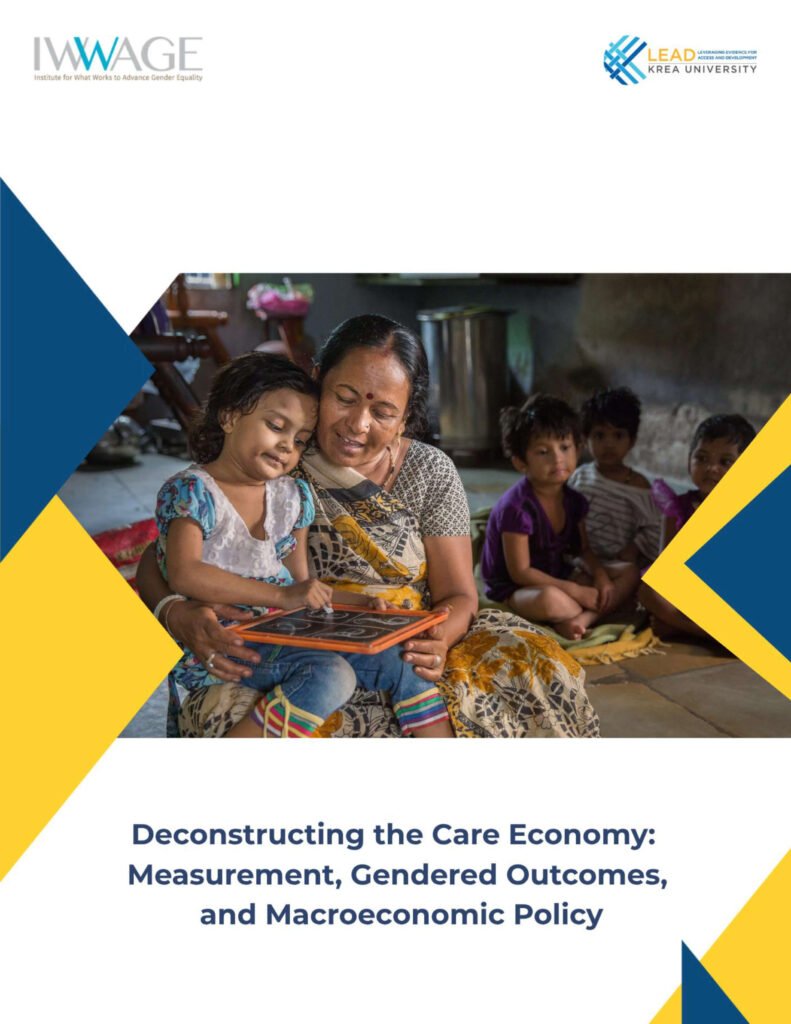
The policy brief examines how unpaid care and domestic work largely undertaken by women remains invisible in conventional economic and labour statistics, while significantly shaping women’s participation and outcomes in the labour market. It highlights how care responsibilities contribute to women’s underemployment, lower-paid and precarious work, and inequalities in platform and hybrid work.
The policy brief examines how unpaid care and domestic work largely undertaken by women remains invisible in conventional economic and labour statistics, while significantly shaping women’s participation and outcomes in the labour market. It highlights how care responsibilities contribute to women’s underemployment, lower-paid and precarious work, and inequalities in platform and hybrid work.
Factsheet
Trends in Female Labour Force Participation in Bihar
- September , 2026
- Vidhi, Bidisha Mondal
Despite economic growth, Bihar continues to face low female labour force participation, reflecting persistent supply-side constraints and limited access to suitable employment opportunities. Young women, in particular, experience low labour force participation amid high youth unemployment, while employment remains concentrated in agriculture and informal work. Sociocultural norms, limited access to education and skills, mobility constraints, inadequate transport, and care responsibilities further restrict women’s access to employment. Against this backdrop, this factsheet examines trends in female labour force participation, workforce composition, sectoral distribution, and working conditions in Bihar.
Despite economic growth, Bihar continues to face low female labour force participation, reflecting persistent supply-side constraints and limited access to suitable employment opportunities. Young women, in particular, experience low labour force participation amid high youth unemployment, while employment remains concentrated in agriculture and informal work. Sociocultural norms, limited access to education and skills, mobility constraints, inadequate transport, and care responsibilities further restrict women’s access to employment. Against this backdrop, this factsheet examines trends in female labour force participation, workforce composition, sectoral distribution, and working conditions in Bihar.
Report
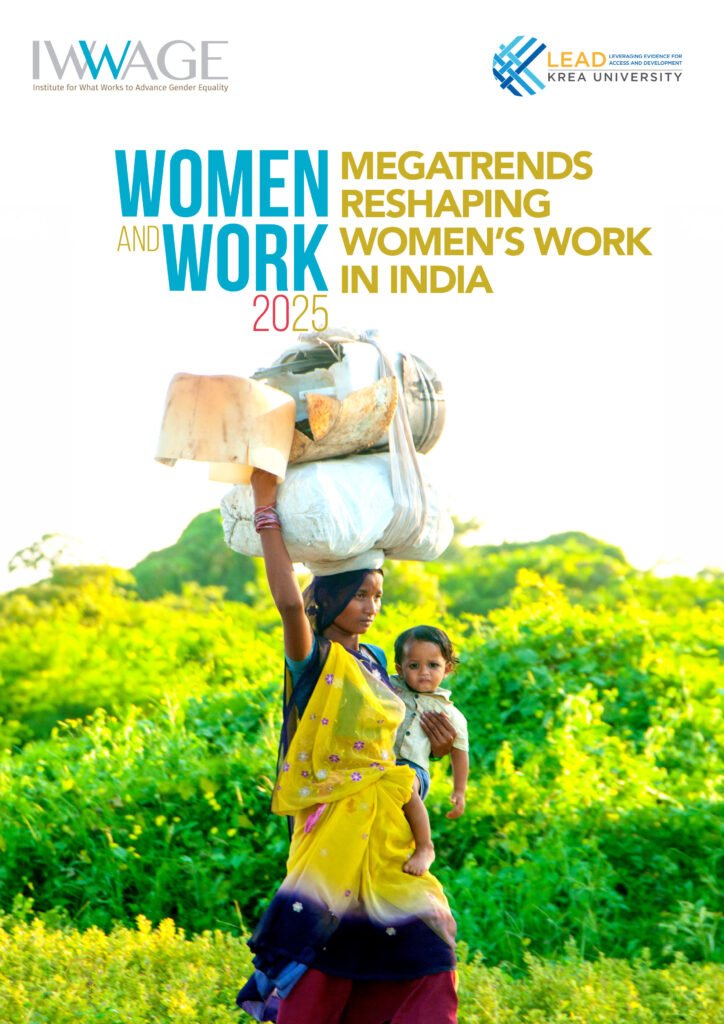
Women and Work 2025: Megatrends Reshaping Women’s Work in India
- September , 2026
- Divya Singh, Prakriti Sharma, Vidhi Singh, Sharati Roy
IWWAGE’s flagship report examines the changing landscape of women’s work in India and the forces shaping its future. Women’s labour force participation has risen significantly in recent years. Yet, the headline numbers tell only part of the story. The nature and experience of women’s work continue to be shaped by the quality and security of employment, unpaid care work, digitalisation, artificial intelligence, climate change, and women’s health at work. The report brings together evidence and emerging policy developments across these interconnected forces to examine where women’s work is headed—and what it will take to translate greater participation into greater economic agency, decent work, and protection.
IWWAGE’s flagship report examines the changing landscape of women’s work in India and the forces shaping its future. Women’s labour force participation has risen significantly in recent years. Yet, the headline numbers tell only part of the story. The nature and experience of women’s work continue to be shaped by the quality and security of employment, unpaid care work, digitalisation, artificial intelligence, climate change, and women’s health at work. The report brings together evidence and emerging policy developments across these interconnected forces to examine where women’s work is headed—and what it will take to translate greater participation into greater economic agency, decent work, and protection.
Factsheet
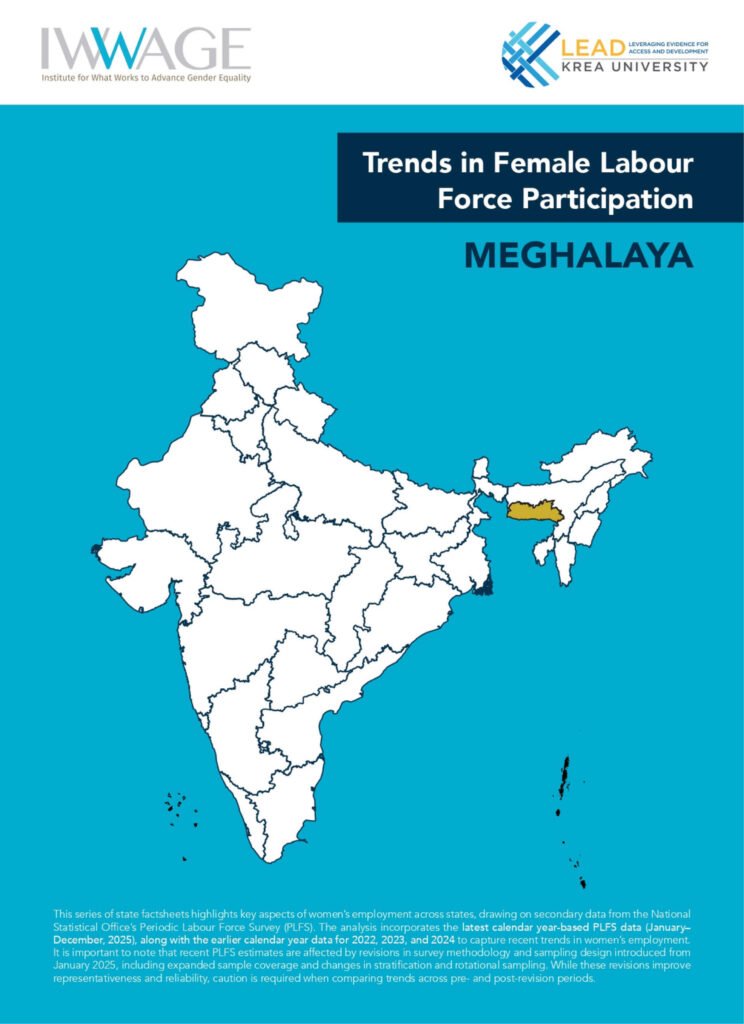
Trends in Female Labour Force Participation in Meghalaya
- August , 2026
- Nabankur Huda, Bidisha Mondal
Meghalaya is a small, hilly state in north-east India with a predominantly rural, agrarian economy and one of the country’s most distinctive social structures. The factsheet explores the trends, opportunities and challenges shaping women’s participation in Meghalaya’s labour market, with a focus on how the state’s social structure and economic transformation influence the nature and quality of women’s work.
Meghalaya is a small, hilly state in north-east India with a predominantly rural, agrarian economy and one of the country’s most distinctive social structures. The factsheet explores the trends, opportunities and challenges shaping women’s participation in Meghalaya’s labour market, with a focus on how the state’s social structure and economic transformation influence the nature and quality of women’s work.
Newsletter (Gender In Focus)
Gender in Focus
- August , 2026
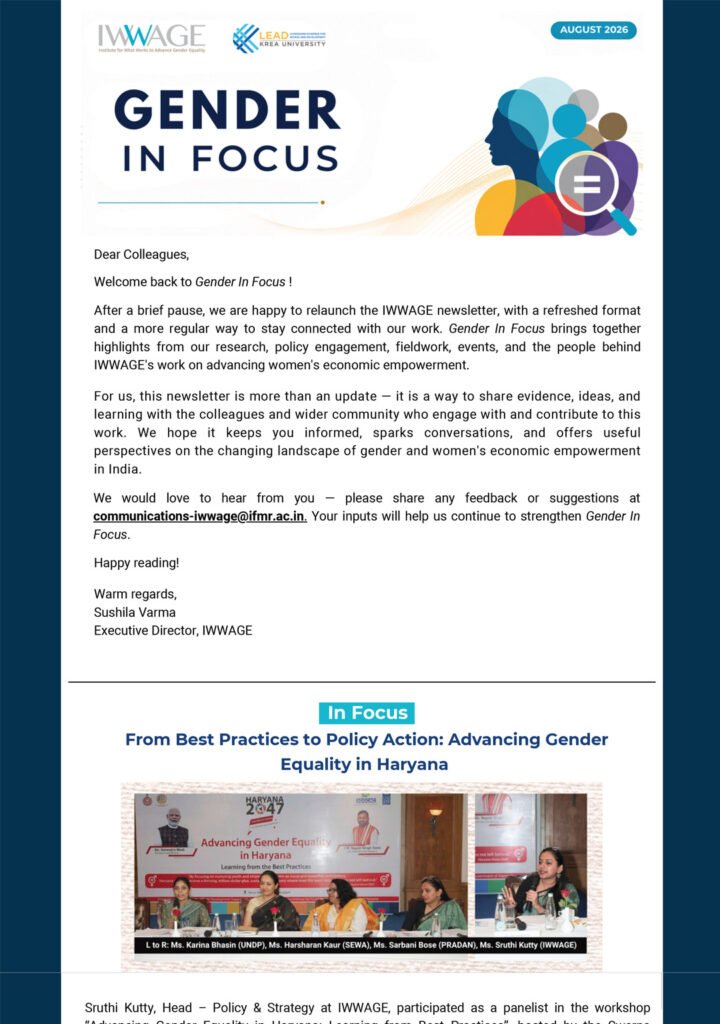
The August 2026 edition features highlights from IWWAGE’s research, policy engagements, fieldwork and knowledge initiatives. It also offers a closer look at emerging trends shaping women’s work and economic participation in India.
The August 2026 edition features highlights from IWWAGE’s research, policy engagements, fieldwork and knowledge initiatives. It also offers a closer look at emerging trends shaping women’s work and economic participation in India.