


Explore our annual collection of factsheets for state-wise analysis of women’s workforce participation in India. Using data from the Periodic Labour Force Survey (PLFS), these factsheets highlight trends in female labor force participation, employment types, and earnings gaps. They provide valuable insights for researchers, policymakers, and the public on the evolving landscape of women’s work in India.
Publications
Publications
Category
Year

Learning note
Impact Of Covid-19 On Working Women
- August , 2020
- Soumya Kapoor Mehta
The COVID-19 pandemic has not only deepened economic uncertainty in India but also intensified the challenges faced by working women across urban and rural areas. Even before the crisis, concerns around women’s workforce participation, pay parity, and career progression were prominent. The pandemic has further exposed vulnerabilities-especially in sectors where women are overrepresented and increasingly seen as dispensable. Now, urgent questions arise: Will the situation worsen for working women? How has the pandemic affected women in both urban and rural areas? Which sectors have made women dispensable? How can we ensure women are not further marginalised during these unprecedented times? This analysis explores the gendered impact of the pandemic on employment, examines key data trends, and raises critical questions about ensuring women are not further marginalised. It also outlines measures to foster recovery and resilience, with a focus on sustaining women’s livelihoods and advancing gender equality in the post-pandemic economy.
The COVID-19 pandemic has not only deepened economic uncertainty in India but also intensified the challenges faced by working women across urban and rural areas. Even before the crisis, concerns around women’s workforce participation, pay parity, and career progression were prominent. The pandemic has further exposed vulnerabilities-especially in sectors where women are overrepresented and increasingly seen as dispensable. Now, urgent questions arise: Will the situation worsen for working women? How has the pandemic affected women in both urban and rural areas? Which sectors have made women dispensable? How can we ensure women are not further marginalised during these unprecedented times? This analysis explores the gendered impact of the pandemic on employment, examines key data trends, and raises critical questions about ensuring women are not further marginalised. It also outlines measures to foster recovery and resilience, with a focus on sustaining women’s livelihoods and advancing gender equality in the post-pandemic economy.

Learning note
Gig Study: Summary and Recommendations
- August , 2020
- Ruchika Chaudhary | Soumya Kapoor Mehta
The rise of India’s gig economy, driven by the proliferation of over 300 digital platforms in the last five years, is transforming the concept of work. With one of the lowest female labour force participation rates in South Asia (24.5%), digital labour platforms offer a potential solution, providing flexible work opportunities for women. However, gig workers face challenges such as income instability, lack of social protection, and safety concerns. This factsheet explores the opportunities and challenges of India’s growing gig economy, particularly its potential to increase women’s participation in the workforce.
The rise of India’s gig economy, driven by the proliferation of over 300 digital platforms in the last five years, is transforming the concept of work. With one of the lowest female labour force participation rates in South Asia (24.5%), digital labour platforms offer a potential solution, providing flexible work opportunities for women. However, gig workers face challenges such as income instability, lack of social protection, and safety concerns. This factsheet explores the opportunities and challenges of India’s growing gig economy, particularly its potential to increase women’s participation in the workforce.
Learning note
Food Security and Wage Employment
- August , 2020
- Sona Mitra | Deepro Guha | Kanika Jha Kingra
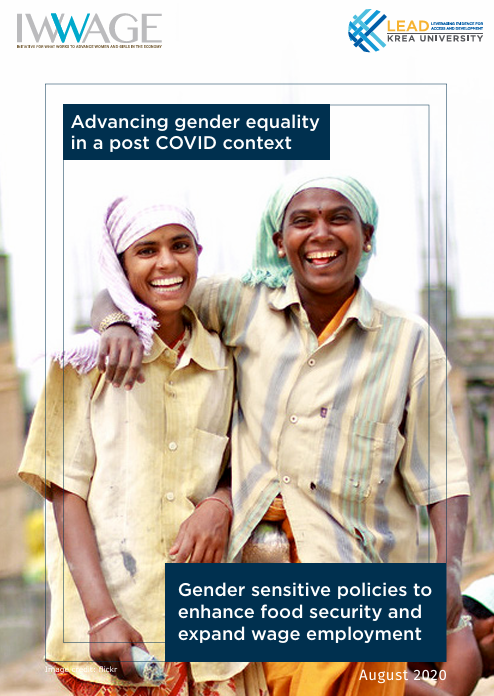
The COVID-19 pandemic has disproportionately impacted women and girls in India, exacerbating pre-existing vulnerabilities. Within households, women now face added responsibilities, including unpaid care work for children, the elderly, and sick family members. Outside the home, shrinking employment opportunities and reduced bargaining power have led to a loss of independence and agency for many women, threatening years of progress made through gender-responsive policies. Women, particularly those in informal sectors, have been hit hardest by job losses and wage reductions. With 90% of the female workforce in informal employment, the economic fallout from the pandemic has severely affected their livelihoods. The crisis has also increased the risk of food insecurity, as women and girls often bear the brunt of inadequate nutrition in households. Additionally, women frontline workers face heightened health risks. To mitigate these challenges, gender-responsive interventions are crucial. Expanding opportunities for women’s wage employment, improving access to decent work, and enhancing social security benefits are essential to addressing the long-term impacts of the pandemic and ensuring a more equitable recovery.
The COVID-19 pandemic has disproportionately impacted women and girls in India, exacerbating pre-existing vulnerabilities. Within households, women now face added responsibilities, including unpaid care work for children, the elderly, and sick family members. Outside the home, shrinking employment opportunities and reduced bargaining power have led to a loss of independence and agency for many women, threatening years of progress made through gender-responsive policies. Women, particularly those in informal sectors, have been hit hardest by job losses and wage reductions. With 90% of the female workforce in informal employment, the economic fallout from the pandemic has severely affected their livelihoods. The crisis has also increased the risk of food insecurity, as women and girls often bear the brunt of inadequate nutrition in households. Additionally, women frontline workers face heightened health risks. To mitigate these challenges, gender-responsive interventions are crucial. Expanding opportunities for women’s wage employment, improving access to decent work, and enhancing social security benefits are essential to addressing the long-term impacts of the pandemic and ensuring a more equitable recovery.
Learning note
Emergency Cash Transfers
- August , 2020
- Soumya Kapoor Mehta | Sona Mitra | Kanika Jha Kingra
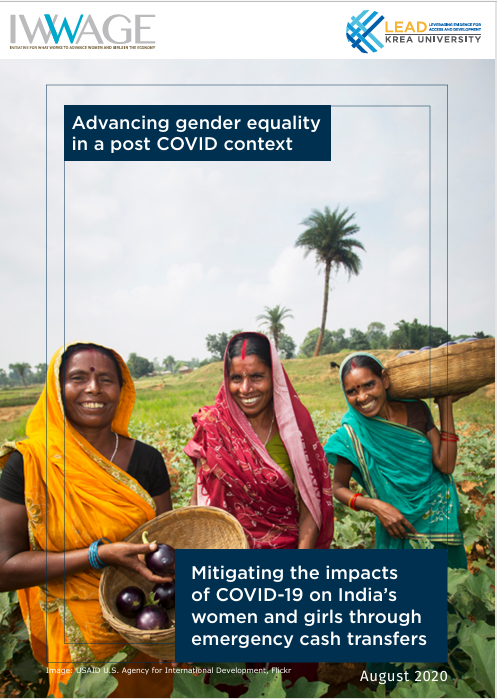
The COVID-19 pandemic has intensified socio-economic challenges across India, with women and girls disproportionately affected. Job losses, food insecurity, wage cuts, and financial instability have all hit vulnerable groups the hardest, exacerbating existing gender inequalities. Women, particularly those in informal sectors such as domestic work and construction, have seen their livelihoods decimated, while the rise in unpaid care work has further burdened them within households. Evidence from past crises shows that women are more vulnerable to job losses, food insecurity, and violence, all of which have worsened during the pandemic. Additionally, women face exclusion from relief packages and farm support schemes, leaving them without crucial safety nets. In light of this, there is a growing call for emergency cash transfers to support the most vulnerable, particularly women and girls. Such transfers, tied to the duration of the pandemic, can help mitigate financial uncertainties, reduce poverty, and promote food security. When complemented by investments in public infrastructure and basic services, an emergency basic income can provide much-needed relief and pave the way for a more inclusive recovery.
The COVID-19 pandemic has intensified socio-economic challenges across India, with women and girls disproportionately affected. Job losses, food insecurity, wage cuts, and financial instability have all hit vulnerable groups the hardest, exacerbating existing gender inequalities. Women, particularly those in informal sectors such as domestic work and construction, have seen their livelihoods decimated, while the rise in unpaid care work has further burdened them within households. Evidence from past crises shows that women are more vulnerable to job losses, food insecurity, and violence, all of which have worsened during the pandemic. Additionally, women face exclusion from relief packages and farm support schemes, leaving them without crucial safety nets. In light of this, there is a growing call for emergency cash transfers to support the most vulnerable, particularly women and girls. Such transfers, tied to the duration of the pandemic, can help mitigate financial uncertainties, reduce poverty, and promote food security. When complemented by investments in public infrastructure and basic services, an emergency basic income can provide much-needed relief and pave the way for a more inclusive recovery.
Newsletter (Gender In Focus)
Gender in Focus
- August , 2020
- IWWAGE
This issue offers a preview of IWWAGE’s work during the pandemic—field voices from discussions with civil society partners in four states, reflections on how physical distancing may affect SHG functioning, and analysis on how recovery strategies must account for women’s employment and labour participation. It also captures highlights from webinars and introduces a new series of policy notes with timely recommendations to support a more resilient and gender-responsive post-COVID world.
This issue offers a preview of IWWAGE’s work during the pandemic—field voices from discussions with civil society partners in four states, reflections on how physical distancing may affect SHG functioning, and analysis on how recovery strategies must account for women’s employment and labour participation. It also captures highlights from webinars and introduces a new series of policy notes with timely recommendations to support a more resilient and gender-responsive post-COVID world.
Learning note
Female Labour Force Participation Rate and Earnings Gap in India
- July , 2020
- Anjana Thampi | Sona Mitra
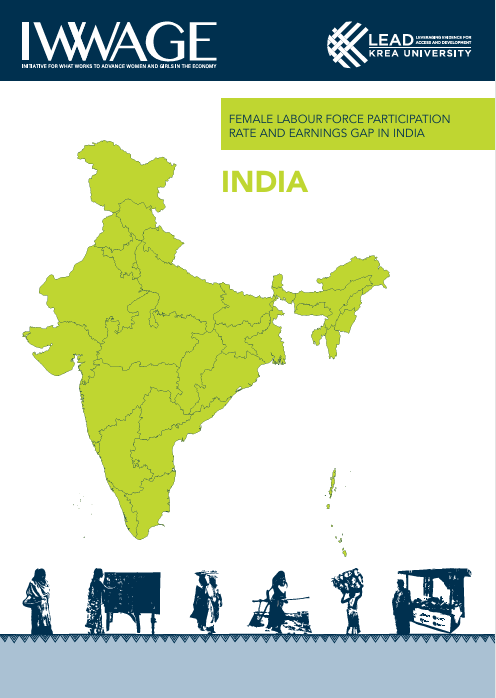
Welcome to our annual repository of factsheets, where we present a detailed analysis of women’s workforce participation across India. Each year, we gather state-wise data from surveys such as the Periodic Labour Force Survey (PLFS) to explore trends in female labour force participation, employment types, and earnings gaps. These factsheets provide a snapshot of the economic and social factors affecting women’s employment, offering valuable insights for researchers, policymakers, and the general public. Dive into the data and discover the evolving landscape of women’s work in India
Welcome to our annual repository of factsheets, where we present a detailed analysis of women’s workforce participation across India. Each year, we gather state-wise data from surveys such as the Periodic Labour Force Survey (PLFS) to explore trends in female labour force participation, employment types, and earnings gaps. These factsheets provide a snapshot of the economic and social factors affecting women’s employment, offering valuable insights for researchers, policymakers, and the general public. Dive into the data and discover the evolving landscape of women’s work in India
Learning note
Policies and Programmes For Women and Girls
- July , 2020
- Nidhi Gyan Pandey
Bihar faces significant challenges in health, education, and gender development. With low female literacy and the country’s lowest female workforce participation, the state has launched initiatives like the ‘Mukhyamantri Balika Cycle Yojana,’ improving school attendance and reducing dropout rates. The ‘Saat Nischay’ programme focuses on empowering women through schemes targeting health, education, and infrastructure. While these efforts show promise, more evaluations are needed to assess their impact on women’s development and social protection.
Bihar faces significant challenges in health, education, and gender development. With low female literacy and the country’s lowest female workforce participation, the state has launched initiatives like the ‘Mukhyamantri Balika Cycle Yojana,’ improving school attendance and reducing dropout rates. The ‘Saat Nischay’ programme focuses on empowering women through schemes targeting health, education, and infrastructure. While these efforts show promise, more evaluations are needed to assess their impact on women’s development and social protection.

Factsheet
Female Labour Force Participation Rate and Earnings Gap in India
- July , 2020
- Anjana Thampi, Sona Mitra
Explore our annual collection of factsheets for state-wise analysis of women’s workforce participation in India. Using data from the Periodic Labour Force Survey (PLFS), these factsheets highlight trends in female labor force participation, employment types, and earnings gaps. They provide valuable insights for researchers, policymakers, and the public on the evolving landscape of women’s work in India.
Explore our annual collection of factsheets for state-wise analysis of women’s workforce participation in India. Using data from the Periodic Labour Force Survey (PLFS), these factsheets highlight trends in female labor force participation, employment types, and earnings gaps. They provide valuable insights for researchers, policymakers, and the public on the evolving landscape of women’s work in India.
Report
Voices from the Field
- June , 2020
- Subhalakshmi Nandi , Soumya Kapoor Mehta , Rukmini Tankha
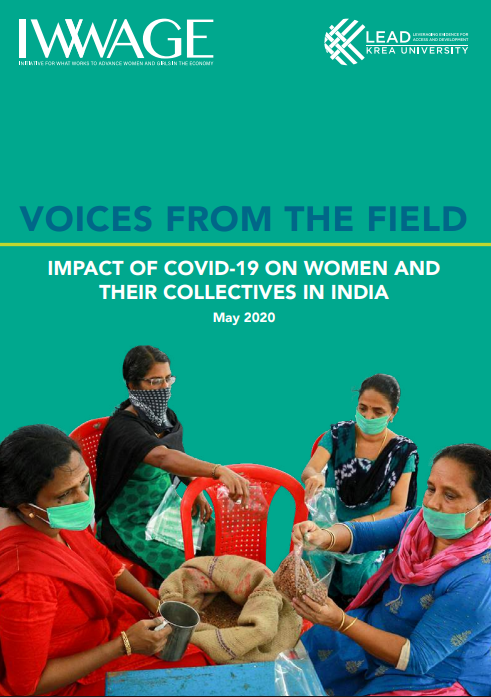
With approximately 67 million women mobilised into Self-Help Groups and federations, owned and represented by women, the Deendayal Antyodaya Yojana-National Rural Livelihoods Mission (DAY-NRLM) holds great promise for advancing women’s socio-economic empowerment and offering them resilience in times of crises such as the current pandemic. SHG federations across India not only offer means for many poor women to build sustainable households, but are also platforms for them to seek support, including financial, social and psychological support that they derive by associating themselves with others who are like them. Stories from the ground during India’s lockdown phase are suggesting that Self Help Groups (SHGs) of women are being involved by state governments in the fight against COVID-19. SHGs across India have worked day and night to manufacture masks, run community kitchens and assist in health checks. They have helped spread awareness about the virus in the local language and in a culturally-sensitive manner within their communities. Yet, SHGs and their members have been impacted both socially and economically, with many reporting intensive losses to their work and livelihoods, increased drudgery and unpaid work burden and rising incidence of domestic violence. In line with IWWAGE’s core mandate of informing the policy agenda on women’s economic empowerment in India, this report presents a summary of insights gained from recent research and conversations around women’s empowerment collectives (WECs) and how women are dealing with the pandemic and lockdown in India. The report attempts to summarise the challenges women and their collectives are facing during the lockdown and concludes with a series of recommendations.
With approximately 67 million women mobilised into Self-Help Groups and federations, owned and represented by women, the Deendayal Antyodaya Yojana-National Rural Livelihoods Mission (DAY-NRLM) holds great promise for advancing women’s socio-economic empowerment and offering them resilience in times of crises such as the current pandemic. SHG federations across India not only offer means for many poor women to build sustainable households, but are also platforms for them to seek support, including financial, social and psychological support that they derive by associating themselves with others who are like them. Stories from the ground during India’s lockdown phase are suggesting that Self Help Groups (SHGs) of women are being involved by state governments in the fight against COVID-19. SHGs across India have worked day and night to manufacture masks, run community kitchens and assist in health checks. They have helped spread awareness about the virus in the local language and in a culturally-sensitive manner within their communities. Yet, SHGs and their members have been impacted both socially and economically, with many reporting intensive losses to their work and livelihoods, increased drudgery and unpaid work burden and rising incidence of domestic violence. In line with IWWAGE’s core mandate of informing the policy agenda on women’s economic empowerment in India, this report presents a summary of insights gained from recent research and conversations around women’s empowerment collectives (WECs) and how women are dealing with the pandemic and lockdown in India. The report attempts to summarise the challenges women and their collectives are facing during the lockdown and concludes with a series of recommendations.
Factsheet
Trends in Female Labour Force Participation in Karnataka
- October , 2026
- Vidhi, Bidisha Mondal
Karnataka occupies a distinctive position in India’s economic landscape, driven by rapid growth in services, technology, and manufacturing sectors.This factsheet examines key trends in women’s labour force participation in Karnataka using PLFS data, with a focus on employment composition, sectoral and occupational distribution, quality of work, and barriers to women’s participation in the labour market.
Karnataka occupies a distinctive position in India’s economic landscape, driven by rapid growth in services, technology, and manufacturing sectors.This factsheet examines key trends in women’s labour force participation in Karnataka using PLFS data, with a focus on employment composition, sectoral and occupational distribution, quality of work, and barriers to women’s participation in the labour market.
Brief
Deconstructing the Care Economy: Measurement, Gendered Outcomes, and Macroeconomic Policy
- September , 2026
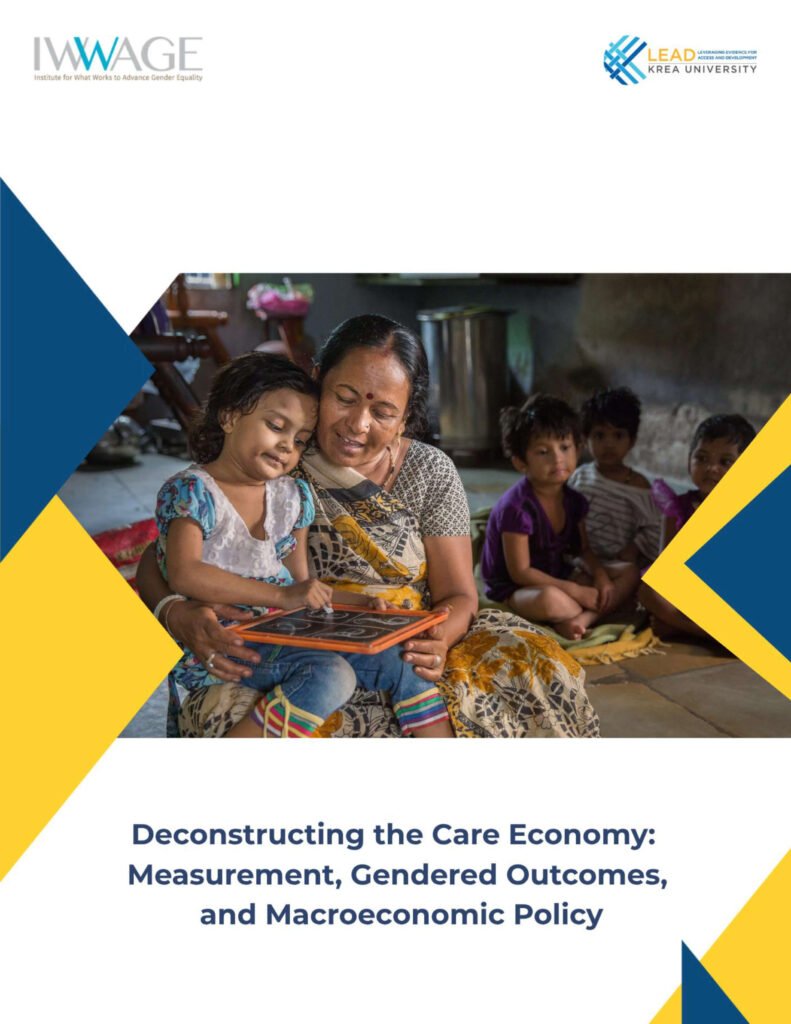
The policy brief examines how unpaid care and domestic work largely undertaken by women remains invisible in conventional economic and labour statistics, while significantly shaping women’s participation and outcomes in the labour market. It highlights how care responsibilities contribute to women’s underemployment, lower-paid and precarious work, and inequalities in platform and hybrid work.
The policy brief examines how unpaid care and domestic work largely undertaken by women remains invisible in conventional economic and labour statistics, while significantly shaping women’s participation and outcomes in the labour market. It highlights how care responsibilities contribute to women’s underemployment, lower-paid and precarious work, and inequalities in platform and hybrid work.
Factsheet
Trends in Female Labour Force Participation in Bihar
- September , 2026
- Vidhi, Bidisha Mondal
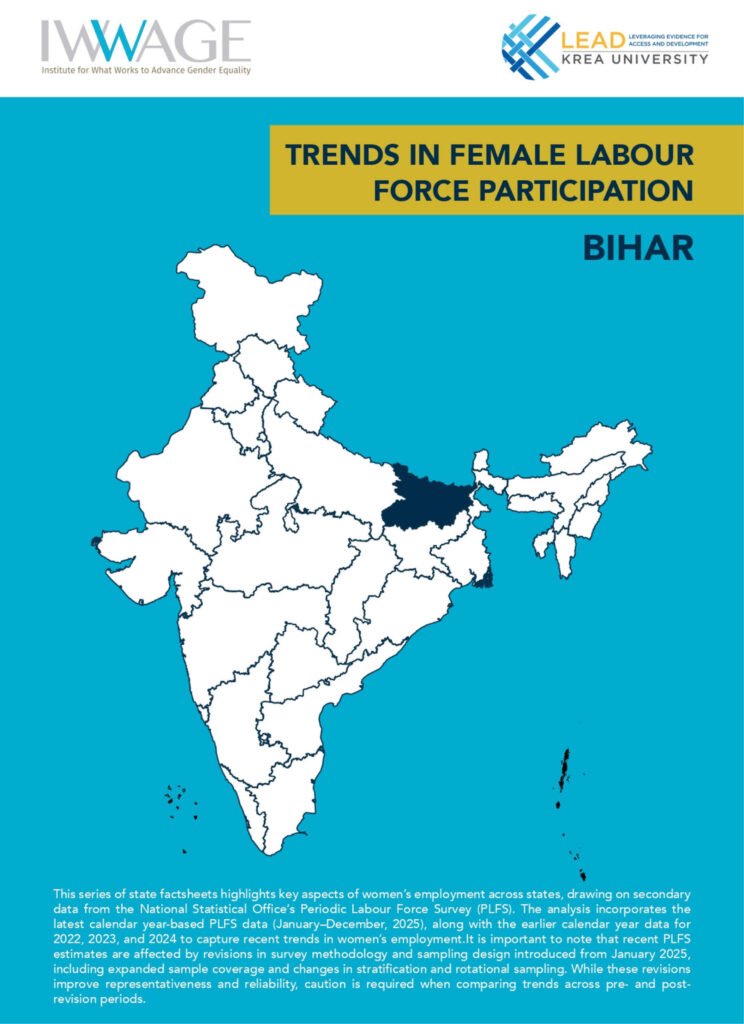
Despite economic growth, Bihar continues to face low female labour force participation, reflecting persistent supply-side constraints and limited access to suitable employment opportunities. Young women, in particular, experience low labour force participation amid high youth unemployment, while employment remains concentrated in agriculture and informal work. Sociocultural norms, limited access to education and skills, mobility constraints, inadequate transport, and care responsibilities further restrict women’s access to employment. Against this backdrop, this factsheet examines trends in female labour force participation, workforce composition, sectoral distribution, and working conditions in Bihar.
Despite economic growth, Bihar continues to face low female labour force participation, reflecting persistent supply-side constraints and limited access to suitable employment opportunities. Young women, in particular, experience low labour force participation amid high youth unemployment, while employment remains concentrated in agriculture and informal work. Sociocultural norms, limited access to education and skills, mobility constraints, inadequate transport, and care responsibilities further restrict women’s access to employment. Against this backdrop, this factsheet examines trends in female labour force participation, workforce composition, sectoral distribution, and working conditions in Bihar.
Report
Women and Work 2025: Megatrends Reshaping Women’s Work in India
- September , 2026
- Divya Singh, Prakriti Sharma, Vidhi Singh, Sharati Roy
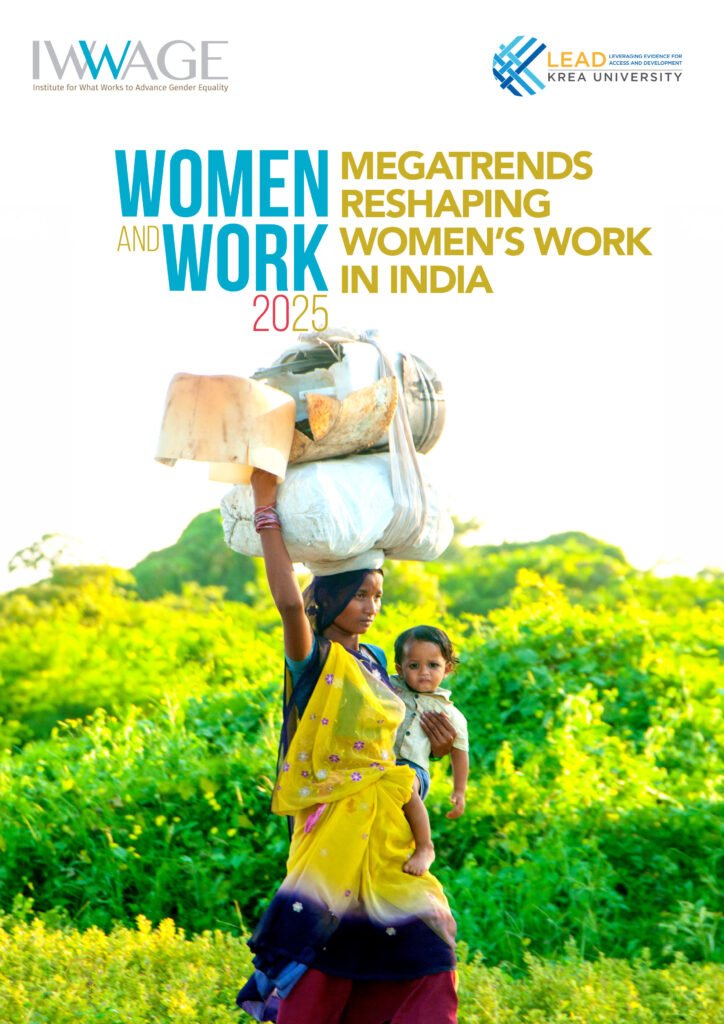
IWWAGE’s flagship report examines the changing landscape of women’s work in India and the forces shaping its future. Women’s labour force participation has risen significantly in recent years. Yet, the headline numbers tell only part of the story. The nature and experience of women’s work continue to be shaped by the quality and security of employment, unpaid care work, digitalisation, artificial intelligence, climate change, and women’s health at work. The report brings together evidence and emerging policy developments across these interconnected forces to examine where women’s work is headed—and what it will take to translate greater participation into greater economic agency, decent work, and protection.
IWWAGE’s flagship report examines the changing landscape of women’s work in India and the forces shaping its future. Women’s labour force participation has risen significantly in recent years. Yet, the headline numbers tell only part of the story. The nature and experience of women’s work continue to be shaped by the quality and security of employment, unpaid care work, digitalisation, artificial intelligence, climate change, and women’s health at work. The report brings together evidence and emerging policy developments across these interconnected forces to examine where women’s work is headed—and what it will take to translate greater participation into greater economic agency, decent work, and protection.
Factsheet
Trends in Female Labour Force Participation in Meghalaya
- August , 2026
- Nabankur Huda, Bidisha Mondal
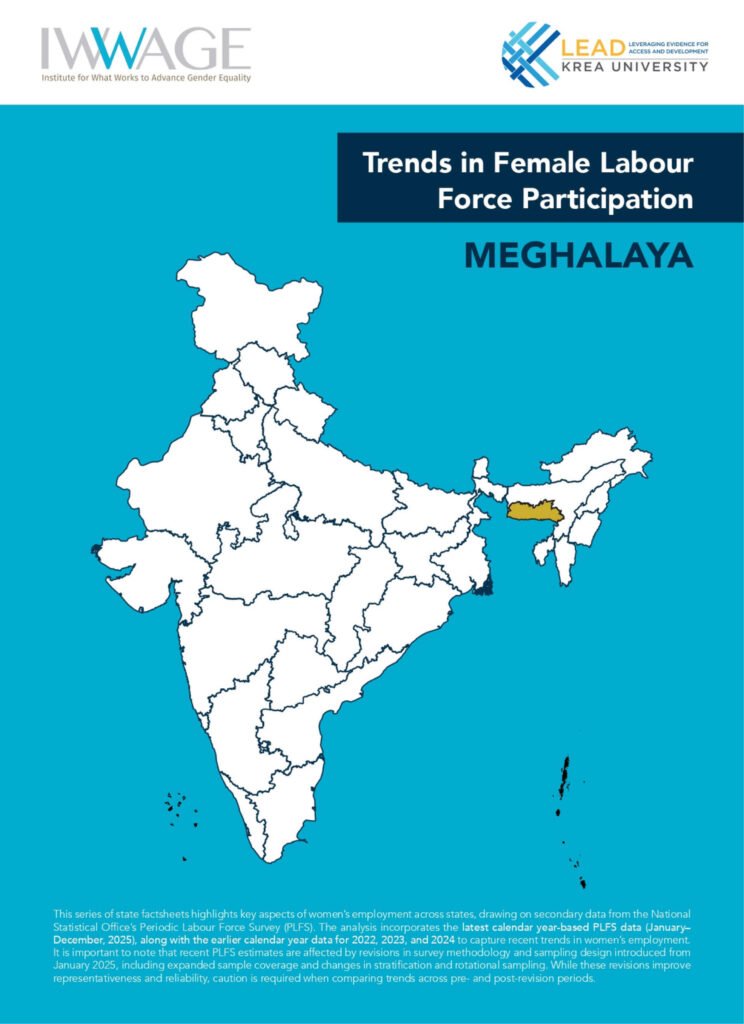
Meghalaya is a small, hilly state in north-east India with a predominantly rural, agrarian economy and one of the country’s most distinctive social structures. The factsheet explores the trends, opportunities and challenges shaping women’s participation in Meghalaya’s labour market, with a focus on how the state’s social structure and economic transformation influence the nature and quality of women’s work.
Meghalaya is a small, hilly state in north-east India with a predominantly rural, agrarian economy and one of the country’s most distinctive social structures. The factsheet explores the trends, opportunities and challenges shaping women’s participation in Meghalaya’s labour market, with a focus on how the state’s social structure and economic transformation influence the nature and quality of women’s work.
Newsletter (Gender In Focus)
Gender in Focus
- August , 2026
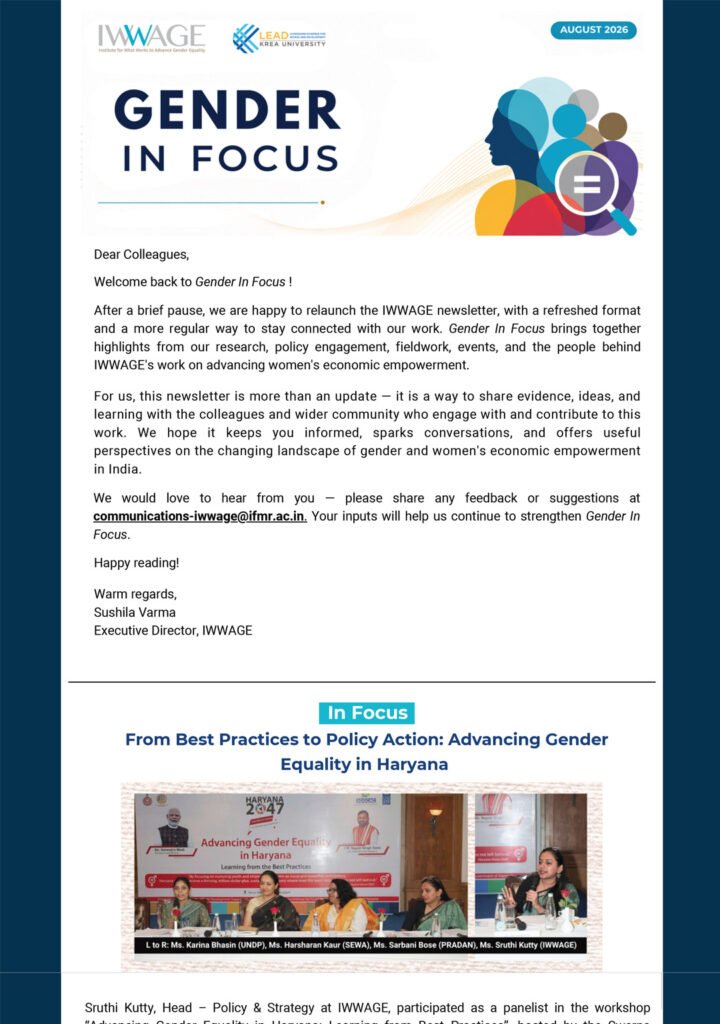
The August 2026 edition features highlights from IWWAGE’s research, policy engagements, fieldwork and knowledge initiatives. It also offers a closer look at emerging trends shaping women’s work and economic participation in India.
The August 2026 edition features highlights from IWWAGE’s research, policy engagements, fieldwork and knowledge initiatives. It also offers a closer look at emerging trends shaping women’s work and economic participation in India.