


Publications
Publications
Category
Year

Brief
Note on IWWAGE Findings
- April , 2019
As part of its commitment to advancing women’s economic empowerment, IWWAGE undertook three key studies in 2018 to generate actionable evidence that informs policy and practice. These studies focus on critical areas affecting women’s participation in the workforce and access to support systems: 1. Centre-Based Childcare as a Solution for Maternal Employment and Early Childhood Development This study explores how accessible, affordable, and quality childcare can reduce women’s unpaid care burden, enabling their participation in the labour force, while also enhancing cognitive and socio-emotional development in children under six. The research highlights the need for improved service quality, greater access, and consideration of prevailing social norms in programme design. 2. SHG Digitisation With the expansion of digital services, this study examines the process and impact of digitising Self-Help Groups (SHGs). It assesses how technology can enhance financial inclusion, transparency, and efficiency in SHG operations while also identifying gaps in access and digital literacy among women. 3. Rapid Assessment of the 181 Women’s Helpline Scheme This assessment evaluates the effectiveness of the 181 helpline, a critical support mechanism for women facing violence. It highlights the need for better infrastructure, trained personnel, and integration with other support services to ensure timely and sensitive responses to women in distress. Together, the studies offer valuable insights and underline the importance of strengthening public systems, leveraging technology, and addressing social barriers. IWWAGE continues to advocate for evidence-informed strategies that improve service delivery, promote gender-responsive policies, and enhance women’s access to economic opportunities and support mechanisms.
As part of its commitment to advancing women’s economic empowerment, IWWAGE undertook three key studies in 2018 to generate actionable evidence that informs policy and practice. These studies focus on critical areas affecting women’s participation in the workforce and access to support systems: 1. Centre-Based Childcare as a Solution for Maternal Employment and Early Childhood Development This study explores how accessible, affordable, and quality childcare can reduce women’s unpaid care burden, enabling their participation in the labour force, while also enhancing cognitive and socio-emotional development in children under six. The research highlights the need for improved service quality, greater access, and consideration of prevailing social norms in programme design. 2. SHG Digitisation With the expansion of digital services, this study examines the process and impact of digitising Self-Help Groups (SHGs). It assesses how technology can enhance financial inclusion, transparency, and efficiency in SHG operations while also identifying gaps in access and digital literacy among women. 3. Rapid Assessment of the 181 Women’s Helpline Scheme This assessment evaluates the effectiveness of the 181 helpline, a critical support mechanism for women facing violence. It highlights the need for better infrastructure, trained personnel, and integration with other support services to ensure timely and sensitive responses to women in distress. Together, the studies offer valuable insights and underline the importance of strengthening public systems, leveraging technology, and addressing social barriers. IWWAGE continues to advocate for evidence-informed strategies that improve service delivery, promote gender-responsive policies, and enhance women’s access to economic opportunities and support mechanisms.
Factsheet
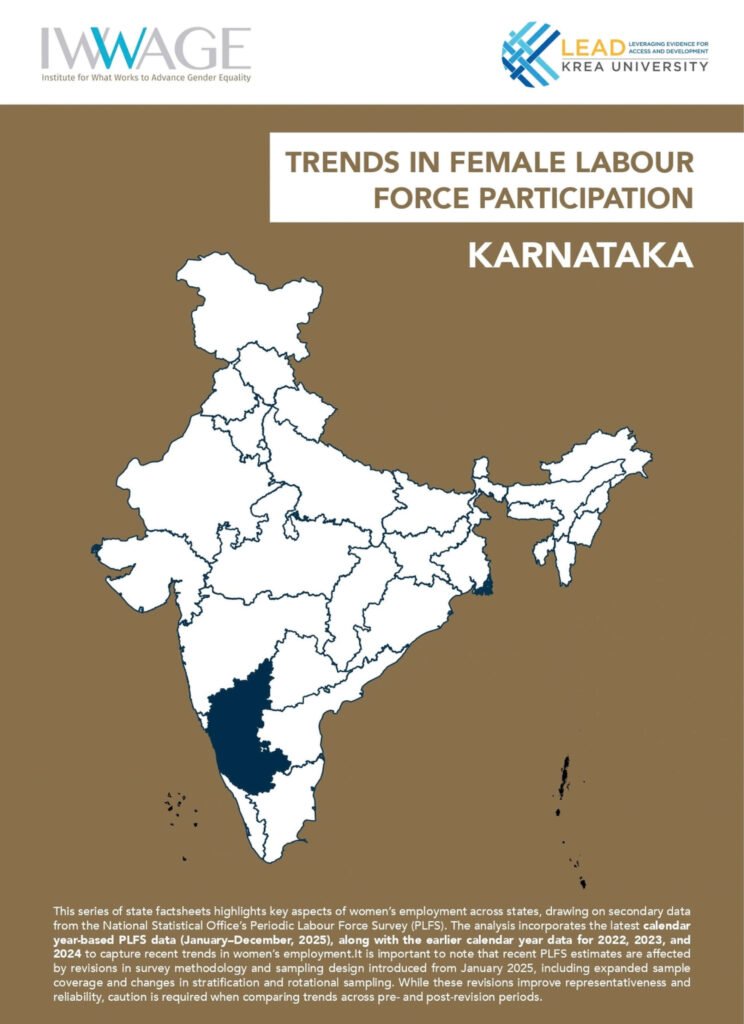
Trends in Female Labour Force Participation in Karnataka
- October , 2026
- Vidhi, Bidisha Mondal
Karnataka occupies a distinctive position in India’s economic landscape, driven by rapid growth in services, technology, and manufacturing sectors.This factsheet examines key trends in women’s labour force participation in Karnataka using PLFS data, with a focus on employment composition, sectoral and occupational distribution, quality of work, and barriers to women’s participation in the labour market.
Karnataka occupies a distinctive position in India’s economic landscape, driven by rapid growth in services, technology, and manufacturing sectors.This factsheet examines key trends in women’s labour force participation in Karnataka using PLFS data, with a focus on employment composition, sectoral and occupational distribution, quality of work, and barriers to women’s participation in the labour market.
Brief
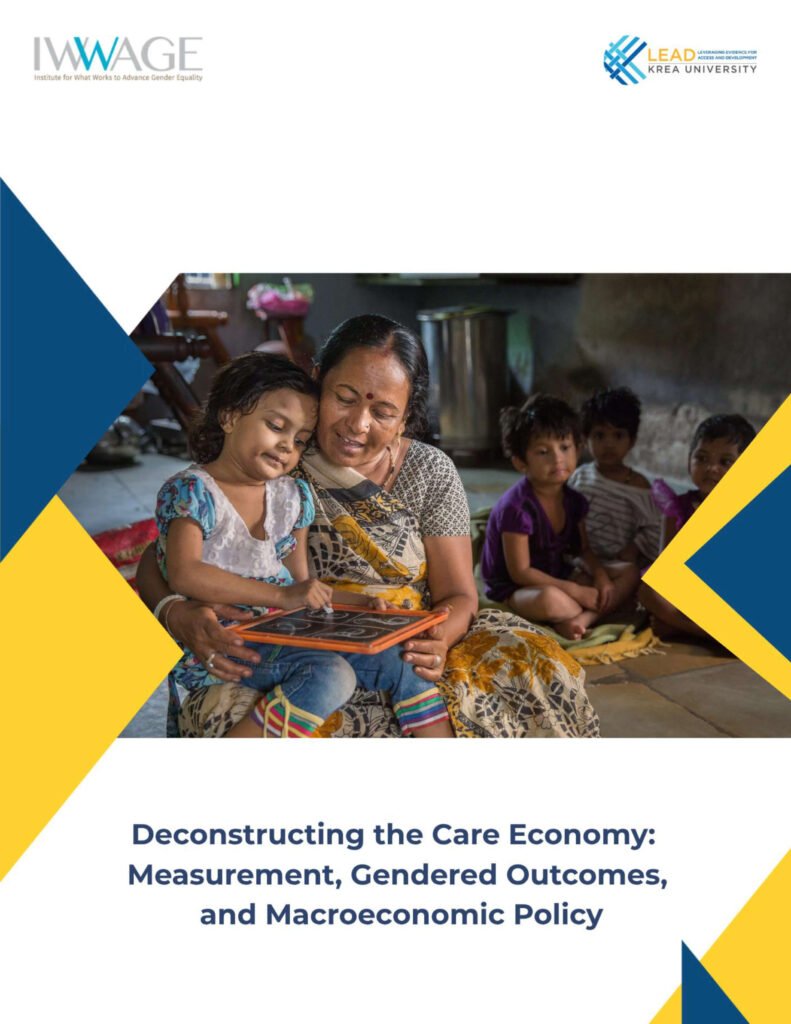
Deconstructing the Care Economy: Measurement, Gendered Outcomes, and Macroeconomic Policy
- September , 2026
The policy brief examines how unpaid care and domestic work largely undertaken by women remains invisible in conventional economic and labour statistics, while significantly shaping women’s participation and outcomes in the labour market. It highlights how care responsibilities contribute to women’s underemployment, lower-paid and precarious work, and inequalities in platform and hybrid work.
The policy brief examines how unpaid care and domestic work largely undertaken by women remains invisible in conventional economic and labour statistics, while significantly shaping women’s participation and outcomes in the labour market. It highlights how care responsibilities contribute to women’s underemployment, lower-paid and precarious work, and inequalities in platform and hybrid work.
Factsheet
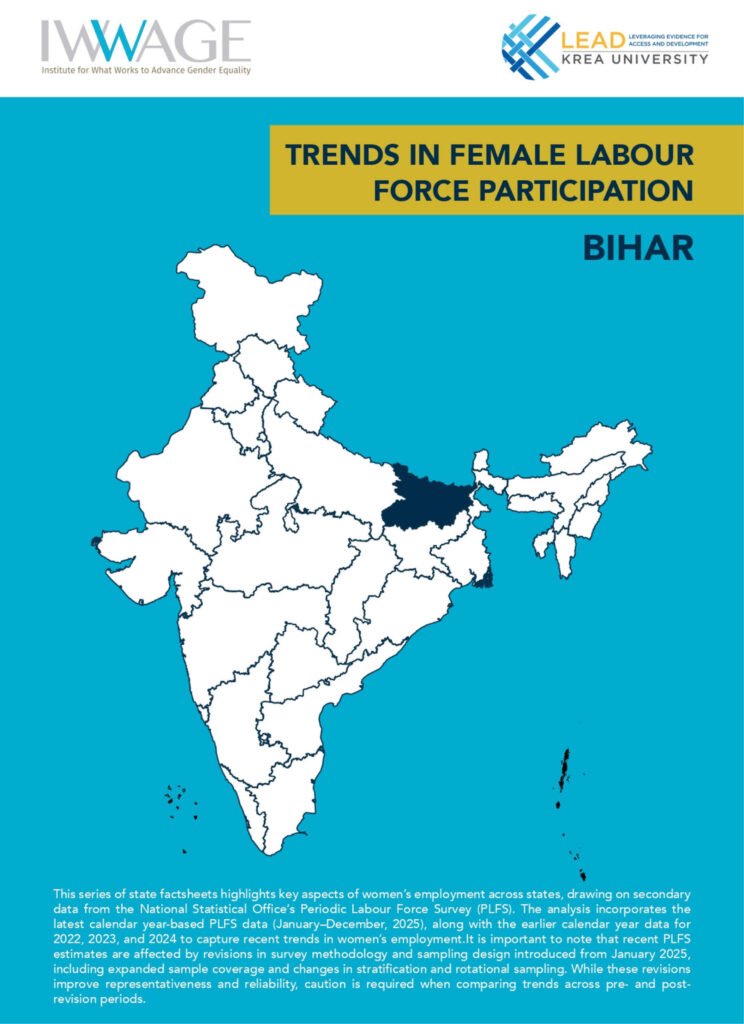
Trends in Female Labour Force Participation in Bihar
- September , 2026
- Vidhi, Bidisha Mondal
Despite economic growth, Bihar continues to face low female labour force participation, reflecting persistent supply-side constraints and limited access to suitable employment opportunities. Young women, in particular, experience low labour force participation amid high youth unemployment, while employment remains concentrated in agriculture and informal work. Sociocultural norms, limited access to education and skills, mobility constraints, inadequate transport, and care responsibilities further restrict women’s access to employment. Against this backdrop, this factsheet examines trends in female labour force participation, workforce composition, sectoral distribution, and working conditions in Bihar.
Despite economic growth, Bihar continues to face low female labour force participation, reflecting persistent supply-side constraints and limited access to suitable employment opportunities. Young women, in particular, experience low labour force participation amid high youth unemployment, while employment remains concentrated in agriculture and informal work. Sociocultural norms, limited access to education and skills, mobility constraints, inadequate transport, and care responsibilities further restrict women’s access to employment. Against this backdrop, this factsheet examines trends in female labour force participation, workforce composition, sectoral distribution, and working conditions in Bihar.
Report
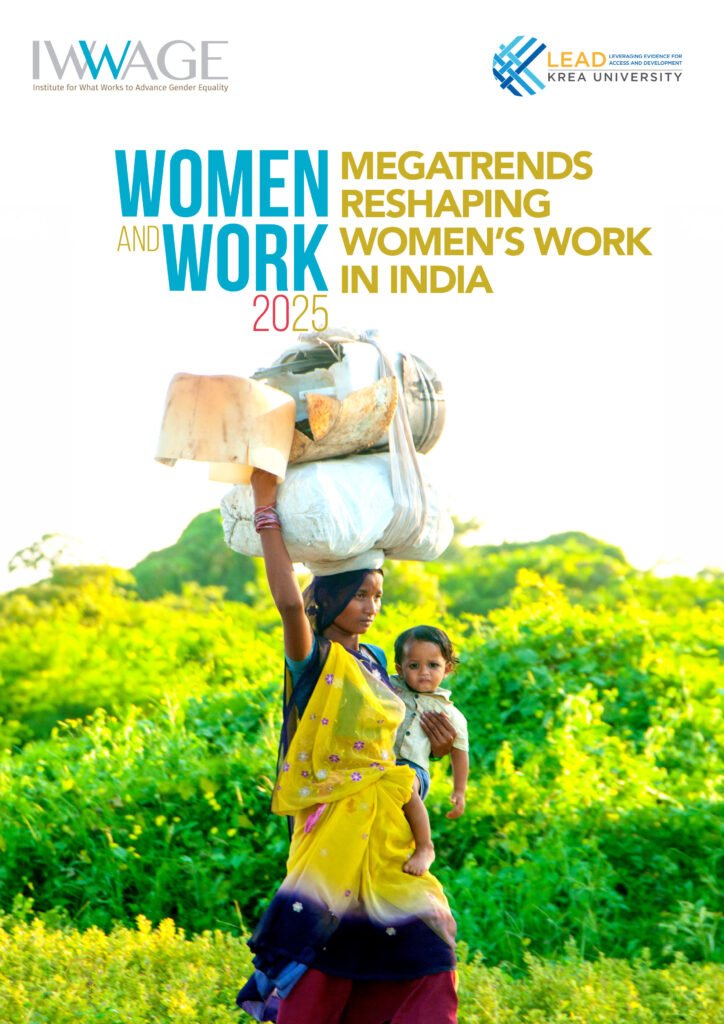
Women and Work 2025: Megatrends Reshaping Women’s Work in India
- September , 2026
- Divya Singh, Prakriti Sharma, Vidhi Singh, Sharati Roy
IWWAGE’s flagship report examines the changing landscape of women’s work in India and the forces shaping its future. Women’s labour force participation has risen significantly in recent years. Yet, the headline numbers tell only part of the story. The nature and experience of women’s work continue to be shaped by the quality and security of employment, unpaid care work, digitalisation, artificial intelligence, climate change, and women’s health at work. The report brings together evidence and emerging policy developments across these interconnected forces to examine where women’s work is headed—and what it will take to translate greater participation into greater economic agency, decent work, and protection.
IWWAGE’s flagship report examines the changing landscape of women’s work in India and the forces shaping its future. Women’s labour force participation has risen significantly in recent years. Yet, the headline numbers tell only part of the story. The nature and experience of women’s work continue to be shaped by the quality and security of employment, unpaid care work, digitalisation, artificial intelligence, climate change, and women’s health at work. The report brings together evidence and emerging policy developments across these interconnected forces to examine where women’s work is headed—and what it will take to translate greater participation into greater economic agency, decent work, and protection.
Factsheet
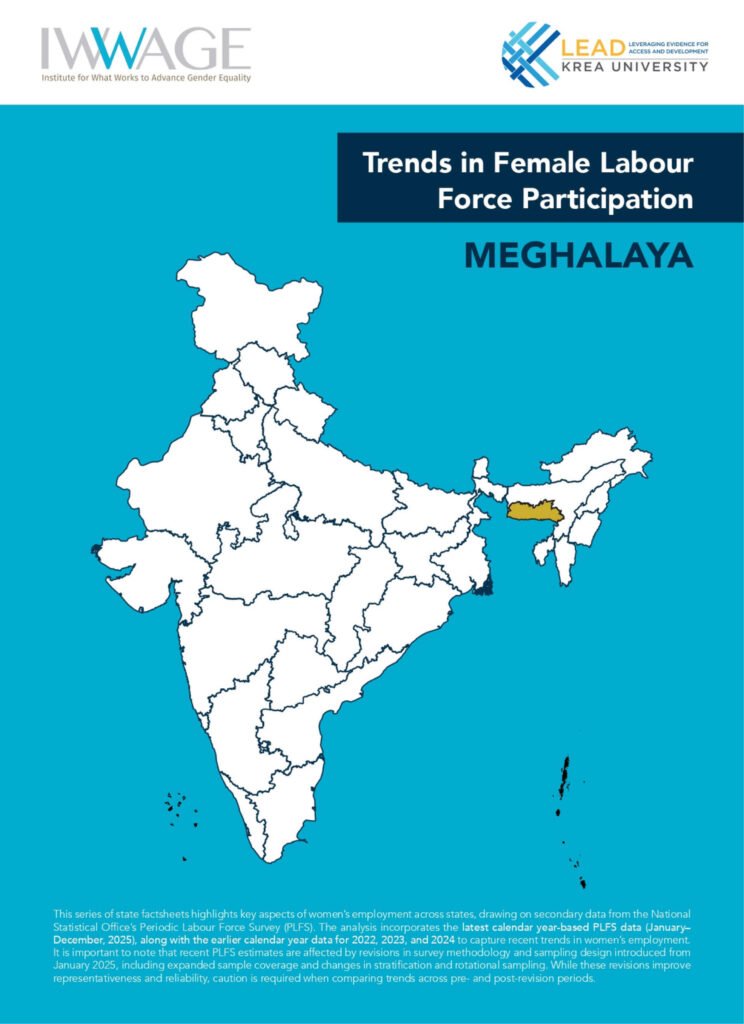
Trends in Female Labour Force Participation in Meghalaya
- August , 2026
- Nabankur Huda, Bidisha Mondal
Meghalaya is a small, hilly state in north-east India with a predominantly rural, agrarian economy and one of the country’s most distinctive social structures. The factsheet explores the trends, opportunities and challenges shaping women’s participation in Meghalaya’s labour market, with a focus on how the state’s social structure and economic transformation influence the nature and quality of women’s work.
Meghalaya is a small, hilly state in north-east India with a predominantly rural, agrarian economy and one of the country’s most distinctive social structures. The factsheet explores the trends, opportunities and challenges shaping women’s participation in Meghalaya’s labour market, with a focus on how the state’s social structure and economic transformation influence the nature and quality of women’s work.
Newsletter (Gender In Focus)
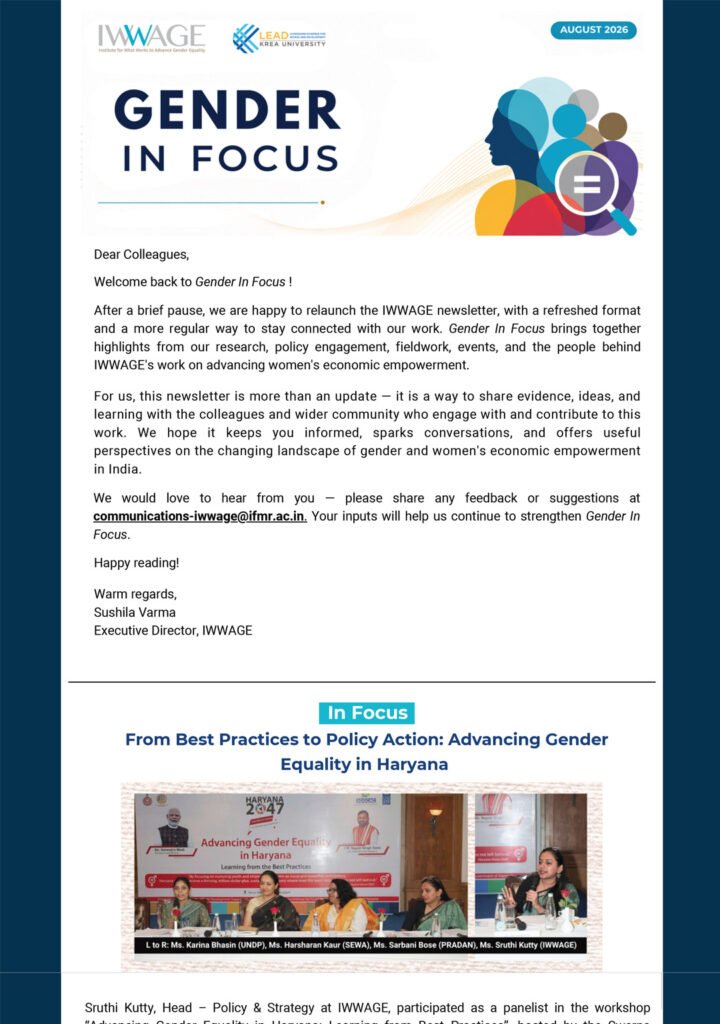
Gender in Focus
- August , 2026
The August 2026 edition features highlights from IWWAGE’s research, policy engagements, fieldwork and knowledge initiatives. It also offers a closer look at emerging trends shaping women’s work and economic participation in India.
The August 2026 edition features highlights from IWWAGE’s research, policy engagements, fieldwork and knowledge initiatives. It also offers a closer look at emerging trends shaping women’s work and economic participation in India.