Samaveshi Aajeevika Yojana
Samaveshi Aajeevika Yojana
BRAC International, through its Ultra-Poor Graduation Initiative (UPGI), is scaling the globally recognised, evidence-based Graduation approach through governments to empower households living in extreme poverty to achieve sustainable economic and social inclusion. The Graduation Approach has demonstrated success across diverse contexts and is widely recognised as one of the most effective models for enabling the most vulnerable households to sustainably move out of poverty.
In India, BRAC International, under its Memorandum of Understanding (MoU) with the National Rural Livelihood Promotion Society (NRLPS), is partnering with the Ministry of Rural Development (MoRD) to support the inclusion of extremely vulnerable households under the Deendayal Antyodaya Yojana–National Rural Livelihoods Mission (DAY-NRLM). The Samaveshi Aajeevika Yojana (SAY) is a national inclusive livelihoods programme under DAY-NRLM that adapts the Graduation approach to provide intensive, sequenced support to these households. As part of this partnership, BRAC is providing technical assistance to support the implementation of SAY in eight states—Chhattisgarh, Karnataka, Maharashtra, Tamil Nadu, Telangana, Andhra Pradesh, Bihar and Himachal Pradesh.
IWWAGE – BRAC Partnership
To support this multi-state initiative, BRAC has partnered with IWWAGE (Initiative for What Works to Advance Gender Equality). Through this collaboration, IWWAGE plays a strategic role in strengthening programme implementation by establishing and managing the National Project Management Unit (NPMU) at the DAY-NRLM, advancing gender integration across programme verticals, and generating evidence through a longitudinal study to assess programme outcomes in two states. The partnership focuses on three key areas:
(1) Establishment and management of the National Project Management Unit (NPMU),
(2) Gender integration across programme implementation, and
(3) Design and implementation of a longitudinal study.
Under this partnership
IWWAGE plays a central role across three key areas:
01 National Project Management Unit (NPMU)
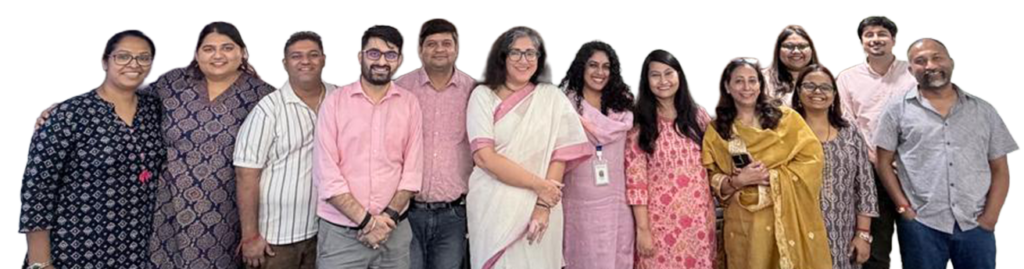
The NPMU serves as the central coordination mechanism for implementing the SAY across the partner states. IWWAGE manages the NPMU and supports the recruitment and deployment of a multidisciplinary team with expertise in gender, project management, livelihoods, climate adaptation, capacity building, monitoring and evaluation, and knowledge management.
Beyond technical oversight, IWWAGE provides comprehensive administrative support to ensure the effective functioning of the NPMU. This centralised structure promotes consistent programme implementation and strengthens coordination between national and state-level institutions across all programme verticals. Through ongoing technical support, strategic planning, and coordination, the NPMU plays a critical role in ensuring quality implementation and effective programme delivery across states.
IWWAGE leads the establishment and management of the NPMU, ensuring:
- Recruitment of a skilled, multidisciplinary team with expertise in gender, livelihoods, climate adaptation, monitoring and evaluation, and capacity building
- Strong operational, HR, and financial systems
- Consistent implementation standards across states
- Effective coordination with state-level institutions
This centralised structure enables efficient programme delivery while ensuring that gender considerations are integrated across all components of the ILP.
02 Gender Integration Across Programme Implementation
Recognising that sustainable poverty reduction requires strengthening women’s agency, decision-making, mobility, and access to opportunities, IWWAGE is leading the programme’s gender integration efforts across all implementation levels. The objective is to ensure that gender is not treated as a standalone component but is systematically embedded across programme design, implementation, capacity building, and monitoring.
As part of this effort, IWWAGE has designed comprehensive gender orientation programmes for all State Project Management Unit (SPMU) teams across five implementation states. These orientations strengthen participants’ understanding of prevailing gender norms, the structural barriers faced by women from extremely vulnerable households, and practical strategies to address these barriers effectively during programme implementation.
Recognising that coaches are the primary interface between the programme and participant households, IWWAGE is also developing and delivering an intensive Gender Training of Trainers (ToT) for coaches. The training equips coaches with the knowledge and practical skills required to engage effectively with women participants and their families, facilitate discussions on gender equality, address restrictive gender norms, and foster supportive environments that enable women’s meaningful participation in livelihood activities.
To further strengthen community-level engagement, IWWAGE is developing simple, user-friendly, visual gender flipcharts that coaches can use during household visits. These tools are designed to facilitate participatory discussions on gender roles, shared household responsibilities, decision-making, women’s agency, mobility, and other issues that influence women’s economic participation and overall well-being.
IWWAGE leads comprehensive gender orientation programmes for State Project Management Units (SPMUs), helping teams:
- Understand gender norms and structural barriers
- Recognise challenges faced by women from ultra-poor households
- Design interventions that promote meaningful participation and inclusion
- Engage households effectively
- Challenge restrictive gender norms
- Encourage shared decision-making and responsibility
To support on-ground engagement, IWWAGE is developing simple, visual gender flipcharts that facilitate discussions on care work, mobility, decision-making, and empowerment during household visits.
03 Longitudinal Study
At the heart of this partnership is a three-year longitudinal evaluation of graduation-based programming under the SAY in select districts and blocks in Maharashtra and Chhattisgarh. This evaluation is designed to capture changes in household-level outcomes among program participants over time through multiple waves of robust survey data collection. The evaluation places a deliberate focus on understanding how impacts are experienced across different social and gender groups, particularly among women and marginalised populations. It assesses progress toward improved livelihood opportunities, increased income, enhanced household economic well-being, inclusive financial inclusion and social protection, and strengthened household resilience. Using a mixed-methods approach that combines quantitative and qualitative evidence, the study generates both accountability-focused results against program targets and deeper insights into differential outcomes for extremely vulnerable households. Currently, the evaluation has completed the baseline survey in Maharashtra and Chhattisgarh and is generating valuable insights from the data.
The evidence generated will inform programme improvements, support policy dialogue, and guide future scale-up efforts across states.
Building Pathways out of Poverty
Together, BRAC and IWWAGE are advancing an inclusive and evidence-driven Graduation Approach that strengthens livelihoods while promoting gender equality and social inclusion. By combining robust programme management, gender-responsive implementation, and rigorous evidence generation, the partnership seeks to improve the well-being of women from the most vulnerable households, strengthen household resilience, and contribute towards creating sustainable pathways out of poverty.