


Publications
Publications
Category
Year
IWWAGE-ISI-BRIEFS
Mobility and Safety of Women
- March , 2021
- Hiya Singh Rajput
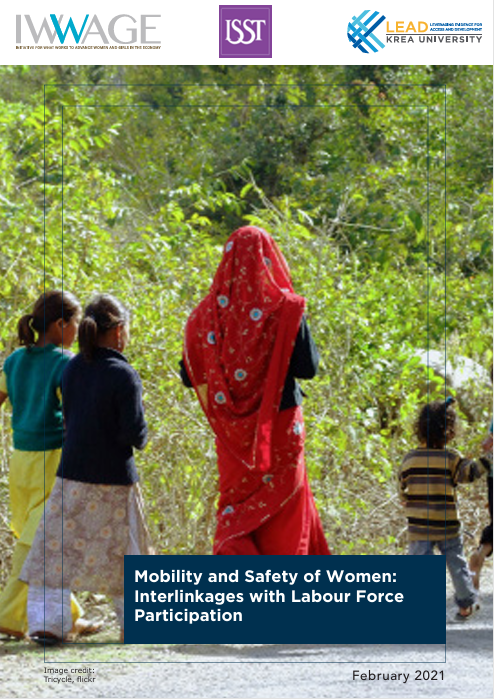
India’s economic growth has not translated into equal economic participation for women. Female labour force participation fell to a historic low of **23.3% in 2017–18**, with only a few countries reporting lower levels. A major barrier is **women’s safety**—fear of sexual violence in public spaces, transport, schools, and workplaces—which restricts mobility and reduces access to education, work, services, and public life. This perceived risk reinforces social norms limiting women’s freedom; for instance, many women require family permission even to visit a health centre. Improving **safe and affordable public transport**, **women-friendly urban infrastructure**, and **inclusive workplace safety laws** can meaningfully enable higher female LFPR.
India’s economic growth has not translated into equal economic participation for women. Female labour force participation fell to a historic low of **23.3% in 2017–18**, with only a few countries reporting lower levels. A major barrier is **women’s safety**—fear of sexual violence in public spaces, transport, schools, and workplaces—which restricts mobility and reduces access to education, work, services, and public life. This perceived risk reinforces social norms limiting women’s freedom; for instance, many women require family permission even to visit a health centre. Improving **safe and affordable public transport**, **women-friendly urban infrastructure**, and **inclusive workplace safety laws** can meaningfully enable higher female LFPR.
IWWAGE-ISI-BRIEFS
Barriers for Women in Public Employment
- March , 2021
- Steven Walker
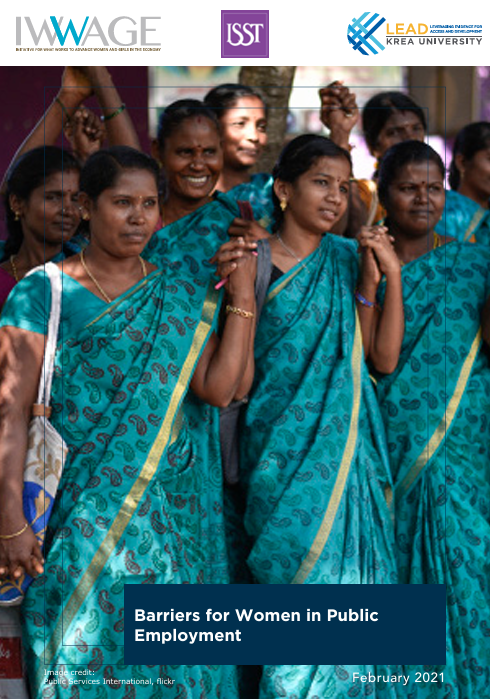
Despite strong growth and better health/economic outcomes since the 1990s, women’s labour force participation in India has stagnated or fallen—reaching 17.5% in 2017–18 (PLFS). Even before Covid-19, most working women were in insecure work: 80%+ were self-employed or casual workers, with under 20% in regular salaried jobs. The public sector is the largest source of formal jobs for women—22.6% of female non-agricultural workers are government-employed (about 27% in rural areas). Women also contribute through under-recognised public roles like Anganwadi workers (ICDS) and bank sakhis (NRLM). However, despite more educated young women being ready to work, structural barriers and reduced public hiring are limiting opportunities. With Covid-19 worsening unemployment and recovery needs, removing barriers to women’s public employment is crucial—both for job creation and wider benefits like better service delivery, stronger social protection, and higher household consumption.
Despite strong growth and better health/economic outcomes since the 1990s, women’s labour force participation in India has stagnated or fallen—reaching 17.5% in 2017–18 (PLFS). Even before Covid-19, most working women were in insecure work: 80%+ were self-employed or casual workers, with under 20% in regular salaried jobs. The public sector is the largest source of formal jobs for women—22.6% of female non-agricultural workers are government-employed (about 27% in rural areas). Women also contribute through under-recognised public roles like Anganwadi workers (ICDS) and bank sakhis (NRLM). However, despite more educated young women being ready to work, structural barriers and reduced public hiring are limiting opportunities. With Covid-19 worsening unemployment and recovery needs, removing barriers to women’s public employment is crucial—both for job creation and wider benefits like better service delivery, stronger social protection, and higher household consumption.
Learning note
Women’s Workforce Participation In India: Statewise Trends
- March , 2021
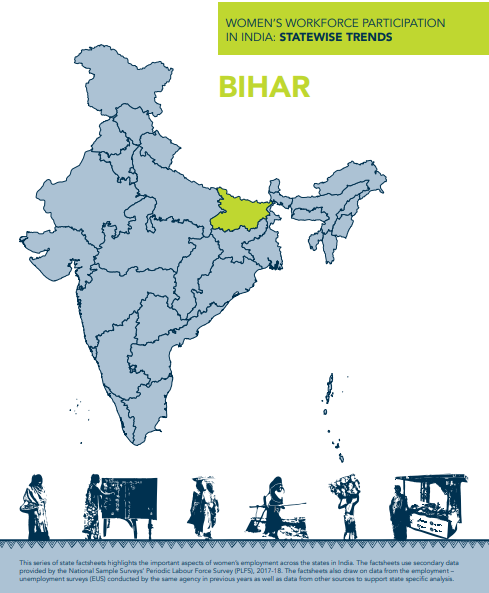
Bihar has the lowest female workforce participation rate (FWPR) among all states at 2.8 percent. The decline in FWPR has been shaper in rural areas as compared to urban areas, pushing a large number of women out of the workforce since 2007-08. With the decline in women workforce, there has been a substantial increase in the share of women in regular employment, in line with the national trend, and a significant decline in the share of self-employed, which is greater than the decline observed at the all India level. Women’s self-employment in Bihar is characterised by high incidence of own account work and low share of unpaid work, in contrast with all India figures.
Bihar has the lowest female workforce participation rate (FWPR) among all states at 2.8 percent. The decline in FWPR has been shaper in rural areas as compared to urban areas, pushing a large number of women out of the workforce since 2007-08. With the decline in women workforce, there has been a substantial increase in the share of women in regular employment, in line with the national trend, and a significant decline in the share of self-employed, which is greater than the decline observed at the all India level. Women’s self-employment in Bihar is characterised by high incidence of own account work and low share of unpaid work, in contrast with all India figures.
Learning note
Women’s Workforce Participation In India: Statewise Trends
- March , 2021
Women’s labourforce participation rates (LFPR) reveals some interesting trends for Maharashtra. As per the figures from the labourforce surveys, the LFPR is significantly higher than the all-India figures, largely driven by higher than average rural employment. The state also shares a decline in self-employment and casual employment and a shift towards regular wage work for both rural and urban women. In Maharashtra the urban areas witnessed a consistent rise in regular wage work of women since 2004-05. More than 60 percent of women are employed as regular workers 70 percent of which is concentrated in the services sector such as education, health and retail. In rural areas, the share of casual workers is considerably higher at around 42 percent, followed by 52 percent in self-employment. The incidence of unpaid family workers among self-employed women exceed 80 percent. While the urban areas show considerable diversity of women workers across occupations and sectors, women in the rural areas remain concentrated as manual workers in agriculture or within construction work.
Women’s labourforce participation rates (LFPR) reveals some interesting trends for Maharashtra. As per the figures from the labourforce surveys, the LFPR is significantly higher than the all-India figures, largely driven by higher than average rural employment. The state also shares a decline in self-employment and casual employment and a shift towards regular wage work for both rural and urban women. In Maharashtra the urban areas witnessed a consistent rise in regular wage work of women since 2004-05. More than 60 percent of women are employed as regular workers 70 percent of which is concentrated in the services sector such as education, health and retail. In rural areas, the share of casual workers is considerably higher at around 42 percent, followed by 52 percent in self-employment. The incidence of unpaid family workers among self-employed women exceed 80 percent. While the urban areas show considerable diversity of women workers across occupations and sectors, women in the rural areas remain concentrated as manual workers in agriculture or within construction work.

Factsheet
Women’s Workforce Participation in India: Statewise Trends
- March , 2021
- Nidhi Gyan Pandey
This factsheet highlights Tamil Nadu’s strong economy, with a GSDP of Rs 18,45,853 crores, and impressive social development. The state ranks third in human development and boasts high female labour force participation rates (rural: 35.1%, urban: 23.6%) along with excellent gender indicators, including a low maternal mortality rate and one of the lowest crime rates against women in India.
This factsheet highlights Tamil Nadu’s strong economy, with a GSDP of Rs 18,45,853 crores, and impressive social development. The state ranks third in human development and boasts high female labour force participation rates (rural: 35.1%, urban: 23.6%) along with excellent gender indicators, including a low maternal mortality rate and one of the lowest crime rates against women in India.
IWWAGE-ISST-BRIEFS
Barriers for Women in Public Employment
- March , 2021
- Steven Walker | Sarojini Ganju Thakur
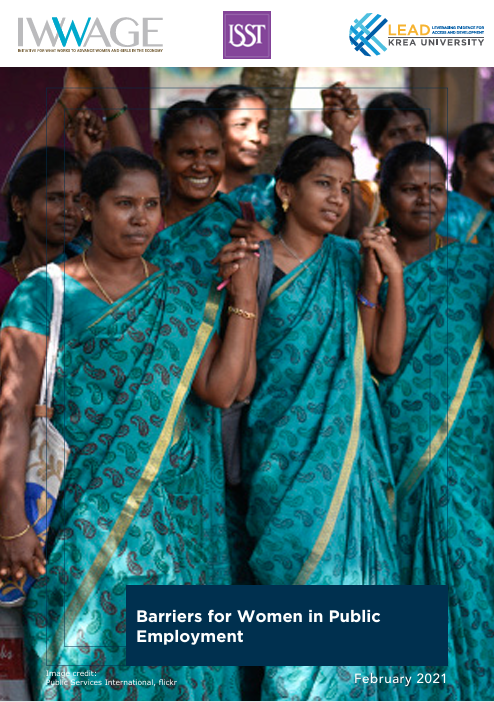
India’s female labour force participation (FLFP) remains among the lowest globally, falling to 17.5% in 2017-18. Despite more women gaining education and work readiness, access to secure jobs-especially in the public sector-remains limited due to structural and social barriers. The public sector is a vital source of formal employment for women, with nearly one in four female non-agricultural workers employed by the government. Yet women still account for just 30% of all government employees and are less likely than men to hold regular salaried roles or access social security benefits. Public employment offers more stability and benefits for women than most sectors, but widening their participation requires targeted reforms. These include: Investing in women’s education and challenging social norms; – Strengthening childcare and basic service infrastructure; – Formalising roles like Anganwadi workers and bank sakhis; – Creating promotion pathways and leadership opportunities; – Filling vacancies with gender-sensitive recruitment practices; – And investing in evidence to inform policy action. Expanding access to public sector jobs can drive economic recovery, reduce gender gaps, and build a more inclusive and resilient workforce.
India’s female labour force participation (FLFP) remains among the lowest globally, falling to 17.5% in 2017-18. Despite more women gaining education and work readiness, access to secure jobs-especially in the public sector-remains limited due to structural and social barriers. The public sector is a vital source of formal employment for women, with nearly one in four female non-agricultural workers employed by the government. Yet women still account for just 30% of all government employees and are less likely than men to hold regular salaried roles or access social security benefits. Public employment offers more stability and benefits for women than most sectors, but widening their participation requires targeted reforms. These include: Investing in women’s education and challenging social norms; – Strengthening childcare and basic service infrastructure; – Formalising roles like Anganwadi workers and bank sakhis; – Creating promotion pathways and leadership opportunities; – Filling vacancies with gender-sensitive recruitment practices; – And investing in evidence to inform policy action. Expanding access to public sector jobs can drive economic recovery, reduce gender gaps, and build a more inclusive and resilient workforce.
Newsletter (Gender In Focus)
Gender in Focus
- March , 2021
- IWWAGE
IWWAGE has partnered with the University of Bath on WorkFREE to test how unconditional cash transfers affect workers in exploitative jobs like waste picking, supported through research over the next 2.5 years. It has also expanded work on gender budgeting and policy solutions—covering gender-responsive financing, urban employment guarantees, post-COVID childcare, and women’s collective responses—while scaling gender resource centres in Madhya Pradesh with Anandi and the State Rural Livelihoods Mission.
IWWAGE has partnered with the University of Bath on WorkFREE to test how unconditional cash transfers affect workers in exploitative jobs like waste picking, supported through research over the next 2.5 years. It has also expanded work on gender budgeting and policy solutions—covering gender-responsive financing, urban employment guarantees, post-COVID childcare, and women’s collective responses—while scaling gender resource centres in Madhya Pradesh with Anandi and the State Rural Livelihoods Mission.
Learning note
Women’s Workforce Participation in India: Statewise Trends
- March , 2021
- Nidhi Gyan Pandey
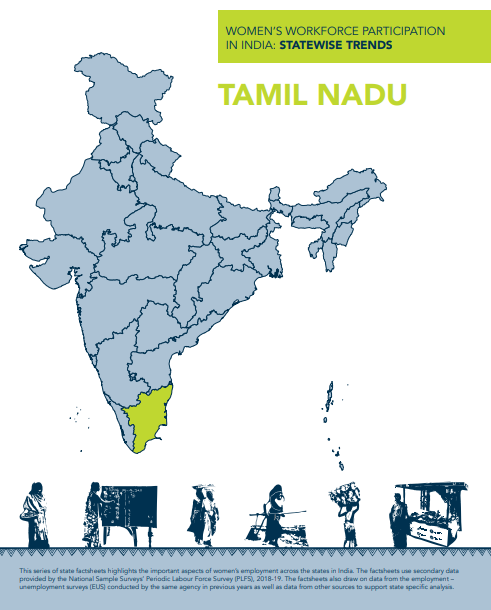
Tamil Nadu, the second-largest economy in India with a GSDP of Rs 18,45,853 crores, is known for combining rapid economic growth with high social development. The state boasts strong public services, ranking third in human development and literacy (96.8%) among all states. Tamil Nadu’s female labour force participation rates (FLFPR) are significantly higher than the national average, with rural FLFPR at 35.1% and urban FLFPR at 23.6%. The state also excels in gender indicators, with a low maternal mortality rate of 66 and the third lowest crime rate against women in the country.
Tamil Nadu, the second-largest economy in India with a GSDP of Rs 18,45,853 crores, is known for combining rapid economic growth with high social development. The state boasts strong public services, ranking third in human development and literacy (96.8%) among all states. Tamil Nadu’s female labour force participation rates (FLFPR) are significantly higher than the national average, with rural FLFPR at 35.1% and urban FLFPR at 23.6%. The state also excels in gender indicators, with a low maternal mortality rate of 66 and the third lowest crime rate against women in the country.
IWWAGE-ISST-BRIEFS
Women’s Entrepreneurship in India: Harnessing the Gender Dividend
- March , 2021
- Sanjana Vijay , Mridulya Narasimhan
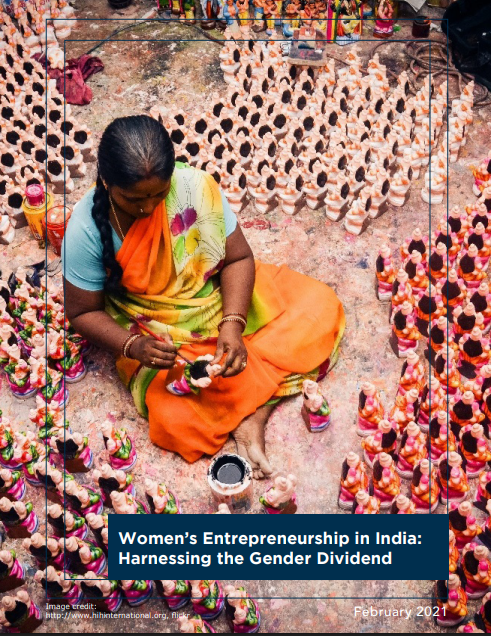
India’s economic growth has largely bypassed its smallest enterprises-particularly those led by women. Despite an increase in the number of micro, small, and medium enterprises (MSMEs), only 21.5% were owned by women as of 2018-19. Even more concerning is the stagnation in growth: between 2010 and 2015, the share of women-led enterprises and their gross value added (GVA) remained static, while the share of workers in these enterprises declined. Women entrepreneurs face layered barriers-from deep-rooted social norms and gender biases to unequal access to education, credit, and networks. For many women, entrepreneurship is not a path to scale but a survivalist response to limited employment opportunities, wage inequality, and inflexible work conditions. India ranked 49th out of 57 countries in the 2020 Mastercard Index of Women Entrepreneurs-a stark reflection of the odds stacked against women in the entrepreneurial landscape. To enable women to thrive as entrepreneurs, we must address structural and cultural challenges. Key recommendations include: – Challenging restrictive gender norms and stereotypes; – Ensuring better access to education and digital literacy; – Expanding affordable and inclusive financing mechanisms; – Creating women-friendly business networks and incubators; – Leveraging technology to connect women to markets, mentorship, and information. Enabling women to realise their entrepreneurial ambitions is not only a matter of equity-it is essential for India’s inclusive and sustainable economic growth.
India’s economic growth has largely bypassed its smallest enterprises-particularly those led by women. Despite an increase in the number of micro, small, and medium enterprises (MSMEs), only 21.5% were owned by women as of 2018-19. Even more concerning is the stagnation in growth: between 2010 and 2015, the share of women-led enterprises and their gross value added (GVA) remained static, while the share of workers in these enterprises declined. Women entrepreneurs face layered barriers-from deep-rooted social norms and gender biases to unequal access to education, credit, and networks. For many women, entrepreneurship is not a path to scale but a survivalist response to limited employment opportunities, wage inequality, and inflexible work conditions. India ranked 49th out of 57 countries in the 2020 Mastercard Index of Women Entrepreneurs-a stark reflection of the odds stacked against women in the entrepreneurial landscape. To enable women to thrive as entrepreneurs, we must address structural and cultural challenges. Key recommendations include: – Challenging restrictive gender norms and stereotypes; – Ensuring better access to education and digital literacy; – Expanding affordable and inclusive financing mechanisms; – Creating women-friendly business networks and incubators; – Leveraging technology to connect women to markets, mentorship, and information. Enabling women to realise their entrepreneurial ambitions is not only a matter of equity-it is essential for India’s inclusive and sustainable economic growth.

IWWAGE-ISST-BRIEFS
Women and Unpaid Work
- March , 2021
- Monika Banerjee , Ahana Chakrabarti
Women’s workforce participation in India has been consistently low-and steadily declining over the last 15 years, as recorded by official surveys like those conducted by the National Sample Survey Office (NSSO) and the Periodic Labour Force Survey (PLFS). However, these numbers fail to capture the full extent of women’s economic contributions, largely because they exclude unpaid work-domestic chores, caregiving, and community roles-that women perform on a daily basis. Feminist scholars have long advocated for the recognition, reduction, and redistribution of unpaid work as essential steps toward achieving gender equality. If the definition of work is expanded to include these invisible activities, it becomes evident that many more women are contributing to the economy than current statistics suggest. The COVID-19 pandemic further exacerbated these inequalities. As homes transformed into sites of both work and survival, women’s unpaid workload increased significantly. A Rapid Assessment Survey conducted by the Institute of Social Studies Trust (ISST) in Delhi found that women in urban informal sectors-such as domestic work, waste picking, street vending, and construction-reported a significant rise in unpaid responsibilities, including childcare, eldercare, and food provisioning. Despite other family members being at home, women continued to shoulder the majority of domestic work, often with little or no help. To build a more inclusive and equitable economy, it is critical to recognise and value unpaid labour and ensure that data and policy frameworks reflect the full spectrum of women’s work.
Women’s workforce participation in India has been consistently low-and steadily declining over the last 15 years, as recorded by official surveys like those conducted by the National Sample Survey Office (NSSO) and the Periodic Labour Force Survey (PLFS). However, these numbers fail to capture the full extent of women’s economic contributions, largely because they exclude unpaid work-domestic chores, caregiving, and community roles-that women perform on a daily basis. Feminist scholars have long advocated for the recognition, reduction, and redistribution of unpaid work as essential steps toward achieving gender equality. If the definition of work is expanded to include these invisible activities, it becomes evident that many more women are contributing to the economy than current statistics suggest. The COVID-19 pandemic further exacerbated these inequalities. As homes transformed into sites of both work and survival, women’s unpaid workload increased significantly. A Rapid Assessment Survey conducted by the Institute of Social Studies Trust (ISST) in Delhi found that women in urban informal sectors-such as domestic work, waste picking, street vending, and construction-reported a significant rise in unpaid responsibilities, including childcare, eldercare, and food provisioning. Despite other family members being at home, women continued to shoulder the majority of domestic work, often with little or no help. To build a more inclusive and equitable economy, it is critical to recognise and value unpaid labour and ensure that data and policy frameworks reflect the full spectrum of women’s work.
Brief
Care and Climate Change
- January , 2026
The brief focuses on bridging feminist economics and climate policy, highlighting gendered care burdens, structural undervaluation of reproductive labour, and the need for transformative interventions like care-responsive adaptation and finance.
The brief focuses on bridging feminist economics and climate policy, highlighting gendered care burdens, structural undervaluation of reproductive labour, and the need for transformative interventions like care-responsive adaptation and finance.
Brief
Measuring Women’s Work: Innovations and Obstacles in the Global South
- January , 2026
The brief examined challenges and innovations in capturing women’s paid and unpaid work in labour statistics. Drawing on experiences from India, South Africa, Latin America, and global systems, panelists highlighted how survey design, classifications, and institutional limits determine what is counted, and what remains invisible
The brief examined challenges and innovations in capturing women’s paid and unpaid work in labour statistics. Drawing on experiences from India, South Africa, Latin America, and global systems, panelists highlighted how survey design, classifications, and institutional limits determine what is counted, and what remains invisible

Report Snapshot
The Changing World of Women’s Work
- December , 2025
- Bidisha Mondal, Prakriti Sharma, Aneek Chowdhury, Anjali S
This study examines women’s participation in India’s platform economy using a mixed-methods approach, combining a survey of 598 platform workers (440 women) across care, domestic, beauty, ride-sharing, and delivery services with qualitative interviews. While platform work offers new entry points and flexibility, it often mirrors and deepens the precarity of informal work, limiting its potential for women’s empowerment. Persistent challenges include income instability, high entry and platform costs, limited social protection, unsafe conditions, and reinforced gender inequalities. Meaningful progress requires coordinated action by policymakers, platforms, and worker collectives to ensure fair earnings, social security, gender-sensitive systems, and effective grievance redressal
This study examines women’s participation in India’s platform economy using a mixed-methods approach, combining a survey of 598 platform workers (440 women) across care, domestic, beauty, ride-sharing, and delivery services with qualitative interviews. While platform work offers new entry points and flexibility, it often mirrors and deepens the precarity of informal work, limiting its potential for women’s empowerment. Persistent challenges include income instability, high entry and platform costs, limited social protection, unsafe conditions, and reinforced gender inequalities. Meaningful progress requires coordinated action by policymakers, platforms, and worker collectives to ensure fair earnings, social security, gender-sensitive systems, and effective grievance redressal

Brief
Women’s Work and AI-Unlocking Potential, Bridging the Divide
- December , 2025
- Sharati Roy, Dr. Mahima Taneja
AI is not neutral in how it’s designed or deployed. It is reshaping labour markets, with the biggest gains when it complements human skills rather than replaces them (ILO, 2025). While AI can improve efficiency and decision-making in sectors like healthcare, finance, and education, it also risks job losses and deeper inequalities. Outcomes will depend on whether AI drives automation or augmentation. In India—where Digital Public Infrastructure, data expansion, and the gig economy are growing rapidly—this brief explores women’s opportunities in AI/data value-chain work and AI-augmented livelihoods to support economic empowerment.
AI is not neutral in how it’s designed or deployed. It is reshaping labour markets, with the biggest gains when it complements human skills rather than replaces them (ILO, 2025). While AI can improve efficiency and decision-making in sectors like healthcare, finance, and education, it also risks job losses and deeper inequalities. Outcomes will depend on whether AI drives automation or augmentation. In India—where Digital Public Infrastructure, data expansion, and the gig economy are growing rapidly—this brief explores women’s opportunities in AI/data value-chain work and AI-augmented livelihoods to support economic empowerment.
Report
The Changing World of Women’s Work
- December , 2025
- Bidisha Mondal, Prakriti Sharma, Aneek Chowdhury, Anjali S
This study examines women’s participation in India’s platform economy using a mixed-methods approach, combining a survey of 598 platform workers (440 women) across care, domestic, beauty, ride-sharing, and delivery services with qualitative interviews. While platform work offers new entry points and flexibility, it often mirrors and deepens the precarity of informal work, limiting its potential for women’s empowerment. Persistent challenges include income instability, high entry and platform costs, limited social protection, unsafe conditions, and reinforced gender inequalities. Meaningful progress requires coordinated action by policymakers, platforms, and worker collectives to ensure fair earnings, social security, gender-sensitive systems, and effective grievance redressal
This study examines women’s participation in India’s platform economy using a mixed-methods approach, combining a survey of 598 platform workers (440 women) across care, domestic, beauty, ride-sharing, and delivery services with qualitative interviews. While platform work offers new entry points and flexibility, it often mirrors and deepens the precarity of informal work, limiting its potential for women’s empowerment. Persistent challenges include income instability, high entry and platform costs, limited social protection, unsafe conditions, and reinforced gender inequalities. Meaningful progress requires coordinated action by policymakers, platforms, and worker collectives to ensure fair earnings, social security, gender-sensitive systems, and effective grievance redressal

Brief
Impact of Social Norms on Women’s Economic Empowerment in India
- November , 2025
- Mridusmita Bordoloi, Surabhi Awasthi, Sharati Roy
Women’s Economic Empowerment (WEE) refers to women’s access to economic opportunities, resources, decent work, and the ability to make independent economic choices. It is both a process and an outcome that strengthens individual agency and supports inclusive growth. In countries like India, WEE is constrained not only by structural gaps—such as inadequate care infrastructure, poor connectivity, and limited skills access—but also by deeply rooted gender norms that shape women’s roles in society.
Women’s Economic Empowerment (WEE) refers to women’s access to economic opportunities, resources, decent work, and the ability to make independent economic choices. It is both a process and an outcome that strengthens individual agency and supports inclusive growth. In countries like India, WEE is constrained not only by structural gaps—such as inadequate care infrastructure, poor connectivity, and limited skills access—but also by deeply rooted gender norms that shape women’s roles in society.