


Assam has seen a sharp rise in female labour force participation since 2021–22, now above the national average (50% vs 42% in PLFS 2023–24). However, the 2022–23 gender gap appears distorted due to an NSSO weighting error in a few villages, which led to underreporting of female participation at district, state, and national levels. In parallel, pro-women initiatives such as Sarothi (interest-subsidised loans) and PMKVY 2.0 (industry-relevant skilling) are believed to have supported this improvement. Future analysis will use corrected PLFS data to better track trends and understand the drivers of rising female employment in Assam.
Publications
Publications
Category
Year
Working Paper
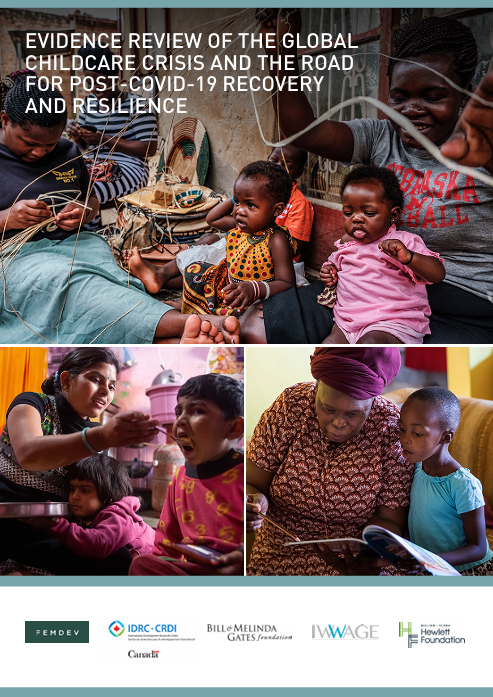
Evidence Review of the Global Childcare Crisis and the Road for post COVID- 19 Recovery and Resilience
- March , 2021
- Kate Grantham, Leva Rouhani and Neelanjana Gupta
A year into the pandemic, COVID-19 has severely reversed progress on women’s livelihoods by intensifying unpaid care work and triggering a global childcare crisis. With widespread school closures and limited childcare services, women—especially those in low-income, informal, rural, or marginalized groups—have faced rising time burdens, job losses, and reduced labour force participation. Female-dominated childcare services have also been hit hard, reducing both access to care and employment opportunities. Despite its central role in supporting households and economic growth, childcare remains undervalued and underfunded. Urgent public, private, and donor action is needed to address unpaid care, rebuild childcare services, and integrate childcare into inclusive COVID-19 recovery efforts.
A year into the pandemic, COVID-19 has severely reversed progress on women’s livelihoods by intensifying unpaid care work and triggering a global childcare crisis. With widespread school closures and limited childcare services, women—especially those in low-income, informal, rural, or marginalized groups—have faced rising time burdens, job losses, and reduced labour force participation. Female-dominated childcare services have also been hit hard, reducing both access to care and employment opportunities. Despite its central role in supporting households and economic growth, childcare remains undervalued and underfunded. Urgent public, private, and donor action is needed to address unpaid care, rebuild childcare services, and integrate childcare into inclusive COVID-19 recovery efforts.
Learning note
IWWAGE- ISST Briefs
- February , 2021
- Ayushi Gupta, Hiya Singh Rajput, Monika Banerjee, Mridulya Narasimhan, Sanjana Vijay, Shiney Chakraborty, Steven Walker
The series of research brief presented below identifies the barriers to women’s labourforce participation and highlights each issue in a separate brief based on available evidence. This is a collaborative series between IWWAGE and ISST. The briefs have been prepared by IWWAGE and ISST team members and reviewed by an internal team comprising of Ratna Sudarshan, Aasha Kapur Mehta, Sona Mitra and Soumya Kapoor Mehta. Mobility and Safety of Women: Interlinkages with Labour Force Participation One of the major factors limiting the participation of women in the labour force is concern for their safety. These include fear of sexual violence in streets, in and around public transportation, schools, workplaces and other public and private spaces. This reality decreases women’s and girls freedom of mobility by impacting their ability to participate in school, work and public life; access to essential services; and enjoyment of cultural and recreational opportunities. In particular, ensuring a safe city and a safe workplace by investing in safe and affordable modes of public transportation, infrastructural additions to make cities more accessible for women, and inclusive legal provisions for safety at work can be important enablers of female LFPR. This policy brief attempts to describe the issues underpinning women’s safety as a barrier to their participation in the labour force; and shares recommendations to ensure that safety does not act as a barrier to mobility and the ability to access services that might improve life prospects and opportunities for women and girls. Women’s Entrepreneurship in India: Harnessing the Gender Dividend. India’s economic growth story has eluded a large section of the micro, small and medium enterprises (MSMEs) in fact the smallest of the enterprises led by women. This is evident in the fact that, despite the growing number of MSMEs in India, as of 2018-19, only one in every five enterprises was owned by women (21.5 per cent). Not only is women’s representation across sectors low, the growth of existing enterprises also seems to have stagnated over time. This brief seeks to highlight the key challenges to women’s entrepreneurship in India, including social norms and biases, lack of education, unequal opportunities for affordable financing, and limited networking opportunities which prevent them from exploring their full entrepreneurial potential. It also seeks to document some of the key recommendations to address these social, economic and technological constraints. Financial Inclusion and Female Labour Force Participation The rapid growth in India over the past decade has been coupled with a steady decline in female labour force participation. Despite rising GDPs, improvements in higher education attainment as well as fall in fertility rates, India’s female labour force participation rate (LFPR) has continued to drop. This has been further aggravated by job stagnation and high unemployment rates in recent years which have impacted women disproportionately and may worsen due to the ongoing pandemic. In India, existing societal norms, low literacy levels as well as lack of access to fixed assets further excludes women from the formal financial structure, thereby hampering their socio-economic growth. The brief analyses the barriers faced by women while accessing financial services and products, the lack of gender- specific policies, discrimination towards women entrepreneurs and geographic distance to financial institutions. Attempt is also made to look at policy interventions, and schemes designed to address some of the supply side barriers. Barriers for Women in Public Employment Despite high economic growth and improved health and economic outcomes since the 1990s, female labour force participation (FLFP) has stagnated or declined in India, falling to 17.5 per cent in 2017-18 according to the Periodic Labour Force Survey (PLFS). For working women, the public sector is the largest provider of formal or regular salaried jobs in the Indian economy. Given stagnating FLFP according to official data, the severe impacts of COVID-19 on unemployment, and the necessity to boost economic growth and recovery, removing barriers to women’s opportunities in public employment is more important than ever. The brief looks at the role of women’s public employment prospects in not only creating needed jobs, but delivering indirect benefits such as improved public service delivery, greater social protection for women, and boosts to consumption from increased household incomes. Addressing them will help guarantee the right to safe working conditions, adequate compensation, and deserved social protections that will benefit women workers and the economy at large. Women in the Indian Informal Economy Globally, two billion of population aged 15 years and above works in the informal economy, representing 61.2 per cent of world employment. Informal employment is a greater source of employment for men (63 per cent) than women (58.1 per cent). In India, although the absolute numbers are lower, a slightly higher percentage of women workers are in informal employment as compared to men. In India, women are almost always involved in some kind of productive and/or reproductive activity, but much of their work is invisible, and they are largely employed in low skilled, low paid informal work with little or no social security, with a consolidation of caste or religion-based disadvantages, even within a larger context of women’s marginalisation. Within this informal workforce with its persistent gender-based occupational segregation, the COVID-19 pandemic is intensifying pre-existing inequalities, exposing vulnerabilities across every sphere, from health to the economy, security to social protection. The brief analyses gender dimension of informality, its implications and captures the gendered experiences of informal workers during the lockdown and the post-lockdown period. Women and Unpaid Work Women’s workforce participation rates (WPR) in India, as measured by the National Sample Survey Organisation (NSSO), have been low and consistently declining over the last 15 years or so. An important part of the reason for this is women’s unpaid and unaccounted work. Time is spent on activities which remain excluded from the radar of large sample surveys on employment. Feminist scholars have been arguing for recognition, reduction and redistribution of unpaid activities to be able to move towards gender equality. With the transformation of the household into the site of work and livelihood due to the COVID- 19 pandemic, power relations are seen manifesting both within and outside the household, forcing women to spend hours in backbreaking work, often not even recognised as work in surveys or discourses. The brief assesses the impact of the pandemic and the consequent lockdown on women workers in informal sectors and shares recommendations to recognise and redistribute unpaid work.
The series of research brief presented below identifies the barriers to women’s labourforce participation and highlights each issue in a separate brief based on available evidence. This is a collaborative series between IWWAGE and ISST. The briefs have been prepared by IWWAGE and ISST team members and reviewed by an internal team comprising of Ratna Sudarshan, Aasha Kapur Mehta, Sona Mitra and Soumya Kapoor Mehta. Mobility and Safety of Women: Interlinkages with Labour Force Participation One of the major factors limiting the participation of women in the labour force is concern for their safety. These include fear of sexual violence in streets, in and around public transportation, schools, workplaces and other public and private spaces. This reality decreases women’s and girls freedom of mobility by impacting their ability to participate in school, work and public life; access to essential services; and enjoyment of cultural and recreational opportunities. In particular, ensuring a safe city and a safe workplace by investing in safe and affordable modes of public transportation, infrastructural additions to make cities more accessible for women, and inclusive legal provisions for safety at work can be important enablers of female LFPR. This policy brief attempts to describe the issues underpinning women’s safety as a barrier to their participation in the labour force; and shares recommendations to ensure that safety does not act as a barrier to mobility and the ability to access services that might improve life prospects and opportunities for women and girls. Women’s Entrepreneurship in India: Harnessing the Gender Dividend. India’s economic growth story has eluded a large section of the micro, small and medium enterprises (MSMEs) in fact the smallest of the enterprises led by women. This is evident in the fact that, despite the growing number of MSMEs in India, as of 2018-19, only one in every five enterprises was owned by women (21.5 per cent). Not only is women’s representation across sectors low, the growth of existing enterprises also seems to have stagnated over time. This brief seeks to highlight the key challenges to women’s entrepreneurship in India, including social norms and biases, lack of education, unequal opportunities for affordable financing, and limited networking opportunities which prevent them from exploring their full entrepreneurial potential. It also seeks to document some of the key recommendations to address these social, economic and technological constraints. Financial Inclusion and Female Labour Force Participation The rapid growth in India over the past decade has been coupled with a steady decline in female labour force participation. Despite rising GDPs, improvements in higher education attainment as well as fall in fertility rates, India’s female labour force participation rate (LFPR) has continued to drop. This has been further aggravated by job stagnation and high unemployment rates in recent years which have impacted women disproportionately and may worsen due to the ongoing pandemic. In India, existing societal norms, low literacy levels as well as lack of access to fixed assets further excludes women from the formal financial structure, thereby hampering their socio-economic growth. The brief analyses the barriers faced by women while accessing financial services and products, the lack of gender- specific policies, discrimination towards women entrepreneurs and geographic distance to financial institutions. Attempt is also made to look at policy interventions, and schemes designed to address some of the supply side barriers. Barriers for Women in Public Employment Despite high economic growth and improved health and economic outcomes since the 1990s, female labour force participation (FLFP) has stagnated or declined in India, falling to 17.5 per cent in 2017-18 according to the Periodic Labour Force Survey (PLFS). For working women, the public sector is the largest provider of formal or regular salaried jobs in the Indian economy. Given stagnating FLFP according to official data, the severe impacts of COVID-19 on unemployment, and the necessity to boost economic growth and recovery, removing barriers to women’s opportunities in public employment is more important than ever. The brief looks at the role of women’s public employment prospects in not only creating needed jobs, but delivering indirect benefits such as improved public service delivery, greater social protection for women, and boosts to consumption from increased household incomes. Addressing them will help guarantee the right to safe working conditions, adequate compensation, and deserved social protections that will benefit women workers and the economy at large. Women in the Indian Informal Economy Globally, two billion of population aged 15 years and above works in the informal economy, representing 61.2 per cent of world employment. Informal employment is a greater source of employment for men (63 per cent) than women (58.1 per cent). In India, although the absolute numbers are lower, a slightly higher percentage of women workers are in informal employment as compared to men. In India, women are almost always involved in some kind of productive and/or reproductive activity, but much of their work is invisible, and they are largely employed in low skilled, low paid informal work with little or no social security, with a consolidation of caste or religion-based disadvantages, even within a larger context of women’s marginalisation. Within this informal workforce with its persistent gender-based occupational segregation, the COVID-19 pandemic is intensifying pre-existing inequalities, exposing vulnerabilities across every sphere, from health to the economy, security to social protection. The brief analyses gender dimension of informality, its implications and captures the gendered experiences of informal workers during the lockdown and the post-lockdown period. Women and Unpaid Work Women’s workforce participation rates (WPR) in India, as measured by the National Sample Survey Organisation (NSSO), have been low and consistently declining over the last 15 years or so. An important part of the reason for this is women’s unpaid and unaccounted work. Time is spent on activities which remain excluded from the radar of large sample surveys on employment. Feminist scholars have been arguing for recognition, reduction and redistribution of unpaid activities to be able to move towards gender equality. With the transformation of the household into the site of work and livelihood due to the COVID- 19 pandemic, power relations are seen manifesting both within and outside the household, forcing women to spend hours in backbreaking work, often not even recognised as work in surveys or discourses. The brief assesses the impact of the pandemic and the consequent lockdown on women workers in informal sectors and shares recommendations to recognise and redistribute unpaid work.
IWWAGE-ISST-BRIEFS
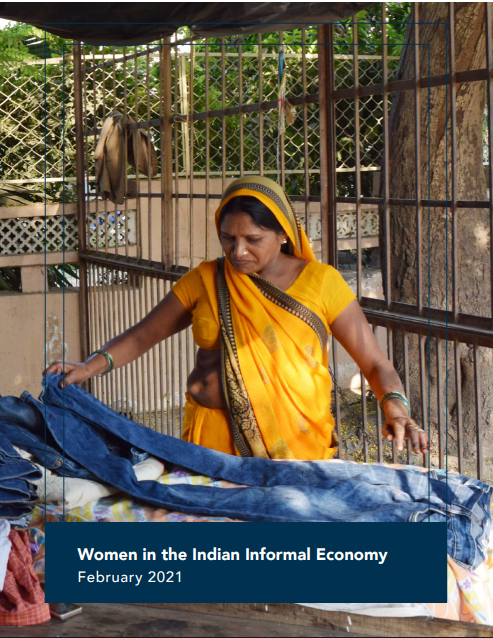
Women in the Indian Informal Economy
- March , 2021
- Shiney Chakraborty
Globally, the informal economy employs over two billion people aged 15 and above-accounting for 61.2 per cent of total employment. In India, a slightly higher proportion of women than men are engaged in informal employment, despite the absolute numbers being lower. Informality often reflects a lack of socio-economic development and education, with workers possessing limited or no formal qualifications being more vulnerable to informal work. In India, women are extensively engaged in productive and reproductive activities, yet much of this labour remains invisible. They are concentrated in low-skilled, low-paid informal jobs with minimal or no social protection-working as domestic workers, self-employed home-based workers, or in other precarious roles. These challenges are further compounded by caste- and religion-based discrimination, revealing the layered nature of women’s marginalisation. The COVID-19 pandemic exacerbated existing gender inequalities within the informal sector. With the collapse of livelihoods during the lockdown, women bore a disproportionate burden of job losses and increased household responsibilities. The economic shock reinforced pre-existing gaps in employment, wages, and access to social security. To address these inequities, the following policy recommendations are key: – Expand employment opportunities through direct public investment and job generation, including reservation for women in these initiatives. – Improve working conditions in the informal sector by recognising all types of work (including home-based), enforcing minimum wages, and reducing gender wage gaps. – Strengthen access to social protection, especially old-age pensions and healthcare, including occupational health services for women in often-overlooked sectors. – Invest in gender-sensitive infrastructure, such as safe public transport, crèche facilities, and accessible toilets. – Support collective organising among informal women workers to strengthen their bargaining power and representation. Addressing informality through a gendered lens is crucial for building an inclusive and equitable economy.
Globally, the informal economy employs over two billion people aged 15 and above-accounting for 61.2 per cent of total employment. In India, a slightly higher proportion of women than men are engaged in informal employment, despite the absolute numbers being lower. Informality often reflects a lack of socio-economic development and education, with workers possessing limited or no formal qualifications being more vulnerable to informal work. In India, women are extensively engaged in productive and reproductive activities, yet much of this labour remains invisible. They are concentrated in low-skilled, low-paid informal jobs with minimal or no social protection-working as domestic workers, self-employed home-based workers, or in other precarious roles. These challenges are further compounded by caste- and religion-based discrimination, revealing the layered nature of women’s marginalisation. The COVID-19 pandemic exacerbated existing gender inequalities within the informal sector. With the collapse of livelihoods during the lockdown, women bore a disproportionate burden of job losses and increased household responsibilities. The economic shock reinforced pre-existing gaps in employment, wages, and access to social security. To address these inequities, the following policy recommendations are key: – Expand employment opportunities through direct public investment and job generation, including reservation for women in these initiatives. – Improve working conditions in the informal sector by recognising all types of work (including home-based), enforcing minimum wages, and reducing gender wage gaps. – Strengthen access to social protection, especially old-age pensions and healthcare, including occupational health services for women in often-overlooked sectors. – Invest in gender-sensitive infrastructure, such as safe public transport, crèche facilities, and accessible toilets. – Support collective organising among informal women workers to strengthen their bargaining power and representation. Addressing informality through a gendered lens is crucial for building an inclusive and equitable economy.
IWWAGE-ISI-BRIEFS
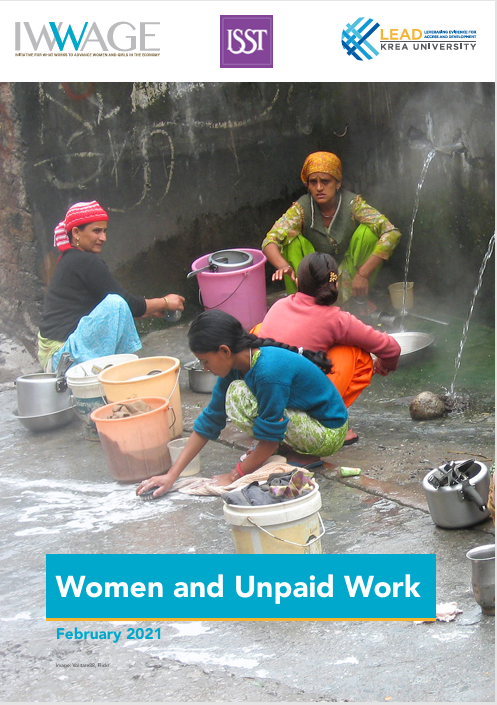
Women and Unpaid Work
- February , 2021
- Monika Bannerjee
Women’s workforce participation in India, as captured by NSSO surveys, has been low and declining for around 15 years, largely because a major share of women’s labour is **unpaid and not counted**. Much of women’s time goes into activities that employment surveys (earlier NSSO, now PLFS) often exclude, which leads to systematic underestimation of women’s work. Feminist scholars argue for **recognition, reduction, and redistribution** of unpaid work to advance gender equality. If “work” were defined more broadly to include these activities, far more women would be seen as working yet current data continues to **invisibilise** their multiple economic contributions.
Women’s workforce participation in India, as captured by NSSO surveys, has been low and declining for around 15 years, largely because a major share of women’s labour is **unpaid and not counted**. Much of women’s time goes into activities that employment surveys (earlier NSSO, now PLFS) often exclude, which leads to systematic underestimation of women’s work. Feminist scholars argue for **recognition, reduction, and redistribution** of unpaid work to advance gender equality. If “work” were defined more broadly to include these activities, far more women would be seen as working yet current data continues to **invisibilise** their multiple economic contributions.
IWWAGE-ISI-BRIEFS
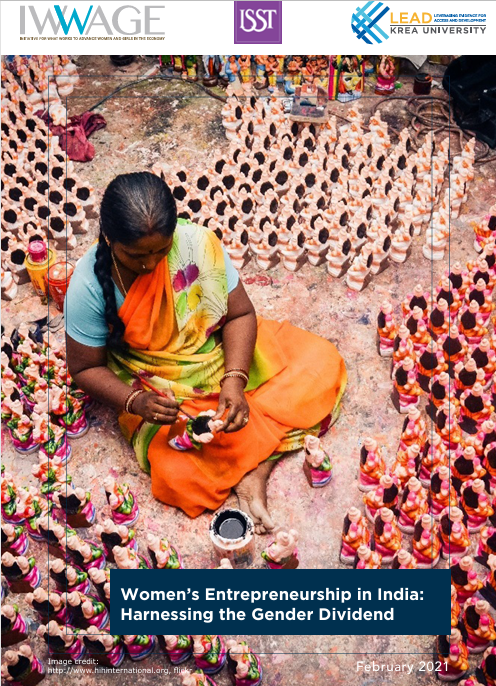
Women’s Entrepreneurship in India: Harnessing the Gender Dividend
- February , 2021
- Sanjana Vijay
Women-led micro and small enterprises have benefited the least from India’s growth. Despite a rising number of MSMEs, **only 21.5%** were women-owned in **2018–19**. Growth has also stagnated: **NSS 2015** estimates show that between **2010 and 2015**, the share of women-led enterprises and their **GVA** did not rise, and their share of workers fell from **18% to 16%**. India also ranked **49th out of 57** in the **2020 Mastercard Index of Women Entrepreneurs**, reflecting persistent barriers in the ecosystem. Limited opportunities due to inflexible work, wage gaps, and constrained job options push many women toward subsistence, “survivalist” entrepreneurship. The brief outlines key constraints—**social norms and bias, low education, limited access to affordable finance, and weak networks**—and compiles recommendations to address these social, economic, and technological barriers.
Women-led micro and small enterprises have benefited the least from India’s growth. Despite a rising number of MSMEs, **only 21.5%** were women-owned in **2018–19**. Growth has also stagnated: **NSS 2015** estimates show that between **2010 and 2015**, the share of women-led enterprises and their **GVA** did not rise, and their share of workers fell from **18% to 16%**. India also ranked **49th out of 57** in the **2020 Mastercard Index of Women Entrepreneurs**, reflecting persistent barriers in the ecosystem. Limited opportunities due to inflexible work, wage gaps, and constrained job options push many women toward subsistence, “survivalist” entrepreneurship. The brief outlines key constraints—**social norms and bias, low education, limited access to affordable finance, and weak networks**—and compiles recommendations to address these social, economic, and technological barriers.
IWWAGE-ISI-BRIEFS
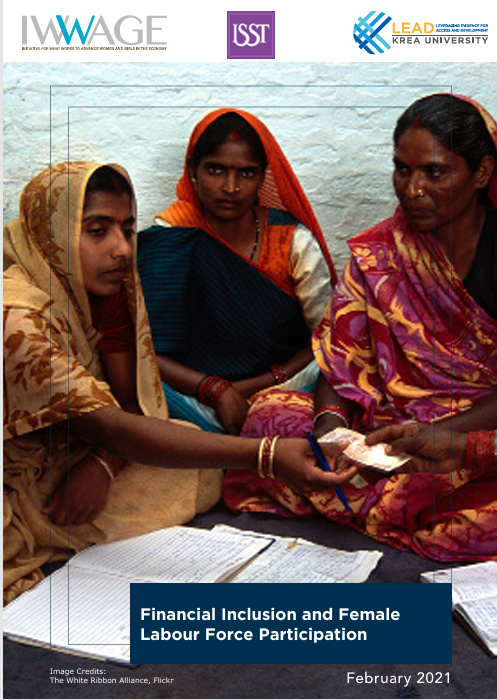
Financial Inclusion and FLFP
- February , 2021
- Ayushi Gupta
India’s rapid economic growth has coincided with a steady decline in women’s labour force participation, despite higher education gains and falling fertility. Recent job stagnation and high unemployment have hit women harder and may worsen with the pandemic. The decline varies by state, with rural areas seeing a sharper fall than urban—though urban women have also become vulnerable during the pandemic because many work in informal, low-wage jobs with limited social protection. While this “growth but falling LFPR” paradox is well-studied, a less explored angle is financial inclusion: despite expansion of formal financial services, women still face a large access gap versus men, especially in South Asia. In India, social norms, low literacy, and limited asset ownership further restrict women’s access to formal finance, limiting their economic and social mobility.
India’s rapid economic growth has coincided with a steady decline in women’s labour force participation, despite higher education gains and falling fertility. Recent job stagnation and high unemployment have hit women harder and may worsen with the pandemic. The decline varies by state, with rural areas seeing a sharper fall than urban—though urban women have also become vulnerable during the pandemic because many work in informal, low-wage jobs with limited social protection. While this “growth but falling LFPR” paradox is well-studied, a less explored angle is financial inclusion: despite expansion of formal financial services, women still face a large access gap versus men, especially in South Asia. In India, social norms, low literacy, and limited asset ownership further restrict women’s access to formal finance, limiting their economic and social mobility.
Learning note
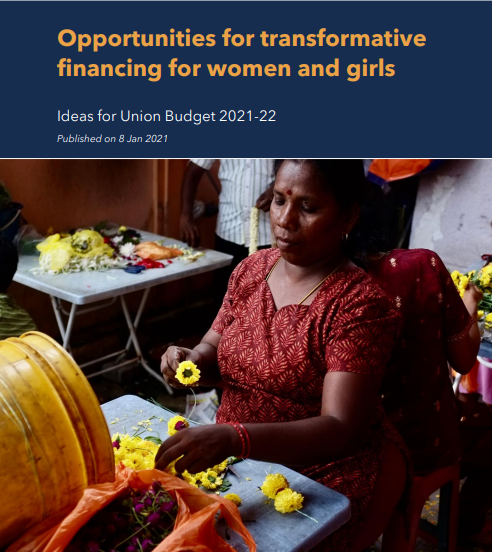
Opportunities for Transformative Financing for Women and Girls
- January , 2021
This paper draws on a pre-budget consultation hosted by IWWAGE and The Quantum Hub (TQH) on 1 October 2020, ‘Transformative financing for Gender Equality in a COVID-19 context’ to inform the Union Budget 2021-22. The aim of the consultation was to identify and amplify the needs of millions of women and girls whose lives have been disrupted and severely affected because of the pandemic, but also account for the disadvantages and inequities that existed even before COVID-19. IWWAGE invited experts1 from academia, civil society, NGOs, and donor bodies, who have been actively advocating for transformative financing for gender equality in India. These experts shared their insights from current and past experiences to shape an actionable agenda to improve the lives of women and girls in the current context. IWWAGE, like some of the experts invited for the consultation, is part of the Broad-Based Committee on Gender Budgeting and Analysis that has been set up by the Ministry for Women and Child Development (MWCD). We used this opportunity to provide suggestions to support the gender responsive budgeting efforts of MWCD and that of other relevant ministries, and also shared these with the Ministry of Finance in response to their request for ideas for Union Budget 2021-22. We also aim to share insights from this consultation among key decision makers, relevant line ministries and departments, and to a wider audience engaged in shaping the agenda on advancing gender equality and women’s economic empowerment in India. This paper has been jointly developed by The Quantum Hub (TQH) and IWWAGE.
This paper draws on a pre-budget consultation hosted by IWWAGE and The Quantum Hub (TQH) on 1 October 2020, ‘Transformative financing for Gender Equality in a COVID-19 context’ to inform the Union Budget 2021-22. The aim of the consultation was to identify and amplify the needs of millions of women and girls whose lives have been disrupted and severely affected because of the pandemic, but also account for the disadvantages and inequities that existed even before COVID-19. IWWAGE invited experts1 from academia, civil society, NGOs, and donor bodies, who have been actively advocating for transformative financing for gender equality in India. These experts shared their insights from current and past experiences to shape an actionable agenda to improve the lives of women and girls in the current context. IWWAGE, like some of the experts invited for the consultation, is part of the Broad-Based Committee on Gender Budgeting and Analysis that has been set up by the Ministry for Women and Child Development (MWCD). We used this opportunity to provide suggestions to support the gender responsive budgeting efforts of MWCD and that of other relevant ministries, and also shared these with the Ministry of Finance in response to their request for ideas for Union Budget 2021-22. We also aim to share insights from this consultation among key decision makers, relevant line ministries and departments, and to a wider audience engaged in shaping the agenda on advancing gender equality and women’s economic empowerment in India. This paper has been jointly developed by The Quantum Hub (TQH) and IWWAGE.
Report
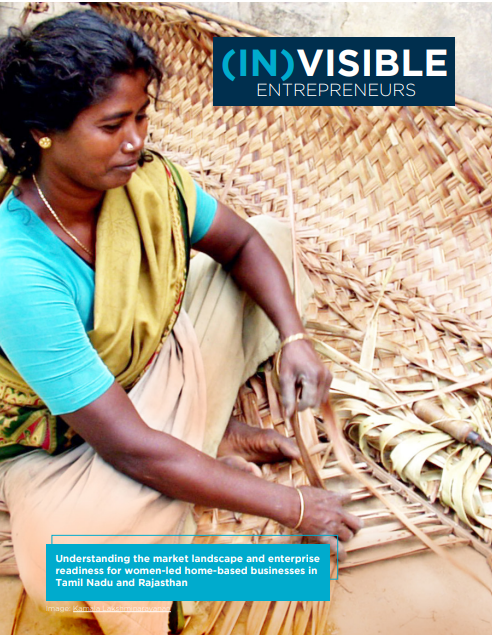
Understanding the Market Landscape and Enterprise Readiness for Women-led Home-based Businesses
- January , 2021
- Rigzom Wangchuk , Mridulya Narasimhan , M P Karthick
Women entrepreneurs contribute to the Indian economy in terms of GDP and employment. Despite this, they face gender specific barriers in labour force participation, such as, market, mobility, time, and credit constraints. These factors have been the driving forces behind the emergence of home-based businesses led by women especially in the informal sector. As a part of IWWAGE’s strategic vision to facilitate women’s economic empowerment through an evidence-based approach, Part 1 of the study aims to map the market landscape for home-based handicraft and handloom enterprises led by women, and assess their readiness. The subsequent study (Part 2) will look to answer critical questions related to credit access, and alternatives to existing credit scoring mechanisms. To capture a granular perspective on the state of market access and supply chain linkages, 800 home-based women entrepreneurs were surveyed across Rajasthan and Tamil Nadu. The study sheds light on the need for two approaches when designing policy interventions for improving the market landscape of female entrepreneurs. The first is the need for a facilitative and enabling ecosystem for home-based entrepreneurs because the market landscape itself lacks structure and formality with significant variations across the two states. Second, women entrepreneurs should not be approached as a singular segment but instead, need to be segmented according to their nuanced needs and strengths. A targeted approach through looking at personas or the type of entrepreneurs could be a great beginning. Based on insights from the survey, a diagnostic policy framework Business Readiness Scorecard for Women (WBRS) has been developed to identify priority areas for intervention.
Women entrepreneurs contribute to the Indian economy in terms of GDP and employment. Despite this, they face gender specific barriers in labour force participation, such as, market, mobility, time, and credit constraints. These factors have been the driving forces behind the emergence of home-based businesses led by women especially in the informal sector. As a part of IWWAGE’s strategic vision to facilitate women’s economic empowerment through an evidence-based approach, Part 1 of the study aims to map the market landscape for home-based handicraft and handloom enterprises led by women, and assess their readiness. The subsequent study (Part 2) will look to answer critical questions related to credit access, and alternatives to existing credit scoring mechanisms. To capture a granular perspective on the state of market access and supply chain linkages, 800 home-based women entrepreneurs were surveyed across Rajasthan and Tamil Nadu. The study sheds light on the need for two approaches when designing policy interventions for improving the market landscape of female entrepreneurs. The first is the need for a facilitative and enabling ecosystem for home-based entrepreneurs because the market landscape itself lacks structure and formality with significant variations across the two states. Second, women entrepreneurs should not be approached as a singular segment but instead, need to be segmented according to their nuanced needs and strengths. A targeted approach through looking at personas or the type of entrepreneurs could be a great beginning. Based on insights from the survey, a diagnostic policy framework Business Readiness Scorecard for Women (WBRS) has been developed to identify priority areas for intervention.
Report
Impact of COVID-19 on Rural SHG Women in Odisha
- January , 2021
- Kaliat Ammu Sanyal | Sushmita Mukherjee | Biraj Laxmi Sarangi
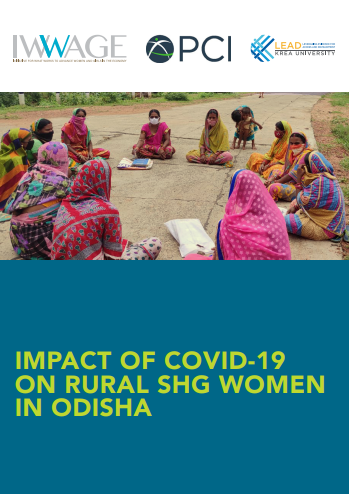
The COVID-19 pandemic and subsequent lockdowns to curb the virus have had far-reaching impacts globally. The situation in India has been particularly difficult, with the country recording over 8.9 million cases as of November 2020. The nation-wide lockdown announced on 24 March 2020 had devastating effects on millions of people, their livelihoods and income generating activities. Given the scale of the crisis, it becomes imperative to focus on the impacts on already disadvantaged groups, and more specifically, on women and girls. Experiences from past disease outbreaks globally, demonstrate the need for a gendered analysis for preparedness and response. This report presents findings from the study, Impact of COVID-19 on Rural SHG Women in Odisha, conducted by the Initiative for What Works to Advance Women and Girls in the Economy (IWWAGE) and Project Concern International (PCI). The main objectives of this study were to (i) study the overall impacts on women’s well-being during and post the lockdown period, and (ii) understand SHG participation in COVID-19 response activities. Overall, the study demonstrates that rural women in Odisha have had to contend with rising stress and anxiety, loss of income, and an increased load of household work. Concomitantly, the SHG movement has proved to be an immense source of strength and support for women. The report concludes with a set of recommendations to strengthen the SHG platforms and state- run gender initiatives, and to invest in digital tools as these have proved to be a means through which women have kept in touch with family and friends in difficult times.
The COVID-19 pandemic and subsequent lockdowns to curb the virus have had far-reaching impacts globally. The situation in India has been particularly difficult, with the country recording over 8.9 million cases as of November 2020. The nation-wide lockdown announced on 24 March 2020 had devastating effects on millions of people, their livelihoods and income generating activities. Given the scale of the crisis, it becomes imperative to focus on the impacts on already disadvantaged groups, and more specifically, on women and girls. Experiences from past disease outbreaks globally, demonstrate the need for a gendered analysis for preparedness and response. This report presents findings from the study, Impact of COVID-19 on Rural SHG Women in Odisha, conducted by the Initiative for What Works to Advance Women and Girls in the Economy (IWWAGE) and Project Concern International (PCI). The main objectives of this study were to (i) study the overall impacts on women’s well-being during and post the lockdown period, and (ii) understand SHG participation in COVID-19 response activities. Overall, the study demonstrates that rural women in Odisha have had to contend with rising stress and anxiety, loss of income, and an increased load of household work. Concomitantly, the SHG movement has proved to be an immense source of strength and support for women. The report concludes with a set of recommendations to strengthen the SHG platforms and state- run gender initiatives, and to invest in digital tools as these have proved to be a means through which women have kept in touch with family and friends in difficult times.
Report
Women and Work: How India fared in 2020
- January , 2021
- Surbhi Singh , Kanika Jha Kingra , Soumya Kapoor Mehta
Women and girls across the world have been disproportionately affected in the year of the pandemic, not in terms of impact of the virus, but more so socially and economically. While India was rapidly responding to the health crisis, millions of Indians were grappling with the unintended impacts of lockdown measures on the economy and their livelihoods. Even before the onset of COVID-19, India’s female workforce was largely invisible, underpaid, under-protected and constituted largest segment of the informal workforce, which is among the worst-hit this year. But several opportunities exist in 2021 to ensure that India’s women are not left behind in its recovery plans. Against this backdrop, IWWAGE and The Quantum Hub (TQH) authored a report that draws from various studies, data sources and nationally-representative data sets to look at the key trends and policy developments that came to shape and define the lives of women across India in 2020. This report captures key data on economic and social indicators (like female labour force participation, barriers to work and livelihoods, financial inclusion, digital access, skilling, education and violence against women) that played a central role in determining women’s role in the Indian economy this year.
Women and girls across the world have been disproportionately affected in the year of the pandemic, not in terms of impact of the virus, but more so socially and economically. While India was rapidly responding to the health crisis, millions of Indians were grappling with the unintended impacts of lockdown measures on the economy and their livelihoods. Even before the onset of COVID-19, India’s female workforce was largely invisible, underpaid, under-protected and constituted largest segment of the informal workforce, which is among the worst-hit this year. But several opportunities exist in 2021 to ensure that India’s women are not left behind in its recovery plans. Against this backdrop, IWWAGE and The Quantum Hub (TQH) authored a report that draws from various studies, data sources and nationally-representative data sets to look at the key trends and policy developments that came to shape and define the lives of women across India in 2020. This report captures key data on economic and social indicators (like female labour force participation, barriers to work and livelihoods, financial inclusion, digital access, skilling, education and violence against women) that played a central role in determining women’s role in the Indian economy this year.
SWAYAM
Practice Guide for Gender Integration in Livelihoods under DAY-NRLM
- September , 2025
- Shilpa Vasavada | Seema Bhaskaran
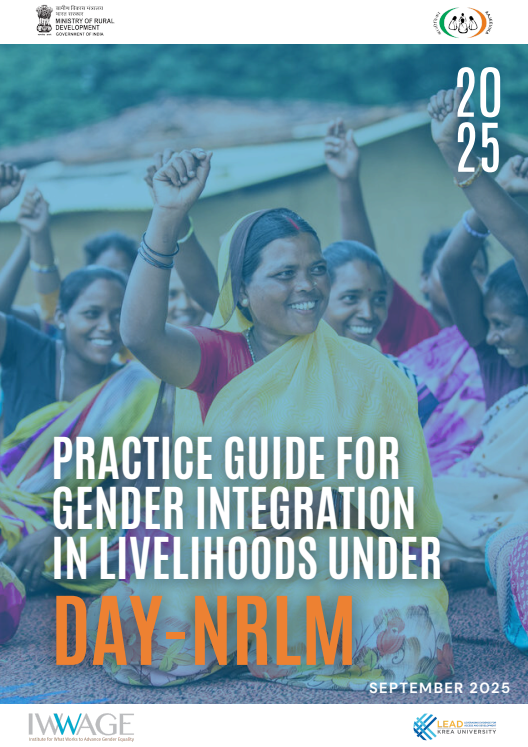
This booklet is intended for the livelihoods vertical and serves as a practical, field-focused Guide for teams on integrating gender into livelihoods interventions. Since these interventions include both farm-based and nonfarm- based activities, the booklet addresses each type separately, following a gender-responsive and progressively gender-transformative approach.
This booklet is intended for the livelihoods vertical and serves as a practical, field-focused Guide for teams on integrating gender into livelihoods interventions. Since these interventions include both farm-based and nonfarm- based activities, the booklet addresses each type separately, following a gender-responsive and progressively gender-transformative approach.

Report
Women and Work: How India fared in 2024
- September , 2025
- Aishwarya Bhuta, Harshita Kumari, Sohinee Thakurta, and Teesta Shukla.
The year 2024 marked a key moment for women and work in India, shaped by economic shifts, policy action, and technological change. Since 2021–22, new challenges and opportunities have influenced women’s workforce participation, alongside renewed efforts to advance women’s economic empowerment. Building on the vision of women-led development highlighted during India’s 2023 G20 presidency, momentum continued across multiple initiatives. This report examines key trends, policy developments, and emerging challenges shaping women’s work in 2024. Drawing on secondary data and research from IWWAGE and LEAD, it maps the evolving landscape of women’s work in India and identifies pathways to greater inclusion and economic agency.
The year 2024 marked a key moment for women and work in India, shaped by economic shifts, policy action, and technological change. Since 2021–22, new challenges and opportunities have influenced women’s workforce participation, alongside renewed efforts to advance women’s economic empowerment. Building on the vision of women-led development highlighted during India’s 2023 G20 presidency, momentum continued across multiple initiatives. This report examines key trends, policy developments, and emerging challenges shaping women’s work in 2024. Drawing on secondary data and research from IWWAGE and LEAD, it maps the evolving landscape of women’s work in India and identifies pathways to greater inclusion and economic agency.

Knowledge series
Migration Climate Change and Gender
- July , 2025
- Divya Singh (IWWAGE), Aiman Akhtar (PDAG)
Climate change is altering everyday life and livelihoods across India, and its impacts are not felt equally. Women, particularly those from marginalised and low-income communities, are often the first to absorb the effects of climate shocks, whether through disrupted livelihoods, migration, or the pressures of extreme weather. These experiences are shaped by long-standing social and economic inequalities, making it essential to look beyond sectoral solutions. One of the least visible but most affected areas is the care economy. As climate risks intensify, women’s unpaid and poorly paid care work expands, especially during displacement, crises, and recovery. Care work plays a critical role in helping families and communities cope with climate stress, yet it remains largely invisible within climate policy and planning. Looking at climate change through the lens of care helps reveal two connected dynamics: how climate risks reshape care responsibilities, and how the way care is organised influences resilience and adaptation. Recognising care, valuing women’s unpaid labour, and strengthening care systems are therefore not add-ons, but central to effective climate responses. This series of policy briefs, jointly developed by IWWAGE and PDAG, explores these connections in detail. It examines how care work is shaped by climate-related vulnerabilities, labour transitions, and forced mobility, with close attention to gendered outcomes. The series is part of a broader climate–gender conversation that includes work, migration, governance, and energy transitions, while centring experiences from India and the Global South. Through this initiative, we aim to deepen understanding, inform policy choices, and contribute meaningfully to ongoing discussions on climate change, care, and gender equality.
Climate change is altering everyday life and livelihoods across India, and its impacts are not felt equally. Women, particularly those from marginalised and low-income communities, are often the first to absorb the effects of climate shocks, whether through disrupted livelihoods, migration, or the pressures of extreme weather. These experiences are shaped by long-standing social and economic inequalities, making it essential to look beyond sectoral solutions. One of the least visible but most affected areas is the care economy. As climate risks intensify, women’s unpaid and poorly paid care work expands, especially during displacement, crises, and recovery. Care work plays a critical role in helping families and communities cope with climate stress, yet it remains largely invisible within climate policy and planning. Looking at climate change through the lens of care helps reveal two connected dynamics: how climate risks reshape care responsibilities, and how the way care is organised influences resilience and adaptation. Recognising care, valuing women’s unpaid labour, and strengthening care systems are therefore not add-ons, but central to effective climate responses. This series of policy briefs, jointly developed by IWWAGE and PDAG, explores these connections in detail. It examines how care work is shaped by climate-related vulnerabilities, labour transitions, and forced mobility, with close attention to gendered outcomes. The series is part of a broader climate–gender conversation that includes work, migration, governance, and energy transitions, while centring experiences from India and the Global South. Through this initiative, we aim to deepen understanding, inform policy choices, and contribute meaningfully to ongoing discussions on climate change, care, and gender equality.

Knowledge series
Migration Climate Change and Gender
- July , 2025
- Divya Singh (IWWAGE), Aiman Akhtar (PDAG)
Climate change is altering everyday life and livelihoods across India, and its impacts are not felt equally. Women, particularly those from marginalised and low-income communities, are often the first to absorb the effects of climate shocks, whether through disrupted livelihoods, migration, or the pressures of extreme weather. These experiences are shaped by long-standing social and economic inequalities, making it essential to look beyond sectoral solutions. One of the least visible but most affected areas is the care economy. As climate risks intensify, women’s unpaid and poorly paid care work expands, especially during displacement, crises, and recovery. Care work plays a critical role in helping families and communities cope with climate stress, yet it remains largely invisible within climate policy and planning. Looking at climate change through the lens of care helps reveal two connected dynamics: how climate risks reshape care responsibilities, and how the way care is organised influences resilience and adaptation. Recognising care, valuing women’s unpaid labour, and strengthening care systems are therefore not add-ons, but central to effective climate responses. This series of policy briefs, jointly developed by IWWAGE and PDAG, explores these connections in detail. It examines how care work is shaped by climate-related vulnerabilities, labour transitions, and forced mobility, with close attention to gendered outcomes. The series is part of a broader climate–gender conversation that includes work, migration, governance, and energy transitions, while centring experiences from India and the Global South. Through this initiative, we aim to deepen understanding, inform policy choices, and contribute meaningfully to ongoing discussions on climate change, care, and gender equality.
Climate change is altering everyday life and livelihoods across India, and its impacts are not felt equally. Women, particularly those from marginalised and low-income communities, are often the first to absorb the effects of climate shocks, whether through disrupted livelihoods, migration, or the pressures of extreme weather. These experiences are shaped by long-standing social and economic inequalities, making it essential to look beyond sectoral solutions. One of the least visible but most affected areas is the care economy. As climate risks intensify, women’s unpaid and poorly paid care work expands, especially during displacement, crises, and recovery. Care work plays a critical role in helping families and communities cope with climate stress, yet it remains largely invisible within climate policy and planning. Looking at climate change through the lens of care helps reveal two connected dynamics: how climate risks reshape care responsibilities, and how the way care is organised influences resilience and adaptation. Recognising care, valuing women’s unpaid labour, and strengthening care systems are therefore not add-ons, but central to effective climate responses. This series of policy briefs, jointly developed by IWWAGE and PDAG, explores these connections in detail. It examines how care work is shaped by climate-related vulnerabilities, labour transitions, and forced mobility, with close attention to gendered outcomes. The series is part of a broader climate–gender conversation that includes work, migration, governance, and energy transitions, while centring experiences from India and the Global South. Through this initiative, we aim to deepen understanding, inform policy choices, and contribute meaningfully to ongoing discussions on climate change, care, and gender equality.

Factsheet
Trends in Female Labour and Workforce Participation – Assam
- July , 2025
- Aneek Choudhary and Vidhi
Assam has seen a sharp rise in female labour force participation since 2021–22, now above the national average (50% vs 42% in PLFS 2023–24). However, the 2022–23 gender gap appears distorted due to an NSSO weighting error in a few villages, which led to underreporting of female participation at district, state, and national levels. In parallel, pro-women initiatives such as Sarothi (interest-subsidised loans) and PMKVY 2.0 (industry-relevant skilling) are believed to have supported this improvement. Future analysis will use corrected PLFS data to better track trends and understand the drivers of rising female employment in Assam.
Assam has seen a sharp rise in female labour force participation since 2021–22, now above the national average (50% vs 42% in PLFS 2023–24). However, the 2022–23 gender gap appears distorted due to an NSSO weighting error in a few villages, which led to underreporting of female participation at district, state, and national levels. In parallel, pro-women initiatives such as Sarothi (interest-subsidised loans) and PMKVY 2.0 (industry-relevant skilling) are believed to have supported this improvement. Future analysis will use corrected PLFS data to better track trends and understand the drivers of rising female employment in Assam.

Report Snapshot
Swayam Process Evaluation: A Year-Long Ethnography Study, Madhya Pradesh & Odisha
- June , 2025
- Anushree Goenka, Lopamudra Nayak, Moumita Mandal, Shaheen Kauser, Sudhir Kumar Kori, Anubha Dixit, Mallika Mitra Biswas, Garvi Dhar, Pratyusha Barua, Surabhi Awasthi, Gayathri Sreedharan
This study assesses the impact of training programmes on community change and empowerment among leaders of Self-Help Groups (SHGs), Village Organisations (VOs), and Cluster-Level Federations (CLFs). It also includes interviews with district- and block-level officials from MPSRLM and OLM to examine how line departments collaborate with community institutions to address and resolve complaints.
This study assesses the impact of training programmes on community change and empowerment among leaders of Self-Help Groups (SHGs), Village Organisations (VOs), and Cluster-Level Federations (CLFs). It also includes interviews with district- and block-level officials from MPSRLM and OLM to examine how line departments collaborate with community institutions to address and resolve complaints.