Publications

Publications

Category

Year

Report

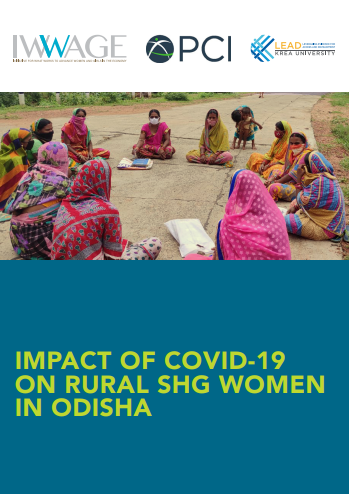
Community and Institutional Response to COVID-19 in India: Role of Women’s SHG and NRLM

This publication was developed with support from the Bill & Melinda Gates Foundation. The findings and conclusions in this publication are those of the authors and do not necessarily represent the views of the Bill & Melinda Gates Foundation
IWWAGE-ISI-BRIEFS

Nudging Households to increase the usage of Clean Fuel

Indoor air pollution, particularly from cooking with solid fuels, poses a severe public health risk, with women disproportionately bearing the burden. This project, based in rural Madhya Pradesh, investigates how targeted health communication and information on LPG subsidies can influence a shift towards cleaner cooking practices. Villages were randomly assigned to receive different interventions: health awareness alone, health awareness with information on the LPG subsidy programme, or no intervention (control). The combined campaign resulted in a 6% annual increase in LPG refill purchases, a 14% rise in monthly consumption, and a 320% boost in self-reported induction stove usage. While the ‘health only’ group did not show an increase in LPG use, there was improved adoption of safety measures such as smoke outlets or separate kitchens. These findings suggest that both awareness and financial accessibility are critical in enabling consistent clean fuel usage. Despite the significant expansion of LPG access under the Government of India’s Ujjwala Yojana scheme, sustained use remains limited due to low awareness about subsidy benefits and the health risks of solid fuels. This study underscores the importance of integrated communication and policy design in advancing cleaner, safer household energy use.
Learning note

Digital Solutions for SHGs in Chhattisgarh

Government entitlements are often the primary source of social protection for poor households. With the aim of increasing information about and uptake of government entitlements, and with the support of the State Rural Livelihoods Mission (SRLM) in the state of Chhattisgarh, IWWAGE – an initiative of LEAD at Krea University and Haqdarshak Empowerment Solutions Private Limited (HESPL),is implementing a project on promoting government entitlements through women self-help group (SHG) members as agents. Within this project, self-help group (SHG) members are trained on a digital application called Haqdarshak. The digital tool, Haqdarshak, is an innovative mobile application developed by HESPL. The application provides a ready reference of more than 200 central and state government welfare schemes and programmes, their benefits, eligibility criteria, documents required, and the application process for each scheme. These SHG women members, known as Haqdarshikas, in turn go door to door to households within their communities to provide information and enable households to apply for these government programmes, for a small fee. The research team at IWWAGE – an initiative of LEAD at Krea University, conducted a survey of 411 Haqdarshikas in September and October 2020 to understand factors that influence retention and drop-out from the programme. This cohort of Haqdarshikas received training between August 2019 to February 2020. The survey also delved into the impact of COVID-19 on the work of the Haqdarshikas.
Brief

IWWAGE-ISI Briefs: Analysing the constraints to women’s economic participation in the context of pandemic

As a part of the project undertaken by Indian Statistical Institute (ISI) and IWWAGE, a set of four briefs have been developed to understand the challenges faced by women while engaging in remunerative economic activities. The briefs also evaluate the existing programmes with gender lens, that aim at unleashing women’s economic potential fully in India, and offers policy recommendations. As the pandemic and subsequent lockdowns have impacted women adversely, these briefs also assess the gendered experience of the crisis, on the lives and livelihoods of women, including their physical and emotional well-being. Home production, technology and women’s time allocation The gender gap in time use, especially related to cooking and fuel collection, constrains women’s participation in remunerative activities, while also disproportionately having higher adverse health impacts for women. More efficient technology for home production in the form of LPG (liquefied petroleum gas) usage for cooking may enable women to invest the time and effort saved in more productive activities and thus increase their wellbeing. This aims inducing households to switch to LPG for cooking, through information campaigns on the health benefits of clean fuels and the existing LPG subsidy. It builds on the Pradhan Mantri Ujjwala Yojana, which seeks to expand access to clean fuel among rural households. Impact of COVID-19 on urban poor in industrial clusters: a gender lens As work opportunities in agriculture shrink, the future lies in improving women’s access to jobs in manufacturing and services. It is therefore, important to understand the demand and supply factors that determine their participation in these sectors. The project seeks to examine the profile and background of women workers in contemporary industrial and urban landscapes types of opportunities available, barriers to participation, and aspirations and expectations from industrial employment. It further aims to situate the findings within the context of existing policy and regulatory frameworks, and the implications they hold for women’s industrial employment, while also assessing the impact of the pandemic on the lives and livelihoods of women. Nudging households to increase the usage of clean fuel Air pollution is a grave public health concern and cooking with solid fuels is a major contributor, which also has a disproportionately adverse impact on women. In this project, based in Madhya Pradesh, villages were randomly assigned to a campaign by public health workers to either raise awareness about health effects of solid fuels and mitigation measures, or health awareness on the LPG subsidy programme, or a control group in which no information is provided. In the health only intervention, households become more likely to have a smoke outlet or a separate cooking room, indicating that financial constraints and design of public subsidy schemes are salient in inducing regular usage of clean fuel. Women in agriculture: gendered impact of mechanisation on labour demand The trend of mechanisation in agriculture, which increased exponentially since the 1990s, has had an adverse impact of farm employment, especially that of women. When the production process is sequential and the division of labour across complementary tasks is gendered as is the case in agriculture technological change can have a differential impact on women’s and men’s labour. By constructing a comprehensive database of multiple secondary data sources on farm employment, agricultural inputs, climate and socio-economic characteristics at the district level in India, this study explores various aspects of the gendered effects of technological change in agricultural production.
Learning note

Women’s Workforce Participation In India: Statewise Trends

In Andhra Pradesh, the rise in urban women’s work participation rates are exceptional. The state shows high incidence of self-employment among women in both rural and urban areas. However, almost 66 percent of such women in rural areas work as unpaid helpers in household enterprises. In the urban areas, the incidence of women’s entrepreneurship in self-employment is visible. Among wage workers, MGNREGA has been an attractive option apart from other construction, manufacturing and service employment. The urban areas show some diversity in women’s engagement, while in rural areas women work in agriculture, construction and low productive manufacturing sectors
Learning note

Women’s Workforce Participation In India: Statewise Trends

Madhya Pradesh (MP) is the only state in India to have witnessed a rise in workforce participation rates (WPRs) of women in both rural and urban areas between 2011-12 and 2017-18. The increase in women’s WPR in MP was driven largely by increase in self-employment in the rural areas and regular employment in the urban areas. According to the Periodic Labourforce Survey in 2017-18, more than half of the female workforce in the state is self-employed, with a higher incidence of self-employment in rural areas. While approximately 88 percent of the rural self-employed women in MP are engaged in unpaid work, the share of women in own account enterprises is substantially high in urban MP. The distribution of casual women workers suggests very few women engaged under MGNREGA and other public works as 96 percent women in casual employment were engaged in non-public works, with very little security or guarantee of payment
Learning note

Women’s Workforce Participation In India: Statewise Trends

Women’s labourforce participation rates (LFPR) reveals some interesting trends for Maharashtra. As per the figures from the labourforce surveys, the LFPR is significantly higher than the all-India figures, largely driven by higher than average rural employment. The state also shares a decline in self-employment and casual employment and a shift towards regular wage work for both rural and urban women. In Maharashtra the urban areas witnessed a consistent rise in regular wage work of women since 2004-05. More than 60 percent of women are employed as regular workers 70 percent of which is concentrated in the services sector such as education, health and retail. In rural areas, the share of casual workers is considerably higher at around 42 percent, followed by 52 percent in self-employment. The incidence of unpaid family workers among self-employed women exceed 80 percent. While the urban areas show considerable diversity of women workers across occupations and sectors, women in the rural areas remain concentrated as manual workers in agriculture or within construction work.
Newsletter (Gender In Focus)

Gender in Focus

During COVID-19, women’s Self-Help Groups (SHGs) under DAY-NRLM played a critical role due to their deep rural reach and strong social capital. SHGs emerged as frontline actors in crisis response, leveraging trust and local networks to support communities. To recognise this contribution, IWWAGE’s report documents the good practices, strategies, and innovations led by SHGs in partnership with State Rural Livelihoods Missions during the pandemic.
Learning note

Women’s Workforce Participation in India: Statewise Trends

Maharashtra, one of India’s most prosperous and industrially advanced states, has the highest Gross State Domestic Product (GSDP) among all states, amounting to Rs. 19,400 billion in 2017-18. Despite its economic strength, Maharashtra ranks lower on gender indicators, with a sex ratio of 958 females per 1,000 males and a child sex ratio of 894. Female labour force participation (FLFPR) in Maharashtra is significantly higher than the national average at 31%, driven by rural participation. However, urban FLFPR remains low at 16.8%, highlighting gender disparities in urban employment. This factsheet explores key socio-economic and gender trends in the state.
Learning note

Women’s Workforce Participation in India: Statewise Trends

Bihar, one of India’s poorest states, faces significant challenges in development across key areas such as education, health, and nutrition, while also lagging in gender development. With the lowest female workforce participation rate (WPR) in the country at just 2.8%, Bihar’s economic empowerment of women is a critical concern. This factsheet highlights the stark disparities in women’s employment in the state and calls for urgent policy action to address these issues, offering a comparison with national averages.
Knowledge series

Migration Climate Change and Gender

Climate change is altering everyday life and livelihoods across India, and its impacts are not felt equally. Women, particularly those from marginalised and low-income communities, are often the first to absorb the effects of climate shocks, whether through disrupted livelihoods, migration, or the pressures of extreme weather. These experiences are shaped by long-standing social and economic inequalities, making it essential to look beyond sectoral solutions. One of the least visible but most affected areas is the care economy. As climate risks intensify, women’s unpaid and poorly paid care work expands, especially during displacement, crises, and recovery. Care work plays a critical role in helping families and communities cope with climate stress, yet it remains largely invisible within climate policy and planning. Looking at climate change through the lens of care helps reveal two connected dynamics: how climate risks reshape care responsibilities, and how the way care is organised influences resilience and adaptation. Recognising care, valuing women’s unpaid labour, and strengthening care systems are therefore not add-ons, but central to effective climate responses. This series of policy briefs, jointly developed by IWWAGE and PDAG, explores these connections in detail. It examines how care work is shaped by climate-related vulnerabilities, labour transitions, and forced mobility, with close attention to gendered outcomes. The series is part of a broader climate–gender conversation that includes work, migration, governance, and energy transitions, while centring experiences from India and the Global South. Through this initiative, we aim to deepen understanding, inform policy choices, and contribute meaningfully to ongoing discussions on climate change, care, and gender equality.
Factsheet

Trends in Female Labour and Workforce Participation – Assam

Assam has seen a sharp rise in female labour force participation since 2021–22, now above the national average (50% vs 42% in PLFS 2023–24). However, the 2022–23 gender gap appears distorted due to an NSSO weighting error in a few villages, which led to underreporting of female participation at district, state, and national levels. In parallel, pro-women initiatives such as Sarothi (interest-subsidised loans) and PMKVY 2.0 (industry-relevant skilling) are believed to have supported this improvement. Future analysis will use corrected PLFS data to better track trends and understand the drivers of rising female employment in Assam.

Assam has seen a sharp rise in female labour force participation since 2021–22, now above the national average (50% vs 42% in PLFS 2023–24). However, the 2022–23 gender gap appears distorted due to an NSSO weighting error in a few villages, which led to underreporting of female participation at district, state, and national levels. In parallel, pro-women initiatives such as Sarothi (interest-subsidised loans) and PMKVY 2.0 (industry-relevant skilling) are believed to have supported this improvement. Future analysis will use corrected PLFS data to better track trends and understand the drivers of rising female employment in Assam.
Report

Swayam Process Evaluation: A Year-Long Ethnography Study, Madhya Pradesh & Odisha

This study assesses the impact of training programmes on community change and empowerment among leaders of Self-Help Groups (SHGs), Village Organisations (VOs), and Cluster-Level Federations (CLFs). It also includes interviews with district- and block-level officials from MPSRLM and OLM to examine how line departments collaborate with community institutions to address and resolve complaints.
Factsheet

Trends in Female Labour and Workforce Participation-Bihar

Bihar, despite being one of India’s fastest-growing states, has the lowest female labour force participation rate, alongside a widening gender gap. Policy focus on girls’ education, skills, entrepreneurship, and social support through schemes such as the Balika Cycle Yojana, Akshar Anchal Yojana, and Kanya Suraksha Yojana have contributed to recent improvements in female participation. Using PLFS data, this factsheet examines trends and key characteristics of women’s employment in Bihar.
Factsheet

Trends in Female Labour Force Participation in Uttar Pradesh

Uttar Pradesh, India’s most populous state, has a large working-age female population but a female labor force participation rate that is well below the national average. Regional disparities, weak infrastructure in eastern UP, restrictive socio-cultural norms, and limited economic opportunities contribute to low participation. Female workforce participation has improved since 2017–18, supported by schemes such as the Mudra Yojana and Deendayal Antyodaya Yojana, which have expanded women’s access to credit, strengthened self-help groups, and promoted women’s economic empowerment across the state.
Factsheet

Trends in Female Labour Force and Workforce Participation- Haryana

Haryana has transitioned from an agrarian to a more industrial economy, characterized by strong agricultural output and growing sectors such as automotive and IT. Despite economic growth, unemployment remains high, particularly among youth and women, due to limited formal job opportunities and structural challenges. This factsheet analyses female labour force participation in Haryana from 2017–18 to 2023–24, highlighting sectoral trends, occupational segregation, and barriers to workforce entry.

Haryana has transitioned from an agrarian to a more industrial economy, characterized by strong agricultural output and growing sectors such as automotive and IT. Despite economic growth, unemployment remains high, particularly among youth and women, due to limited formal job opportunities and structural challenges. This factsheet analyses female labour force participation in Haryana from 2017–18 to 2023–24, highlighting sectoral trends, occupational segregation, and barriers to workforce entry.
Scroll to Top