


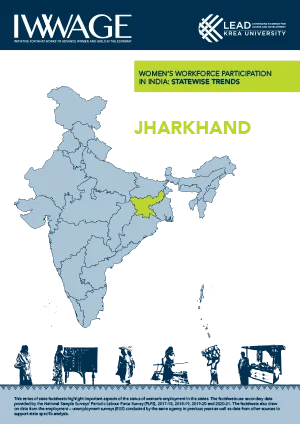
This factsheet provides an overview of Jharkhand’s economy, known for its rich mineral resources and industrial hubs like Jamshedpur and Bokaro. While mining is key, agriculture supports over half the population. In 2021-22, the state’s female Work Participation Rate (WPR) stood at 35.2%, largely driven by its tribal communities. Explore Jharkhand’s employment trends and the role of women in its workforce.
Publications
Publications
Category
Year
Factsheet
Women’s Workforce Participation in India: Statewise Trends
- March , 2023
- Trisha Chandra, Sona Mitra
The female Work Participation Rate (WPR) is high in Jharkhand due to its tribal population.The WPR for rural women has increased significantly over the past few years; however, the WPR of women from ST social groups has stagnated at very low levels.
The female Work Participation Rate (WPR) is high in Jharkhand due to its tribal population.The WPR for rural women has increased significantly over the past few years; however, the WPR of women from ST social groups has stagnated at very low levels.
Report
Gender Modules
- February , 2023
- Moumita Sarkar | Soya Thomas | Seema Bhaskaran
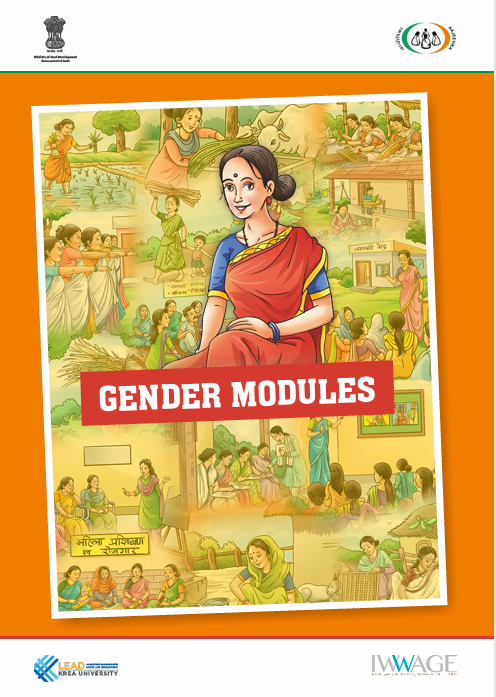
The Deendayal Antyodaya Yojana-National Rural Livelihoods Mission (DAY-NRLM) is a key initiative of the Government of India, led by the Ministry of Rural Development. It aims to collectivise women into institutions that empower them by addressing their needs and concerns, while ensuring their active participation in the development planning process. To advance gender equality, DAY-NRLM follows a two-pronged strategy: establishing functional institutional mechanisms that link communities to governance system and integrating gender-responsive approaches across all program areas. The goal is to foster an environment where women can actively participate in traditional and non-traditional livelihoods and overcome barriers in both public and private spheres. As part of this effort, DAY-NRLM has developed a comprehensive set of 17 training modules. These modules are designed to enhance understanding of key gender concepts and human behaviour, using experiential learning methods such as real-life stories, games, and participatory sessions. They will be used to train National Resource Persons, staff, and community cadres, with the aim of building a demand-driven system that recognises the intersectional challenges faced by women and girls. Developed in collaboration with IWWAGE, these modules cover a wide range of topics, including gender division of labour, asset ownership, and other core concepts, with additional content shaped by state-level needs and the gender operational strategy. This resource is instrumental in supporting DAY-NRLM’s mission to promote gender equality and ensure women’s visibility and empowerment in rural communities.
The Deendayal Antyodaya Yojana-National Rural Livelihoods Mission (DAY-NRLM) is a key initiative of the Government of India, led by the Ministry of Rural Development. It aims to collectivise women into institutions that empower them by addressing their needs and concerns, while ensuring their active participation in the development planning process. To advance gender equality, DAY-NRLM follows a two-pronged strategy: establishing functional institutional mechanisms that link communities to governance system and integrating gender-responsive approaches across all program areas. The goal is to foster an environment where women can actively participate in traditional and non-traditional livelihoods and overcome barriers in both public and private spheres. As part of this effort, DAY-NRLM has developed a comprehensive set of 17 training modules. These modules are designed to enhance understanding of key gender concepts and human behaviour, using experiential learning methods such as real-life stories, games, and participatory sessions. They will be used to train National Resource Persons, staff, and community cadres, with the aim of building a demand-driven system that recognises the intersectional challenges faced by women and girls. Developed in collaboration with IWWAGE, these modules cover a wide range of topics, including gender division of labour, asset ownership, and other core concepts, with additional content shaped by state-level needs and the gender operational strategy. This resource is instrumental in supporting DAY-NRLM’s mission to promote gender equality and ensure women’s visibility and empowerment in rural communities.
Report
Women and Work, How India Fared in 2022
- February , 2023
- IWWAGE , TQH
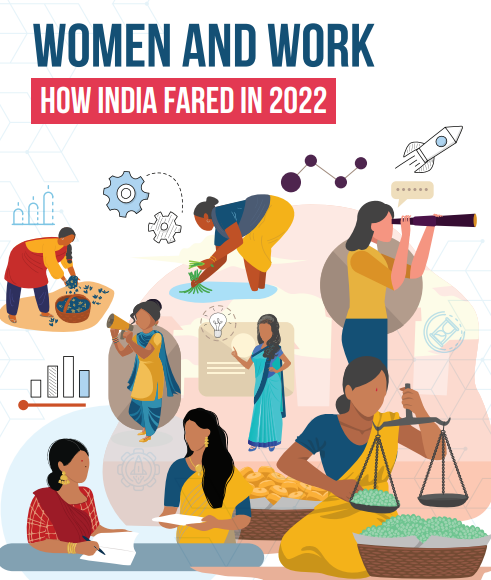
2022 presented a landscape of change as the world aimed for greater resilience, recovery and growth as things began to open up post the COVID-19 pandemic. Spurred by changes in the overall outlook on work, women’s participation in the workforce also reflected a shift, with remote and hybrid work emerging strongly in certain sectors, in continuation of trends set during the height of the pandemic. Similarly, even in work that cannot be performed remotely, there has been a deepening in positive trends. As lockdowns lifted, women persondays in certain employment schemes also climbed. Against this backdrop, India has assumed the G20 presidency for 2023, and the year provides the nation with the opportunity to not only proactively set the agenda for women-led development, but also plan for the next phase of growth. There is thus a need to provide a roadmap for enablers of women-led development, whether through participation in leadership, reflection in policy mandates, or even addressing barriers to work. From the macro-political economic scenario to the specific challenges faced by women, this report situates women’s work against the challenges and opportunities that lie ahead, particularly in light of India’s G20 presidency. Threaded through with insights from IWWAGE and LEAD’s research on the subject, the report covers trends across available data sources on scheme performances, policy changes, and political announcements, mapping the contours of women’s work in India and looking ahead to 2023.
2022 presented a landscape of change as the world aimed for greater resilience, recovery and growth as things began to open up post the COVID-19 pandemic. Spurred by changes in the overall outlook on work, women’s participation in the workforce also reflected a shift, with remote and hybrid work emerging strongly in certain sectors, in continuation of trends set during the height of the pandemic. Similarly, even in work that cannot be performed remotely, there has been a deepening in positive trends. As lockdowns lifted, women persondays in certain employment schemes also climbed. Against this backdrop, India has assumed the G20 presidency for 2023, and the year provides the nation with the opportunity to not only proactively set the agenda for women-led development, but also plan for the next phase of growth. There is thus a need to provide a roadmap for enablers of women-led development, whether through participation in leadership, reflection in policy mandates, or even addressing barriers to work. From the macro-political economic scenario to the specific challenges faced by women, this report situates women’s work against the challenges and opportunities that lie ahead, particularly in light of India’s G20 presidency. Threaded through with insights from IWWAGE and LEAD’s research on the subject, the report covers trends across available data sources on scheme performances, policy changes, and political announcements, mapping the contours of women’s work in India and looking ahead to 2023.

Factsheet
Women’s Workforce Participation in India: Statewise Trends
- January , 2023
- Suchika Gupta, Bidisha Mondal
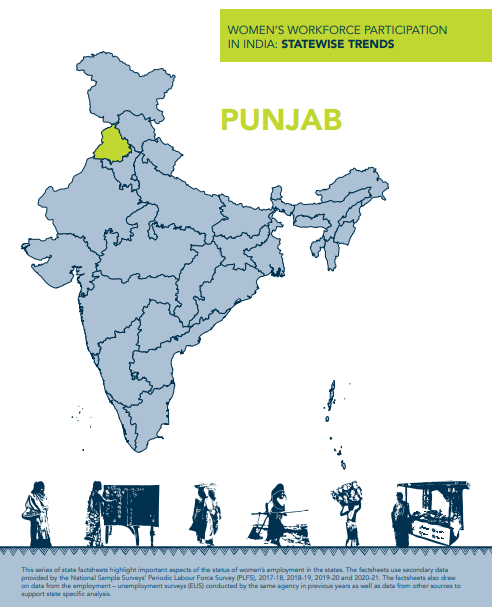
This factsheet provides an overview of Punjab’s socio-economic landscape, highlighting its strong per capita GSDP but ongoing gender challenges. Despite a high literacy rate of 75.8%, the state’s Female Labour Force Participation Rate (FLFPR) remains below national averages, with 19.4% in rural areas and 17.1% in urban areas. Explore the key gender disparities and socio-economic trends shaping Punjab’s development.
This factsheet provides an overview of Punjab’s socio-economic landscape, highlighting its strong per capita GSDP but ongoing gender challenges. Despite a high literacy rate of 75.8%, the state’s Female Labour Force Participation Rate (FLFPR) remains below national averages, with 19.4% in rural areas and 17.1% in urban areas. Explore the key gender disparities and socio-economic trends shaping Punjab’s development.
Factsheet
Women’s Workforce Participation in India: Statewise Trends
- January , 2023
- Prakriti Sharma, Sona Mitra
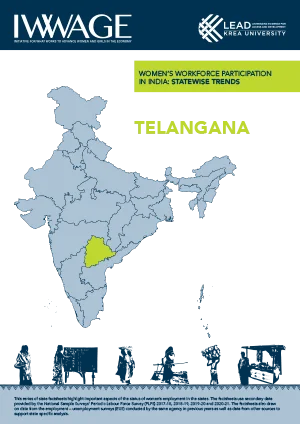
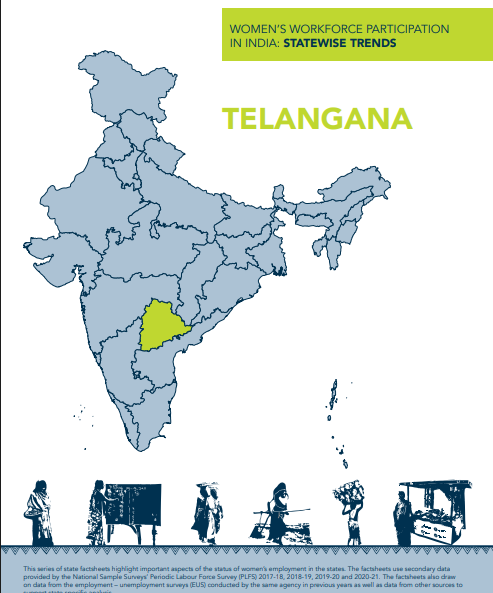
This factsheet highlights Telangana’s rapid economic growth since its formation in 2014, with a per capita income nearly double the national average. While agriculture employs 38% of its population, the services sector drives the state’s economy. Promising progress in education and government initiatives like job reservations and support for Self-Help Groups aim to boost women’s economic empowerment. Explore key socio-economic trends and women’s workforce participation in Telangana.
Telangana demonstrates interesting trends for working rural women – though the PLFS data showcase a significant rise in the share of employed rural women, the proportion of self-employed rural women working as domestic workers, dominantly in agriculture and allied services has increased. There is also a simultaneous decline in women employed in casual work.
Telangana demonstrates interesting trends for working rural women – though the PLFS data showcase a significant rise in the share of employed rural women, the proportion of self-employed rural women working as domestic workers, dominantly in agriculture and allied services has increased. There is also a simultaneous decline in women employed in casual work.
Learning note
Women’s Workforce Participation in India: Statewise Trends
- January , 2023
- Prakriti Sharma , Sona Mitra , Bidisha Mondal
Telangana, India’s newest state, formed in 2014, has quickly emerged as a growing economy with a per capita income nearly double the national average. While agriculture employs 38% of its population, the services sector is the largest contributor to the state’s economy. Telangana shows promising progress in education, with a Gross Enrolment Ratio (GER) for higher education at 35 and a Gender Parity Index (GPI) of 1.05, favoring women. Government initiatives, such as 33.3% reservation for women in state jobs and support for Self-Help Groups, aim to further women’s economic empowerment. This factsheet explores the state’s socio-economic trends and women’s participation in the workforce.
Telangana, India’s newest state, formed in 2014, has quickly emerged as a growing economy with a per capita income nearly double the national average. While agriculture employs 38% of its population, the services sector is the largest contributor to the state’s economy. Telangana shows promising progress in education, with a Gross Enrolment Ratio (GER) for higher education at 35 and a Gender Parity Index (GPI) of 1.05, favoring women. Government initiatives, such as 33.3% reservation for women in state jobs and support for Self-Help Groups, aim to further women’s economic empowerment. This factsheet explores the state’s socio-economic trends and women’s participation in the workforce.
Learning note
Women’s Workforce Participation in India: Statewise Trends
- January , 2023
- Suchika Gupta , Sona Mitra , Bidisha Mondal
Punjab, a northern state known for its agricultural economy, has a per capita Gross State Domestic Product (GSDP) of INR 1,88,015, higher than the national average. Despite its economic strengths, the state faces challenges in gender equity, with a sex ratio of 891, lower than the national average. Punjab’s Female Labour Force Participation Rate (FLFPR) is also below the national figures, at 19.4% in rural areas and 17.1% in urban areas. However, the state boasts a literacy rate of 75.8%, with minimal gender disparity. This factsheet explores Punjab’s key socio-economic indicators and gender disparities.
Punjab, a northern state known for its agricultural economy, has a per capita Gross State Domestic Product (GSDP) of INR 1,88,015, higher than the national average. Despite its economic strengths, the state faces challenges in gender equity, with a sex ratio of 891, lower than the national average. Punjab’s Female Labour Force Participation Rate (FLFPR) is also below the national figures, at 19.4% in rural areas and 17.1% in urban areas. However, the state boasts a literacy rate of 75.8%, with minimal gender disparity. This factsheet explores Punjab’s key socio-economic indicators and gender disparities.
Learning note
Women’s Workforce Participation in India: Statewise Trends
- January , 2023
- Suchika Gupta , Sona Mitra , Bidisha Mondal
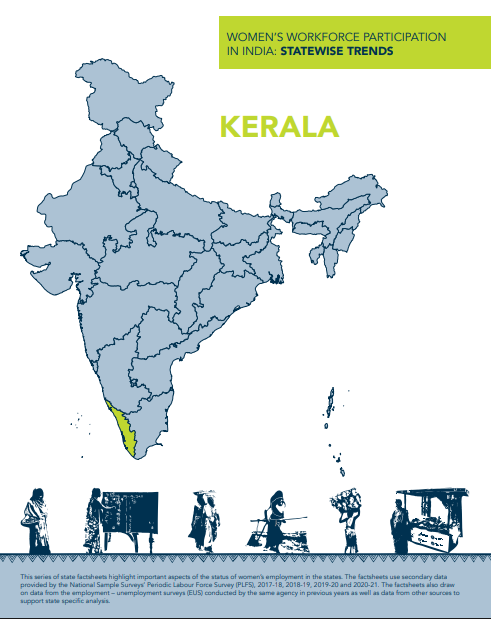
Kerala, a high-income Indian state with a per capita GSDP of INR 1,46,910, boasts impressive socio-economic indicators. It has one of the highest literacy rates in India, with minimal gender disparity-96% for men and 92% for women-and an outstanding sex ratio of 1,084. Despite these achievements, Kerala’s Female Labour Force Participation Rate (FLFPR) remains low, at 29.5% in rural areas and 25.2% in urban areas. This factsheet explores key aspects of Kerala’s economy, gender wage gap, and human development, offering insights into the state’s progress and ongoing challenges.
Kerala, a high-income Indian state with a per capita GSDP of INR 1,46,910, boasts impressive socio-economic indicators. It has one of the highest literacy rates in India, with minimal gender disparity-96% for men and 92% for women-and an outstanding sex ratio of 1,084. Despite these achievements, Kerala’s Female Labour Force Participation Rate (FLFPR) remains low, at 29.5% in rural areas and 25.2% in urban areas. This factsheet explores key aspects of Kerala’s economy, gender wage gap, and human development, offering insights into the state’s progress and ongoing challenges.
Learning note
Women’s Workforce Participation in India: Statewise Trends
- January , 2023
- Prakriti Sharma , Sona Mitra , Bidisha Mondal
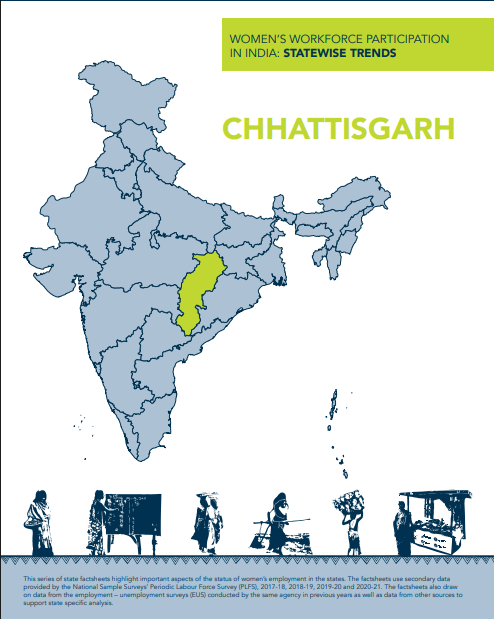
Chhattisgarh, located in east-central India, is the ninth largest state, with about 75% of its population residing in rural areas. Known as the ‘rice bowl of India,’ 70% of the state’s workforce depends on agriculture. Chhattisgarh has made significant strides in reducing multi-dimensional poverty, and its Female Work Participation Rate (FWPR) consistently surpasses the national average. In 2020-21, the state’s FWPR was 17 percentage points higher than the national figure. This factsheet explores Chhattisgarh’s socio-economic trends, focusing on women’s employment and the agricultural sector.
Chhattisgarh, located in east-central India, is the ninth largest state, with about 75% of its population residing in rural areas. Known as the ‘rice bowl of India,’ 70% of the state’s workforce depends on agriculture. Chhattisgarh has made significant strides in reducing multi-dimensional poverty, and its Female Work Participation Rate (FWPR) consistently surpasses the national average. In 2020-21, the state’s FWPR was 17 percentage points higher than the national figure. This factsheet explores Chhattisgarh’s socio-economic trends, focusing on women’s employment and the agricultural sector.
Factsheet
Women’s Workforce Participation in India: Statewise Trends
- January , 2023
- Nidhi Gyan Pandey
This factsheet offers insights into Karnataka’s diverse economy, from its agricultural roots to its status as India’s leading tech hub. With a strong female workforce, the state’s Work Participation Rate (WPR) for women is 31.5%, according to the 2021-22 PLFS. Women are primarily engaged in agriculture in rural areas and manufacturing and services in urban regions. Explore Karnataka’s socio-economic landscape and workforce trends.
This factsheet offers insights into Karnataka’s diverse economy, from its agricultural roots to its status as India’s leading tech hub. With a strong female workforce, the state’s Work Participation Rate (WPR) for women is 31.5%, according to the 2021-22 PLFS. Women are primarily engaged in agriculture in rural areas and manufacturing and services in urban regions. Explore Karnataka’s socio-economic landscape and workforce trends.
Factsheet
Trends in Female Labour Force Participation in Karnataka
- October , 2026
- Vidhi, Bidisha Mondal
Karnataka occupies a distinctive position in India’s economic landscape, driven by rapid growth in services, technology, and manufacturing sectors.This factsheet examines key trends in women’s labour force participation in Karnataka using PLFS data, with a focus on employment composition, sectoral and occupational distribution, quality of work, and barriers to women’s participation in the labour market.
Karnataka occupies a distinctive position in India’s economic landscape, driven by rapid growth in services, technology, and manufacturing sectors.This factsheet examines key trends in women’s labour force participation in Karnataka using PLFS data, with a focus on employment composition, sectoral and occupational distribution, quality of work, and barriers to women’s participation in the labour market.
Brief
Deconstructing the Care Economy: Measurement, Gendered Outcomes, and Macroeconomic Policy
- September , 2026
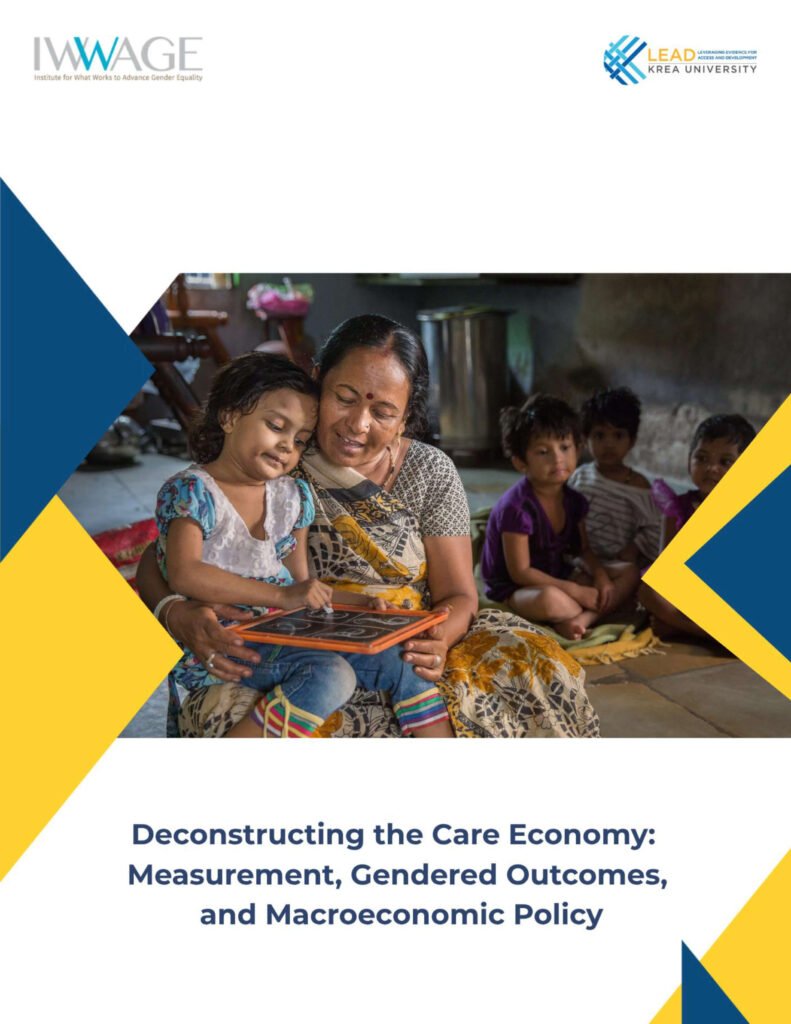
The policy brief examines how unpaid care and domestic work largely undertaken by women remains invisible in conventional economic and labour statistics, while significantly shaping women’s participation and outcomes in the labour market. It highlights how care responsibilities contribute to women’s underemployment, lower-paid and precarious work, and inequalities in platform and hybrid work.
The policy brief examines how unpaid care and domestic work largely undertaken by women remains invisible in conventional economic and labour statistics, while significantly shaping women’s participation and outcomes in the labour market. It highlights how care responsibilities contribute to women’s underemployment, lower-paid and precarious work, and inequalities in platform and hybrid work.
Factsheet
Trends in Female Labour Force Participation in Bihar
- September , 2026
- Vidhi, Bidisha Mondal
Despite economic growth, Bihar continues to face low female labour force participation, reflecting persistent supply-side constraints and limited access to suitable employment opportunities. Young women, in particular, experience low labour force participation amid high youth unemployment, while employment remains concentrated in agriculture and informal work. Sociocultural norms, limited access to education and skills, mobility constraints, inadequate transport, and care responsibilities further restrict women’s access to employment. Against this backdrop, this factsheet examines trends in female labour force participation, workforce composition, sectoral distribution, and working conditions in Bihar.
Despite economic growth, Bihar continues to face low female labour force participation, reflecting persistent supply-side constraints and limited access to suitable employment opportunities. Young women, in particular, experience low labour force participation amid high youth unemployment, while employment remains concentrated in agriculture and informal work. Sociocultural norms, limited access to education and skills, mobility constraints, inadequate transport, and care responsibilities further restrict women’s access to employment. Against this backdrop, this factsheet examines trends in female labour force participation, workforce composition, sectoral distribution, and working conditions in Bihar.
Report
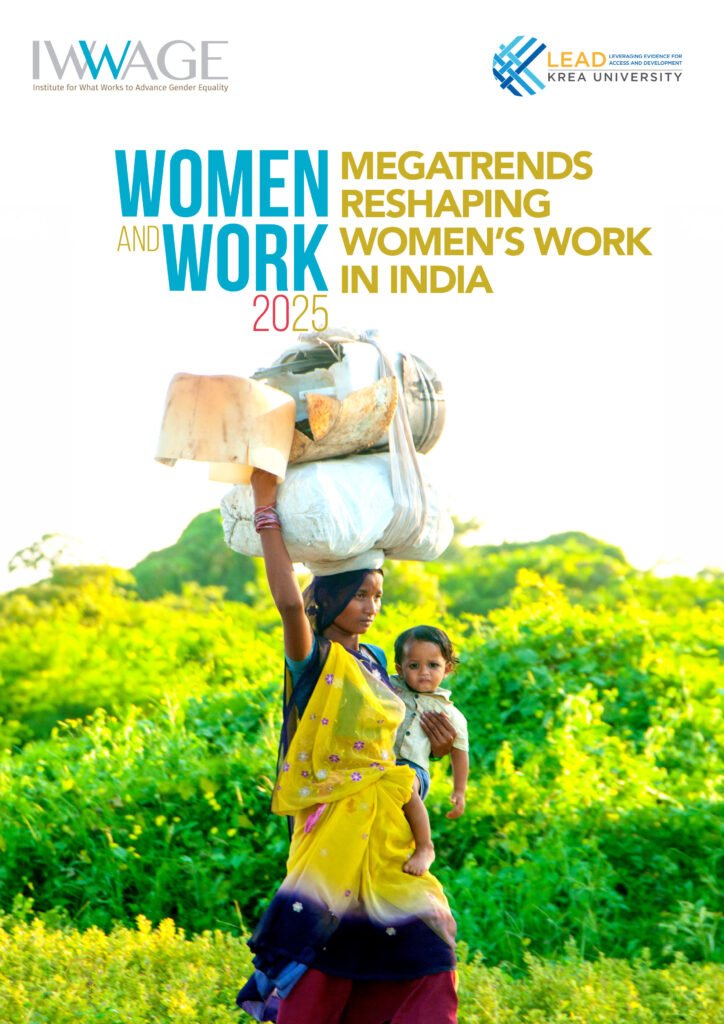
Women and Work 2025: Megatrends Reshaping Women’s Work in India
- September , 2026
- Divya Singh, Prakriti Sharma, Vidhi Singh, Sharati Roy
IWWAGE’s flagship report examines the changing landscape of women’s work in India and the forces shaping its future. Women’s labour force participation has risen significantly in recent years. Yet, the headline numbers tell only part of the story. The nature and experience of women’s work continue to be shaped by the quality and security of employment, unpaid care work, digitalisation, artificial intelligence, climate change, and women’s health at work. The report brings together evidence and emerging policy developments across these interconnected forces to examine where women’s work is headed—and what it will take to translate greater participation into greater economic agency, decent work, and protection.
IWWAGE’s flagship report examines the changing landscape of women’s work in India and the forces shaping its future. Women’s labour force participation has risen significantly in recent years. Yet, the headline numbers tell only part of the story. The nature and experience of women’s work continue to be shaped by the quality and security of employment, unpaid care work, digitalisation, artificial intelligence, climate change, and women’s health at work. The report brings together evidence and emerging policy developments across these interconnected forces to examine where women’s work is headed—and what it will take to translate greater participation into greater economic agency, decent work, and protection.
Factsheet
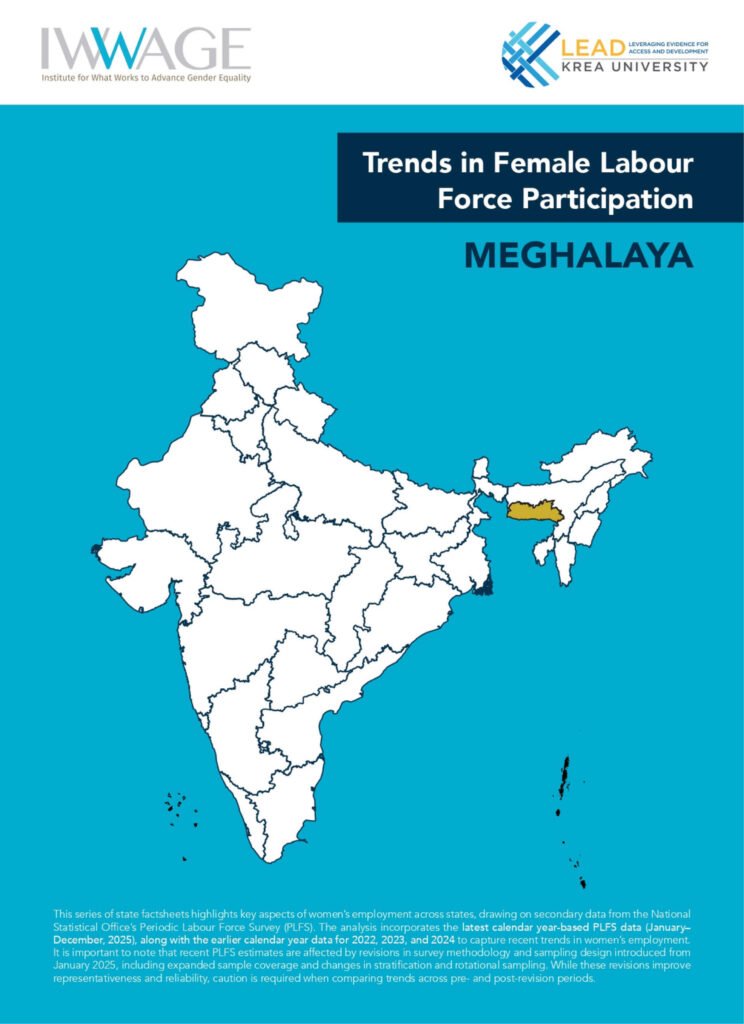
Trends in Female Labour Force Participation in Meghalaya
- August , 2026
- Nabankur Huda, Bidisha Mondal
Meghalaya is a small, hilly state in north-east India with a predominantly rural, agrarian economy and one of the country’s most distinctive social structures. The factsheet explores the trends, opportunities and challenges shaping women’s participation in Meghalaya’s labour market, with a focus on how the state’s social structure and economic transformation influence the nature and quality of women’s work.
Meghalaya is a small, hilly state in north-east India with a predominantly rural, agrarian economy and one of the country’s most distinctive social structures. The factsheet explores the trends, opportunities and challenges shaping women’s participation in Meghalaya’s labour market, with a focus on how the state’s social structure and economic transformation influence the nature and quality of women’s work.
Newsletter (Gender In Focus)
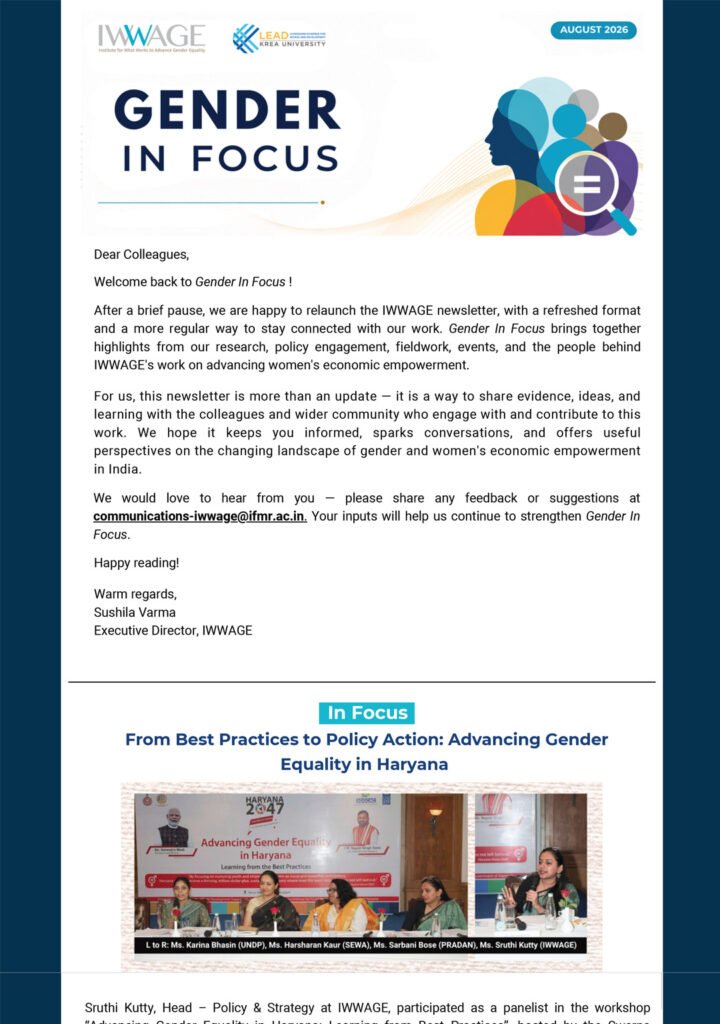
Gender in Focus
- August , 2026
The August 2026 edition features highlights from IWWAGE’s research, policy engagements, fieldwork and knowledge initiatives. It also offers a closer look at emerging trends shaping women’s work and economic participation in India.
The August 2026 edition features highlights from IWWAGE’s research, policy engagements, fieldwork and knowledge initiatives. It also offers a closer look at emerging trends shaping women’s work and economic participation in India.