Care Economy

Care Economy

Women’s low labour force participation in India is closely linked to the unequal burden of unpaid care and domestic work. Evidence from India’s Time Use Survey shows that women and girls spend significantly more time on unpaid household and caregiving responsibilities than men and boys, while paid care work remains largely feminised, undervalued, and characterised by low wages and limited social protection. Addressing the care economy is therefore critical to advancing women’s economic participation and building inclusive labour markets.

IWWAGE’s work on the care economy focuses on:

Building evidence through collaboration

Generating and co-creating policy-relevant evidence in partnership with research institutions, governments, and civil society to highlight the scale, value, and distribution of care work.

Strengthening care and social infrastructure

Advocating investments in care services and enabling infrastructure such as childcare, elder care, piped water, clean energy, and reliable electricity to reduce women’s unpaid care burden.

Improving measurement and visibility of care work

Advancing better tools and methods to measure unpaid and paid care work, ensuring women’s contributions are visible in data, policy, and planning processes.

Advancing rights and protections for care workers

Supporting policy dialogue on fair wages, social protection, and access to entitlements for paid care workers.

Influencing policy and advocacy

Using evidence to inform policy across national and sub-national levels through sustained engagement with key institutions, including NITI Aayog, the Ministry of Women and Child Development, and the Ministry of Rural Development.

This body of work has strengthened national and international attention to care workers’ needs, including during India’s G20 Presidency in 2023, and contributed to IWWAGE being recognised by UNESCAP and UN Women (Regional Office) as a Care Champion in the region for 2024.
IWWAGE-ISST-BRIEFS

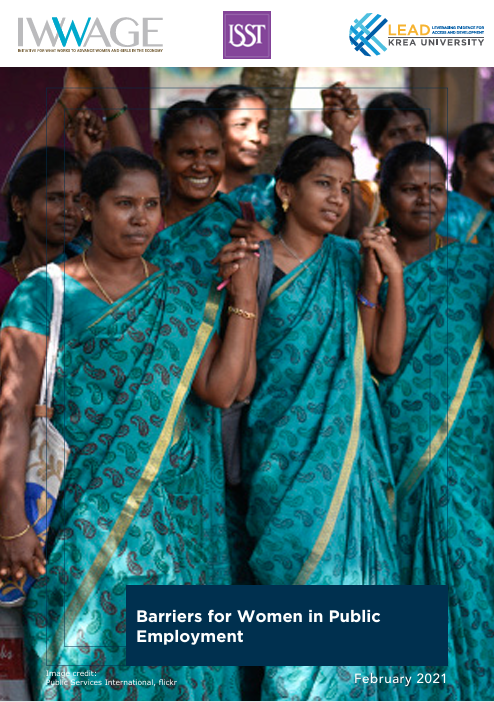
Barriers for Women in Public Employment

India’s female labour force participation (FLFP) remains among the lowest globally, falling to 17.5% in 2017-18. Despite more women gaining education and work readiness, access to secure jobs-especially in the public sector-remains limited due to structural and social barriers. The public sector is a vital source of formal employment for women, with nearly one in four female non-agricultural workers employed by the government. Yet women still account for just 30% of all government employees and are less likely than men to hold regular salaried roles or access social security benefits. Public employment offers more stability and benefits for women than most sectors, but widening their participation requires targeted reforms. These include: Investing in women’s education and challenging social norms; – Strengthening childcare and basic service infrastructure; – Formalising roles like Anganwadi workers and bank sakhis; – Creating promotion pathways and leadership opportunities; – Filling vacancies with gender-sensitive recruitment practices; – And investing in evidence to inform policy action. Expanding access to public sector jobs can drive economic recovery, reduce gender gaps, and build a more inclusive and resilient workforce.
Learning note

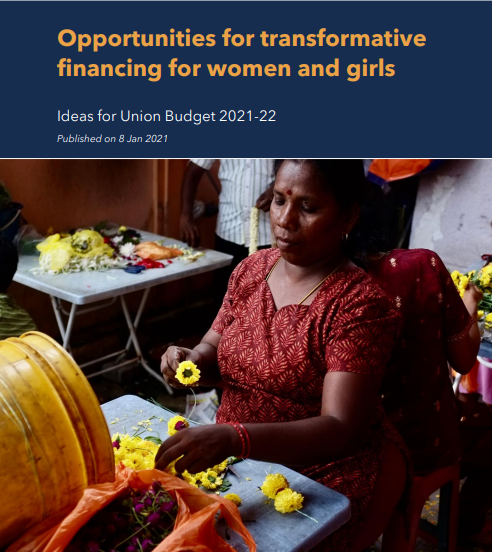
Opportunities for Transformative Financing for Women and Girls

This paper draws on a pre-budget consultation hosted by IWWAGE and The Quantum Hub (TQH) on 1 October 2020, ‘Transformative financing for Gender Equality in a COVID-19 context’ to inform the Union Budget 2021-22. The aim of the consultation was to identify and amplify the needs of millions of women and girls whose lives have been disrupted and severely affected because of the pandemic, but also account for the disadvantages and inequities that existed even before COVID-19. IWWAGE invited experts1 from academia, civil society, NGOs, and donor bodies, who have been actively advocating for transformative financing for gender equality in India. These experts shared their insights from current and past experiences to shape an actionable agenda to improve the lives of women and girls in the current context. IWWAGE, like some of the experts invited for the consultation, is part of the Broad-Based Committee on Gender Budgeting and Analysis that has been set up by the Ministry for Women and Child Development (MWCD). We used this opportunity to provide suggestions to support the gender responsive budgeting efforts of MWCD and that of other relevant ministries, and also shared these with the Ministry of Finance in response to their request for ideas for Union Budget 2021-22. We also aim to share insights from this consultation among key decision makers, relevant line ministries and departments, and to a wider audience engaged in shaping the agenda on advancing gender equality and women’s economic empowerment in India. This paper has been jointly developed by The Quantum Hub (TQH) and IWWAGE.
Report

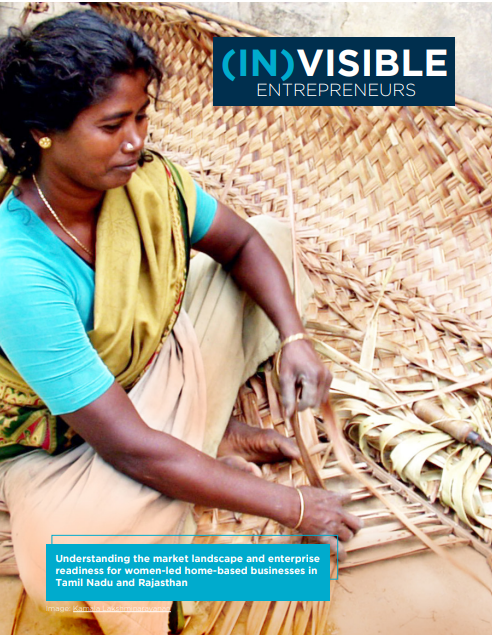
Understanding the Market Landscape and Enterprise Readiness for Women-led Home-based Businesses

Women entrepreneurs contribute to the Indian economy in terms of GDP and employment. Despite this, they face gender specific barriers in labour force participation, such as, market, mobility, time, and credit constraints. These factors have been the driving forces behind the emergence of home-based businesses led by women especially in the informal sector. As a part of IWWAGE’s strategic vision to facilitate women’s economic empowerment through an evidence-based approach, Part 1 of the study aims to map the market landscape for home-based handicraft and handloom enterprises led by women, and assess their readiness. The subsequent study (Part 2) will look to answer critical questions related to credit access, and alternatives to existing credit scoring mechanisms. To capture a granular perspective on the state of market access and supply chain linkages, 800 home-based women entrepreneurs were surveyed across Rajasthan and Tamil Nadu. The study sheds light on the need for two approaches when designing policy interventions for improving the market landscape of female entrepreneurs. The first is the need for a facilitative and enabling ecosystem for home-based entrepreneurs because the market landscape itself lacks structure and formality with significant variations across the two states. Second, women entrepreneurs should not be approached as a singular segment but instead, need to be segmented according to their nuanced needs and strengths. A targeted approach through looking at personas or the type of entrepreneurs could be a great beginning. Based on insights from the survey, a diagnostic policy framework Business Readiness Scorecard for Women (WBRS) has been developed to identify priority areas for intervention.
Report

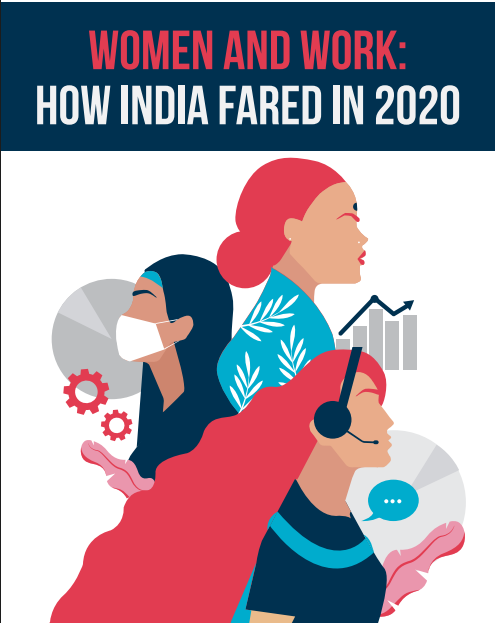
Women and Work: How India fared in 2020

Women and girls across the world have been disproportionately affected in the year of the pandemic, not in terms of impact of the virus, but more so socially and economically. While India was rapidly responding to the health crisis, millions of Indians were grappling with the unintended impacts of lockdown measures on the economy and their livelihoods. Even before the onset of COVID-19, India’s female workforce was largely invisible, underpaid, under-protected and constituted largest segment of the informal workforce, which is among the worst-hit this year. But several opportunities exist in 2021 to ensure that India’s women are not left behind in its recovery plans. Against this backdrop, IWWAGE and The Quantum Hub (TQH) authored a report that draws from various studies, data sources and nationally-representative data sets to look at the key trends and policy developments that came to shape and define the lives of women across India in 2020. This report captures key data on economic and social indicators (like female labour force participation, barriers to work and livelihoods, financial inclusion, digital access, skilling, education and violence against women) that played a central role in determining women’s role in the Indian economy this year.
Report

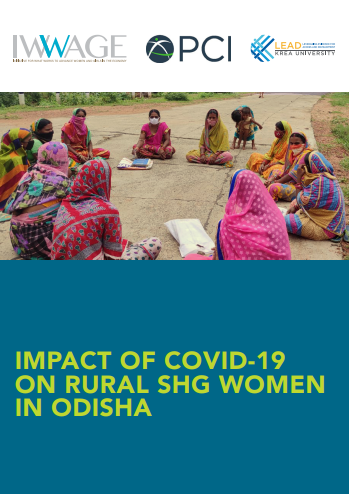
Impact of COVID-19 on Rural SHG Women in Odisha

The COVID-19 pandemic and subsequent lockdowns to curb the virus have had far-reaching impacts globally. The situation in India has been particularly difficult, with the country recording over 8.9 million cases as of November 2020. The nation-wide lockdown announced on 24 March 2020 had devastating effects on millions of people, their livelihoods and income generating activities. Given the scale of the crisis, it becomes imperative to focus on the impacts on already disadvantaged groups, and more specifically, on women and girls. Experiences from past disease outbreaks globally, demonstrate the need for a gendered analysis for preparedness and response. This report presents findings from the study, Impact of COVID-19 on Rural SHG Women in Odisha, conducted by the Initiative for What Works to Advance Women and Girls in the Economy (IWWAGE) and Project Concern International (PCI). The main objectives of this study were to (i) study the overall impacts on women’s well-being during and post the lockdown period, and (ii) understand SHG participation in COVID-19 response activities. Overall, the study demonstrates that rural women in Odisha have had to contend with rising stress and anxiety, loss of income, and an increased load of household work. Concomitantly, the SHG movement has proved to be an immense source of strength and support for women. The report concludes with a set of recommendations to strengthen the SHG platforms and state- run gender initiatives, and to invest in digital tools as these have proved to be a means through which women have kept in touch with family and friends in difficult times.
Learning note

Making a Gender Responsive Urban Employment Guarantee Scheme

The COVID-19 pandemic severely impacted urban livelihoods in India, with over 21 million salaried jobs lost between April and August 2020. Women, particularly those in the informal sector, faced disproportionate job losses, further compounding their already low participation in the labour force. Sectors employing large numbers of women-such as domestic work, construction, and beauty services-were among the hardest hit. Even in the formal economy, women in temporary or part-time roles were more vulnerable to layoffs and lacked access to social security. The crisis has highlighted the urgent need for an urban employment guarantee programme, akin to MGNREGA, which has shown positive outcomes for women in rural areas. Several states have already taken the lead in pilotig such schemes. These efforts present a crucial opportunity to design gender-responsive urban employment programmes that support women’s livelihoods, build resilience, and boost overall economic recovery.
Scroll to Top