


Publications
Publications
Category
Year

Strengthening the Skilling Ecosystem: Leveraging the Potential of the Private Sector in India
- August , 2023
- Prakriti Sharma

Needs Assessment of Childcare Facilities
- July , 2023
- Sona Mitra , Neelanjana Gupta ,Trisha Chandra
SWAYAM Process Evaluation
- July , 2023
- Valentina Brailovskaya , Bhavya Khare , Debendra Nag

Hybrid Work and its Effect on Womens Labour Force Participation
- June , 2023
- Sona Mitra | Preethi Rao | Aishwarya Joshi

Emerging Priorities in the Care Sector: Opportunities for Indias G20 Presidency
- June , 2023
- Sruthi Kutty | Sona Mitra
Gender in Focus
- June , 2023
- IWWAGE
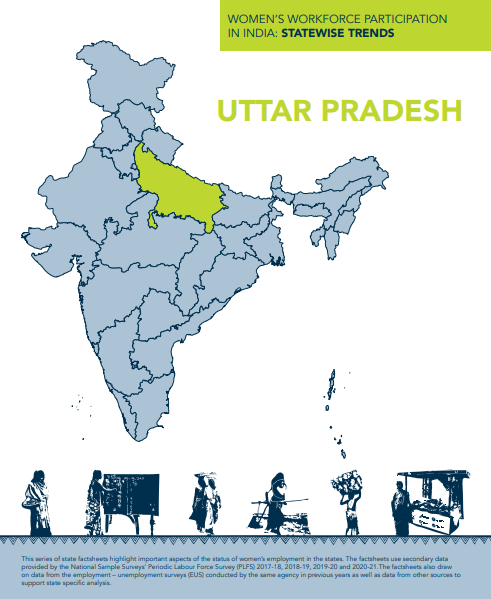
Women’s Workforce Participation in India: Statewise Trends
- April , 2023
- Suchika Gupta , Sona Mitra , Bidisha Mondal

Women’s Workforce Participation in India: Statewise Trends
- April , 2023
- Suchika Gupta , Sona Mitra , Bidisha Mondal

Women’s Workforce Participation in India: Statewise Trends
- April , 2023
- Suchika Gupta, Sona Mitra, Bidisha Mondal

Women’s Workforce Participation in India: Statewise Trends
- April , 2023
- Nidhi Gyan Pandey

Exploring linkages between womens empowerment workforce participation and population dynamics in the Indian context: A comprehensive macro micro analysis
- November , 2025

Trends in Female Labour Force Participation in West Bengal
- October , 2025
- Vidhi and Bidisha Mondal
West Bengal has seen strong economic growth driven by manufacturing, MSMEs and investment, with GSDP projected to grow 12 per cent in 2025–26. However, per capita income remains below the national average. The state has lost around 3 million informal jobs in recent years, disproportionately affecting women, while high outmigration, especially of skilled workers, continues to reshape the labour market. Women remain concentrated in low-productivity informal sectors such as agriculture and domestic work, resulting in low female labour force participation and underscoring the need for targeted employment policies.


Working or Not: What Determines Women’s Labour Force Participation in India?
- May , 2021
- Ruchika Chaudhary
This paper delves into the persistent gender gaps in India’s labour market, highlighting the alarming decline in women’s labour force participation despite socio-economic progress. Using data from the Periodic Labour Force Surveys (PLFS) and the National Sample Survey Office (NSSO), it examines the key factors contributing to this trend, including the disproportionate burden of unpaid care work. The paper underscores the need for targeted policies, such as vocational training and gender-responsive initiatives, to empower women and break down barriers to their economic participation.

A Crisis in Care India’s Ageing Population and the Need for Strengthened Eldercare – Hindi
- September , 2025

A Crisis in Care India’s Ageing
- September , 2025
- Ananya Sharma, Harshita Kumari