


This factsheet highlights Bihar’s significant development challenges, including the lowest female workforce participation rate (WPR) in India at just 2.8%. It underscores the urgent need for policy action to address disparities in women’s employment and offers a comparison with national averages to highlight key gaps in gender development.
Publications
Publications
Category
Year
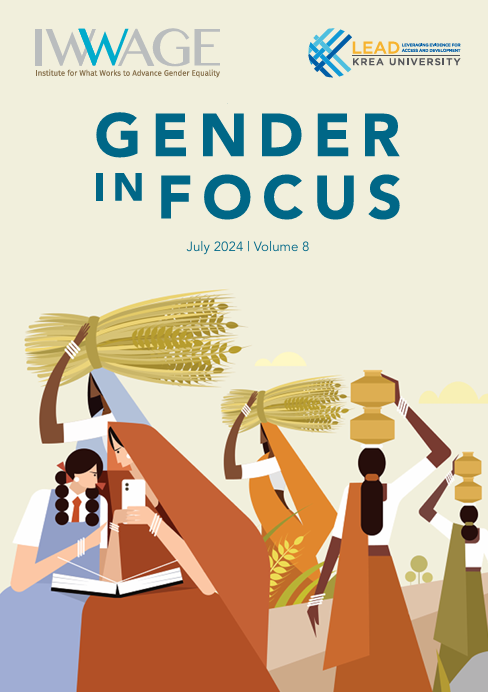
Newsletter (Gender In Focus)
Gender in Focus
- July , 2024
- IWWAGE
This edition of “Gender in Focus” explores key topics such as gender-based violence, empowering women in STEM and the care sector’s emerging priorities. It also feature updates from our networks and coalitions. Each article reflects our collective effort to drive meaningful change and inspire action towards a more equitable society.
This edition of “Gender in Focus” explores key topics such as gender-based violence, empowering women in STEM and the care sector’s emerging priorities. It also feature updates from our networks and coalitions. Each article reflects our collective effort to drive meaningful change and inspire action towards a more equitable society.

Learning note
Digitization and its Effects on Female Labour Force Participation in India
- May , 2024
- Kuhuo Bajaj
India has witnessed a manifold increase in awareness and accessibility of job opportunities thanks to an increase in digitisation in all sectors. Technology has created new jobs and has made old jobs more accessible and convenient. Remote work opportunities, online training modules, and networking have become easier due to the internet, but its benefits are skewed. This paper explores the impact of increasing digitisation on female labour force participation (FLFP). Digitalisation is associated with improving gender outcomes, alongside various socio-economic factors. Research highlights how increasing the use of digital finance, improved digital infrastructure and digital awareness has a strong positive and significant correlation with FLFP. The paper investigates opportunities provided by digitalisation for enhancing women’s economic contribution and empowerment in both rural and urban settings.
India has witnessed a manifold increase in awareness and accessibility of job opportunities thanks to an increase in digitisation in all sectors. Technology has created new jobs and has made old jobs more accessible and convenient. Remote work opportunities, online training modules, and networking have become easier due to the internet, but its benefits are skewed. This paper explores the impact of increasing digitisation on female labour force participation (FLFP). Digitalisation is associated with improving gender outcomes, alongside various socio-economic factors. Research highlights how increasing the use of digital finance, improved digital infrastructure and digital awareness has a strong positive and significant correlation with FLFP. The paper investigates opportunities provided by digitalisation for enhancing women’s economic contribution and empowerment in both rural and urban settings.

Report
Barriers & Opportunities For Aspirational Women Entrepreneurs
- April , 2024
- Neelanjana Gupta | Preethi Rao
This study, conducted in partnership with the Delhi Skill and Entrepreneurship University (DSEU) and the Government of NCT of Delhi, assesses the enterprise readiness of women across five Anganwadi Hubs (AWHs) in the city under the Saheli Samanvay Kendra (SSK) Scheme. Drawing from both quantitative and qualitative data, it explores the demographic profile, motivations, aspirations, and challenges of women’s particularly housewives, unemployed individuals, and informal worker’s seeking to engage in entrepreneurial activities. The findings highlight the critical need for targeted support, especially around access to finance, confidence building, and balancing domestic responsibilities with business pursuits. The study also captures a strong appetite for skill development, with women expressing interest in both technical and soft skills training, particularly if offered at familiar, community-based locations like Anganwadi Centres. These insights directly inform the design of training programmes and the structure of a dedicated fellowship module under the SSK Scheme, which aims to mobilise and mentor women entrepreneurs. The report offers practical recommendations for policymakers and training institutions, underscoring the potential of structured, accessible interventions to advance women’s economic empowerment at the grassroots level.
This study, conducted in partnership with the Delhi Skill and Entrepreneurship University (DSEU) and the Government of NCT of Delhi, assesses the enterprise readiness of women across five Anganwadi Hubs (AWHs) in the city under the Saheli Samanvay Kendra (SSK) Scheme. Drawing from both quantitative and qualitative data, it explores the demographic profile, motivations, aspirations, and challenges of women’s particularly housewives, unemployed individuals, and informal worker’s seeking to engage in entrepreneurial activities. The findings highlight the critical need for targeted support, especially around access to finance, confidence building, and balancing domestic responsibilities with business pursuits. The study also captures a strong appetite for skill development, with women expressing interest in both technical and soft skills training, particularly if offered at familiar, community-based locations like Anganwadi Centres. These insights directly inform the design of training programmes and the structure of a dedicated fellowship module under the SSK Scheme, which aims to mobilise and mentor women entrepreneurs. The report offers practical recommendations for policymakers and training institutions, underscoring the potential of structured, accessible interventions to advance women’s economic empowerment at the grassroots level.
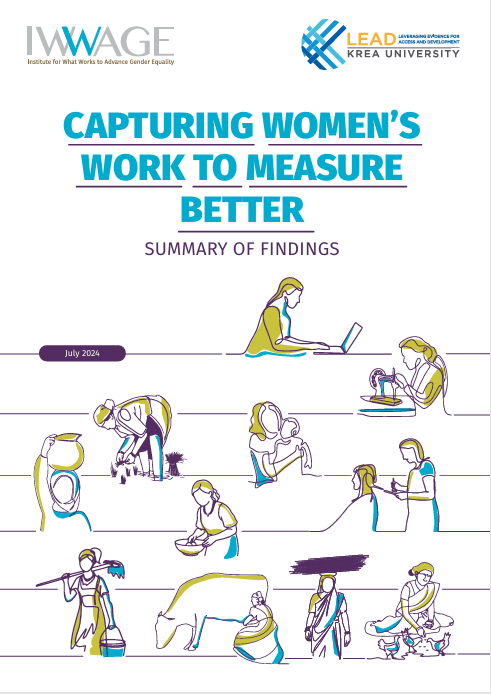
Brief
Capturing Women’s Work To Measure Better
- April , 2024
- Dr. Sona Mitra, Dr. Bidisha Mondal and Prakriti Sharma
Women’s work is often underestimated in labour force surveys due to its complex nature, which includes economic, non-economic, and unpaid work such as domestic tasks and caregiving.This study aims to address these gaps by testing innovative survey techniques that provide more accurate estimates of women’s participation in the workforce. It also examines perception bias in proxy-reporting.
Women’s work is often underestimated in labour force surveys due to its complex nature, which includes economic, non-economic, and unpaid work such as domestic tasks and caregiving.This study aims to address these gaps by testing innovative survey techniques that provide more accurate estimates of women’s participation in the workforce. It also examines perception bias in proxy-reporting.

Learning note
Women in STEM – Challenges and Opportunities in India
- February , 2024
- Sayak Sinha , Devika Oberai , Srijan Rai
The nature of work is rapidly changing due to various factors such as skilling outcomes, sector-specific job creation, and demographic shifts. Global estimates suggest that up to 160 million women may need to transition into higher-skilled roles by 2030. In India, nearly 12 million women could face job losses due to automation, raising critical questions about how to retain women in the workforce. This series of briefs explores the future of work in India, using secondary research and interviews with key stakeholders to highlight gender-responsive strategies. The briefs examine thematic areas and principles that can support and enhance women’s workforce participation, ensuring that women remain central to the evolving employment landscape. By addressing the unique challenges faced by women, these insights aim to guide policy and action to create more inclusive and resilient workforces for the future.
The nature of work is rapidly changing due to various factors such as skilling outcomes, sector-specific job creation, and demographic shifts. Global estimates suggest that up to 160 million women may need to transition into higher-skilled roles by 2030. In India, nearly 12 million women could face job losses due to automation, raising critical questions about how to retain women in the workforce. This series of briefs explores the future of work in India, using secondary research and interviews with key stakeholders to highlight gender-responsive strategies. The briefs examine thematic areas and principles that can support and enhance women’s workforce participation, ensuring that women remain central to the evolving employment landscape. By addressing the unique challenges faced by women, these insights aim to guide policy and action to create more inclusive and resilient workforces for the future.
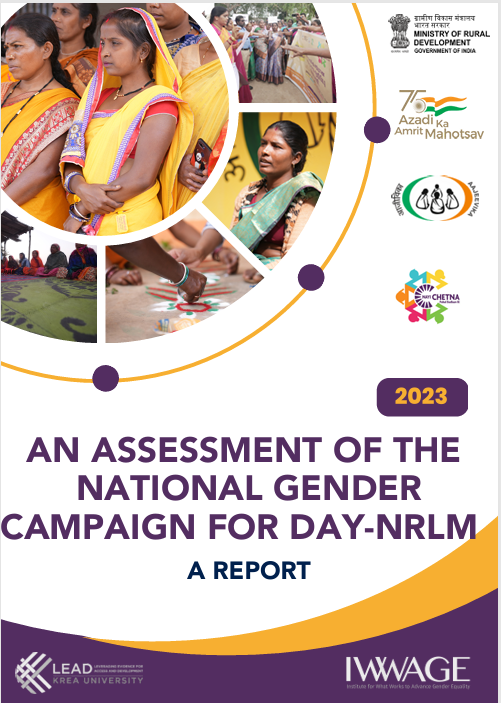
Report
An Assessment Of The National Gender Campaign For DAY-NRLM
- December , 2023
- Moumita Sarkar | Arpita Paul
The Deendayal Antyodaya Yojana-National Rural Livelihoods Mission (DAY-NRLM) is committed to addressing gender equality through its gender interventions, with a focus on eliminating gender-based violence (GBV). GBV, particularly violence against women and girls, remains one of the most significant barriers to personal growth, well-being, and living a life of dignity. Recognising this issue as a major obstacle to individual and societal development, DAY-NRLM has undertaken strategic efforts to combat GBV. To empower marginalised communities, especially women, in recognising and addressing the different forms of violence they face, DAY-NRLM launched the Nayi Chetna Pahal Badlav Ki campaign from 25th November to 23rd December 2022. This month-long initiative, aligned with the International Day for the Elimination of Violence Against Women, was inaugurated by the Honourable Union Minister for Rural Development, Shri Giriraj Singh. The campaign marks the beginning of an annual event focused on gender equity, with each year addressing a specific theme. The theme for Year 1 was Equity and Ending Gender-Based Violence. An assessment was conducted to evaluate the campaign’s reach, relevance, and effectiveness, highlighting the factors that enabled or constrained its success. The findings, drawn from both qualitative and quantitative data, offer valuable insights for improving future campaigns. The report incorporates information from DAY-NRLM’s Management Information System (MIS) and feedback from stakeholders across various administrative level’s state, district, block, Cluster-Level Federations (CLFs), and Village Organisations (VOs). Additionally, a national online survey, with over 20,000 Self-Help Group (SHG) members participating from nearly 5,000 CLFs across 24 states, contributed to the comprehensive assessment.
The Deendayal Antyodaya Yojana-National Rural Livelihoods Mission (DAY-NRLM) is committed to addressing gender equality through its gender interventions, with a focus on eliminating gender-based violence (GBV). GBV, particularly violence against women and girls, remains one of the most significant barriers to personal growth, well-being, and living a life of dignity. Recognising this issue as a major obstacle to individual and societal development, DAY-NRLM has undertaken strategic efforts to combat GBV. To empower marginalised communities, especially women, in recognising and addressing the different forms of violence they face, DAY-NRLM launched the Nayi Chetna Pahal Badlav Ki campaign from 25th November to 23rd December 2022. This month-long initiative, aligned with the International Day for the Elimination of Violence Against Women, was inaugurated by the Honourable Union Minister for Rural Development, Shri Giriraj Singh. The campaign marks the beginning of an annual event focused on gender equity, with each year addressing a specific theme. The theme for Year 1 was Equity and Ending Gender-Based Violence. An assessment was conducted to evaluate the campaign’s reach, relevance, and effectiveness, highlighting the factors that enabled or constrained its success. The findings, drawn from both qualitative and quantitative data, offer valuable insights for improving future campaigns. The report incorporates information from DAY-NRLM’s Management Information System (MIS) and feedback from stakeholders across various administrative level’s state, district, block, Cluster-Level Federations (CLFs), and Village Organisations (VOs). Additionally, a national online survey, with over 20,000 Self-Help Group (SHG) members participating from nearly 5,000 CLFs across 24 states, contributed to the comprehensive assessment.

Towards A Feminist Just Energy Transition in Asia
- December , 2023
- Arimbi Wahono and Laura Doanová
Energy transitions are not gender-neutral, and their impacts vary across social groups. In Asia, women—especially in rural and low-income communities—are disproportionately affected by energy poverty, environmental degradation, and climate change. Limited access to assets such as land and capital restricts women’s ability to adapt to transition processes. At the same time, women’s greater burden of unpaid care work reduces their access to paid employment, education, and training, weakening their capacity to navigate structural transitions. With Asia home to half of the world’s population and a large share living in poverty, these vulnerabilities are further intensified in the face of climate shocks (Oxfam 2022).
Energy transitions are not gender-neutral, and their impacts vary across social groups. In Asia, women—especially in rural and low-income communities—are disproportionately affected by energy poverty, environmental degradation, and climate change. Limited access to assets such as land and capital restricts women’s ability to adapt to transition processes. At the same time, women’s greater burden of unpaid care work reduces their access to paid employment, education, and training, weakening their capacity to navigate structural transitions. With Asia home to half of the world’s population and a large share living in poverty, these vulnerabilities are further intensified in the face of climate shocks (Oxfam 2022).
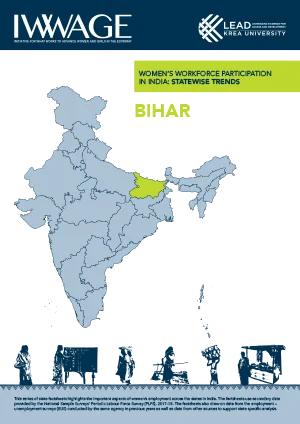
Factsheet
Women’s Workforce Participation in India: Statewise Trends
- November , 2023
- Sona Mitra, Hiya Singh Rajput
Located in the eastern region of the country, Bihar bears the ignominy of being among the poorest states of India with very low development outcomes and indicators in the domains of education, health, food security, hunger and nutrition.The factsheet explicitly points towards certain stark aspects of the status of women’s employment in Bihar – which require urgent policy attention – and highlights the overt disparities through a comparison with the national averages.
Located in the eastern region of the country, Bihar bears the ignominy of being among the poorest states of India with very low development outcomes and indicators in the domains of education, health, food security, hunger and nutrition.The factsheet explicitly points towards certain stark aspects of the status of women’s employment in Bihar – which require urgent policy attention – and highlights the overt disparities through a comparison with the national averages.

Learning note
Designing Gender Responsive Apprenticeship Programs
- September , 2023
- Sona Mitra | Preethi Rao | Sonakshi Chaudhary
The National Apprenticeship Promotion Scheme (NAPS) and the National Apprentice Training Scheme (NATS) aim to enhance skill development and boost employment opportunities in India. However, the overwhelming male dominance in these programs highlights a significant gender gap in their implementation. To address this, several measures are recommended to promote greater female participation. Key recommendations include collecting gender-disaggregated data to understand women’s choices, incentivising employers to hire more women apprentices, and conducting awareness campaigns targeted at women. Additionally, creating gender-sensitive infrastructure and addressing social norms that limit women’s participation are essential steps toward inclusivity. Integrating NAPS with the upcoming DESHStack portal will further enhance women’s access to apprenticeship opportunities and improve their transition into the workforce. Implementing these steps will create a more gender-responsive apprenticeship system, fostering economic growth and empowerment for women.
The National Apprenticeship Promotion Scheme (NAPS) and the National Apprentice Training Scheme (NATS) aim to enhance skill development and boost employment opportunities in India. However, the overwhelming male dominance in these programs highlights a significant gender gap in their implementation. To address this, several measures are recommended to promote greater female participation. Key recommendations include collecting gender-disaggregated data to understand women’s choices, incentivising employers to hire more women apprentices, and conducting awareness campaigns targeted at women. Additionally, creating gender-sensitive infrastructure and addressing social norms that limit women’s participation are essential steps toward inclusivity. Integrating NAPS with the upcoming DESHStack portal will further enhance women’s access to apprenticeship opportunities and improve their transition into the workforce. Implementing these steps will create a more gender-responsive apprenticeship system, fostering economic growth and empowerment for women.

Learning note
Indian Skilling Ecosystem: Potential and Gaps
- August , 2023
- Aparna G | Sona Mitra | Bidisha Mondal
The Indian skilling ecosystem has seen significant investment to position the country as a global skill capital. However, despite these efforts, India continues to face challenges in female labour force participation (FLFP). Evidence shows that over half of women outside the workforce express a desire to gain skills for employment, yet they face multiple barriers such as limited access to training, gender-normative course selections, and poor job retention. This brief explores the gaps in India’s skilling ecosystem, highlighting the need for gender-inclusive training programmes, better data collection on women’s participation, and addressing structural barriers that impede women’s progress from training to employment. Key recommendations include creating gender-responsive infrastructure, offering tailored curricula for women, and improving post-placement support to ensure higher retention in the workforce. By addressing these challenges, India can maximise the potential of skilling programmes to enhance women’s economic empowerment and drive inclusive economic growth.
The Indian skilling ecosystem has seen significant investment to position the country as a global skill capital. However, despite these efforts, India continues to face challenges in female labour force participation (FLFP). Evidence shows that over half of women outside the workforce express a desire to gain skills for employment, yet they face multiple barriers such as limited access to training, gender-normative course selections, and poor job retention. This brief explores the gaps in India’s skilling ecosystem, highlighting the need for gender-inclusive training programmes, better data collection on women’s participation, and addressing structural barriers that impede women’s progress from training to employment. Key recommendations include creating gender-responsive infrastructure, offering tailored curricula for women, and improving post-placement support to ensure higher retention in the workforce. By addressing these challenges, India can maximise the potential of skilling programmes to enhance women’s economic empowerment and drive inclusive economic growth.
SWAYAM
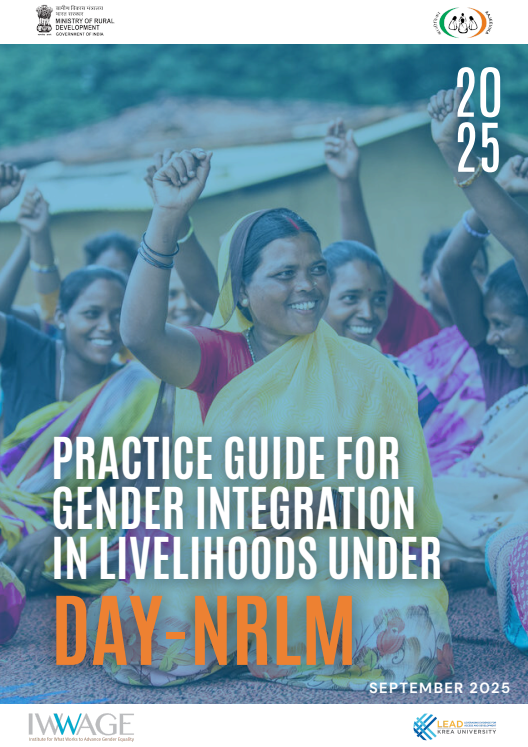
Practice Guide for Gender Integration in Livelihoods under DAY-NRLM
- September , 2025
- Shilpa Vasavada | Seema Bhaskaran
This booklet is intended for the livelihoods vertical and serves as a practical, field-focused Guide for teams on integrating gender into livelihoods interventions. Since these interventions include both farm-based and nonfarm- based activities, the booklet addresses each type separately, following a gender-responsive and progressively gender-transformative approach.
This booklet is intended for the livelihoods vertical and serves as a practical, field-focused Guide for teams on integrating gender into livelihoods interventions. Since these interventions include both farm-based and nonfarm- based activities, the booklet addresses each type separately, following a gender-responsive and progressively gender-transformative approach.

Report
Women and Work: How India fared in 2024
- September , 2025
- Aishwarya Bhuta, Harshita Kumari, Sohinee Thakurta, and Teesta Shukla.
The year 2024 marked a key moment for women and work in India, shaped by economic shifts, policy action, and technological change. Since 2021–22, new challenges and opportunities have influenced women’s workforce participation, alongside renewed efforts to advance women’s economic empowerment. Building on the vision of women-led development highlighted during India’s 2023 G20 presidency, momentum continued across multiple initiatives. This report examines key trends, policy developments, and emerging challenges shaping women’s work in 2024. Drawing on secondary data and research from IWWAGE and LEAD, it maps the evolving landscape of women’s work in India and identifies pathways to greater inclusion and economic agency.
The year 2024 marked a key moment for women and work in India, shaped by economic shifts, policy action, and technological change. Since 2021–22, new challenges and opportunities have influenced women’s workforce participation, alongside renewed efforts to advance women’s economic empowerment. Building on the vision of women-led development highlighted during India’s 2023 G20 presidency, momentum continued across multiple initiatives. This report examines key trends, policy developments, and emerging challenges shaping women’s work in 2024. Drawing on secondary data and research from IWWAGE and LEAD, it maps the evolving landscape of women’s work in India and identifies pathways to greater inclusion and economic agency.

Knowledge series
Migration Climate Change and Gender
- July , 2025
- Divya Singh (IWWAGE), Aiman Akhtar (PDAG)
Climate change is altering everyday life and livelihoods across India, and its impacts are not felt equally. Women, particularly those from marginalised and low-income communities, are often the first to absorb the effects of climate shocks, whether through disrupted livelihoods, migration, or the pressures of extreme weather. These experiences are shaped by long-standing social and economic inequalities, making it essential to look beyond sectoral solutions. One of the least visible but most affected areas is the care economy. As climate risks intensify, women’s unpaid and poorly paid care work expands, especially during displacement, crises, and recovery. Care work plays a critical role in helping families and communities cope with climate stress, yet it remains largely invisible within climate policy and planning. Looking at climate change through the lens of care helps reveal two connected dynamics: how climate risks reshape care responsibilities, and how the way care is organised influences resilience and adaptation. Recognising care, valuing women’s unpaid labour, and strengthening care systems are therefore not add-ons, but central to effective climate responses. This series of policy briefs, jointly developed by IWWAGE and PDAG, explores these connections in detail. It examines how care work is shaped by climate-related vulnerabilities, labour transitions, and forced mobility, with close attention to gendered outcomes. The series is part of a broader climate–gender conversation that includes work, migration, governance, and energy transitions, while centring experiences from India and the Global South. Through this initiative, we aim to deepen understanding, inform policy choices, and contribute meaningfully to ongoing discussions on climate change, care, and gender equality.
Climate change is altering everyday life and livelihoods across India, and its impacts are not felt equally. Women, particularly those from marginalised and low-income communities, are often the first to absorb the effects of climate shocks, whether through disrupted livelihoods, migration, or the pressures of extreme weather. These experiences are shaped by long-standing social and economic inequalities, making it essential to look beyond sectoral solutions. One of the least visible but most affected areas is the care economy. As climate risks intensify, women’s unpaid and poorly paid care work expands, especially during displacement, crises, and recovery. Care work plays a critical role in helping families and communities cope with climate stress, yet it remains largely invisible within climate policy and planning. Looking at climate change through the lens of care helps reveal two connected dynamics: how climate risks reshape care responsibilities, and how the way care is organised influences resilience and adaptation. Recognising care, valuing women’s unpaid labour, and strengthening care systems are therefore not add-ons, but central to effective climate responses. This series of policy briefs, jointly developed by IWWAGE and PDAG, explores these connections in detail. It examines how care work is shaped by climate-related vulnerabilities, labour transitions, and forced mobility, with close attention to gendered outcomes. The series is part of a broader climate–gender conversation that includes work, migration, governance, and energy transitions, while centring experiences from India and the Global South. Through this initiative, we aim to deepen understanding, inform policy choices, and contribute meaningfully to ongoing discussions on climate change, care, and gender equality.

Knowledge series
Migration Climate Change and Gender
- July , 2025
- Divya Singh (IWWAGE), Aiman Akhtar (PDAG)
Climate change is altering everyday life and livelihoods across India, and its impacts are not felt equally. Women, particularly those from marginalised and low-income communities, are often the first to absorb the effects of climate shocks, whether through disrupted livelihoods, migration, or the pressures of extreme weather. These experiences are shaped by long-standing social and economic inequalities, making it essential to look beyond sectoral solutions. One of the least visible but most affected areas is the care economy. As climate risks intensify, women’s unpaid and poorly paid care work expands, especially during displacement, crises, and recovery. Care work plays a critical role in helping families and communities cope with climate stress, yet it remains largely invisible within climate policy and planning. Looking at climate change through the lens of care helps reveal two connected dynamics: how climate risks reshape care responsibilities, and how the way care is organised influences resilience and adaptation. Recognising care, valuing women’s unpaid labour, and strengthening care systems are therefore not add-ons, but central to effective climate responses. This series of policy briefs, jointly developed by IWWAGE and PDAG, explores these connections in detail. It examines how care work is shaped by climate-related vulnerabilities, labour transitions, and forced mobility, with close attention to gendered outcomes. The series is part of a broader climate–gender conversation that includes work, migration, governance, and energy transitions, while centring experiences from India and the Global South. Through this initiative, we aim to deepen understanding, inform policy choices, and contribute meaningfully to ongoing discussions on climate change, care, and gender equality.
Climate change is altering everyday life and livelihoods across India, and its impacts are not felt equally. Women, particularly those from marginalised and low-income communities, are often the first to absorb the effects of climate shocks, whether through disrupted livelihoods, migration, or the pressures of extreme weather. These experiences are shaped by long-standing social and economic inequalities, making it essential to look beyond sectoral solutions. One of the least visible but most affected areas is the care economy. As climate risks intensify, women’s unpaid and poorly paid care work expands, especially during displacement, crises, and recovery. Care work plays a critical role in helping families and communities cope with climate stress, yet it remains largely invisible within climate policy and planning. Looking at climate change through the lens of care helps reveal two connected dynamics: how climate risks reshape care responsibilities, and how the way care is organised influences resilience and adaptation. Recognising care, valuing women’s unpaid labour, and strengthening care systems are therefore not add-ons, but central to effective climate responses. This series of policy briefs, jointly developed by IWWAGE and PDAG, explores these connections in detail. It examines how care work is shaped by climate-related vulnerabilities, labour transitions, and forced mobility, with close attention to gendered outcomes. The series is part of a broader climate–gender conversation that includes work, migration, governance, and energy transitions, while centring experiences from India and the Global South. Through this initiative, we aim to deepen understanding, inform policy choices, and contribute meaningfully to ongoing discussions on climate change, care, and gender equality.

Factsheet
Trends in Female Labour and Workforce Participation – Assam
- July , 2025
- Aneek Choudhary and Vidhi
Assam has seen a sharp rise in female labour force participation since 2021–22, now above the national average (50% vs 42% in PLFS 2023–24). However, the 2022–23 gender gap appears distorted due to an NSSO weighting error in a few villages, which led to underreporting of female participation at district, state, and national levels. In parallel, pro-women initiatives such as Sarothi (interest-subsidised loans) and PMKVY 2.0 (industry-relevant skilling) are believed to have supported this improvement. Future analysis will use corrected PLFS data to better track trends and understand the drivers of rising female employment in Assam.
Assam has seen a sharp rise in female labour force participation since 2021–22, now above the national average (50% vs 42% in PLFS 2023–24). However, the 2022–23 gender gap appears distorted due to an NSSO weighting error in a few villages, which led to underreporting of female participation at district, state, and national levels. In parallel, pro-women initiatives such as Sarothi (interest-subsidised loans) and PMKVY 2.0 (industry-relevant skilling) are believed to have supported this improvement. Future analysis will use corrected PLFS data to better track trends and understand the drivers of rising female employment in Assam.
Assam has seen a sharp rise in female labour force participation since 2021–22, now above the national average (50% vs 42% in PLFS 2023–24). However, the 2022–23 gender gap appears distorted due to an NSSO weighting error in a few villages, which led to underreporting of female participation at district, state, and national levels. In parallel, pro-women initiatives such as Sarothi (interest-subsidised loans) and PMKVY 2.0 (industry-relevant skilling) are believed to have supported this improvement. Future analysis will use corrected PLFS data to better track trends and understand the drivers of rising female employment in Assam.

Report Snapshot
Swayam Process Evaluation: A Year-Long Ethnography Study, Madhya Pradesh & Odisha
- June , 2025
- Anushree Goenka, Lopamudra Nayak, Moumita Mandal, Shaheen Kauser, Sudhir Kumar Kori, Anubha Dixit, Mallika Mitra Biswas, Garvi Dhar, Pratyusha Barua, Surabhi Awasthi, Gayathri Sreedharan
This study assesses the impact of training programmes on community change and empowerment among leaders of Self-Help Groups (SHGs), Village Organisations (VOs), and Cluster-Level Federations (CLFs). It also includes interviews with district- and block-level officials from MPSRLM and OLM to examine how line departments collaborate with community institutions to address and resolve complaints.
This study assesses the impact of training programmes on community change and empowerment among leaders of Self-Help Groups (SHGs), Village Organisations (VOs), and Cluster-Level Federations (CLFs). It also includes interviews with district- and block-level officials from MPSRLM and OLM to examine how line departments collaborate with community institutions to address and resolve complaints.