Publications

Publications

Category

Year
Learning note

Women’s Workforce Participation in India: Statewise Trends

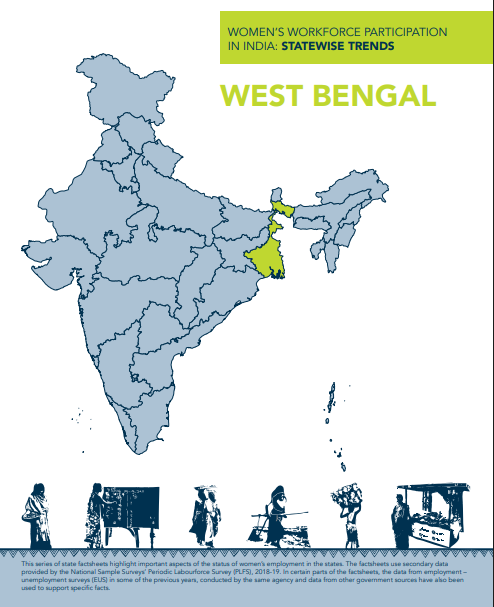
West Bengal, home to 99 million people, is the fourth most populous state in India. With a primarily rural population and agriculture as the main source of employment, women’s work participation rates remain low. Many women in rural areas engage in unpaid agricultural labor, particularly in paddy fields, leading to underreporting of their contributions. The state’s female labour force participation rate (FLFPR) is 17.5%, below the national average. Despite challenges, West Bengal shows strong performance in indicators like maternal mortality and sex ratio, though issues like gender inequality in the labour market and high rates of under-nutrition persist.
Working Paper

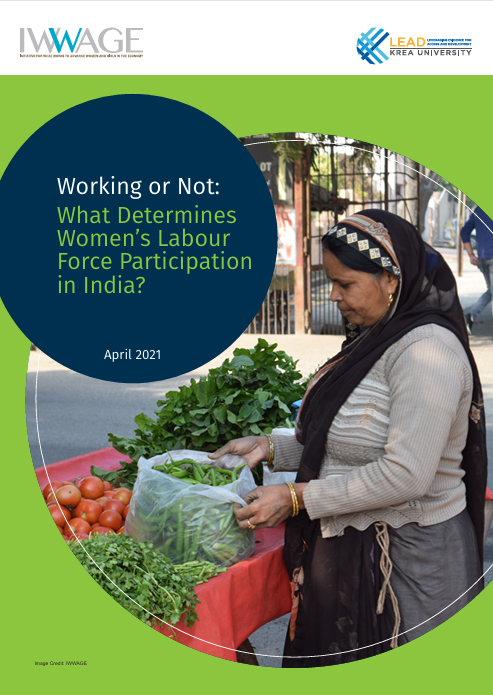
Working or Not: What Determines Women’s Labour Force Participation in India?

The working paper Working or Not: What Determines Women’s Labour Force Participation in India? is an output of the research vertical of the Initiative for What Works to Advance Women and Girls in the Economy (IWWAGE), an initiative of LEAD at Krea University.
SWAYAM

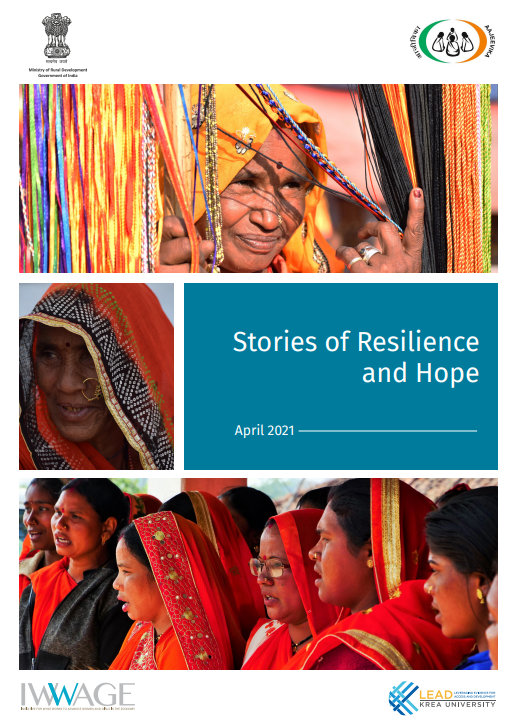
Stories of Resilience and Hope

The case studies in this compendium showcase and bring visibility to DAY-NRLM’s programmatic work, the different types of gender initiatives that are being implemented to build women’s capacities and voice, and amplify women’s voices and experiences. The cases have been selected to by the State Rural Livelihood Mission (SRLM) for each state, and underscore the brilliant work currently underway.
Learning note

Global Policy Summary: Childcare Crisis

The COVID-19 pandemic magnified the global childcare crisis, exposing deep inequalities in how care work is valued and distributed. With school closures and limited access to childcare services, unpaid care burdens surged-falling disproportionately on women and girls. This not only undermined progress on gender equality but also strained families, reduced women’s economic participation, and weakened childcare systems globally. To ensure a just, resilient recovery, childcare must be placed at the centre of economic and social policy. Governments, donors, and the private sector must work together to support care systems that enable women’s full participation in the workforce and recognise care as essential to economic growth and social well-being. Guided by the ILO’s 5Rs of Care Framework, the policy summary outlines a roadmap for action for pathways to a stronger, more equitable future.
Learning note

Global Executive Summary: Childcare Crisis

A year into the pandemic, we are no longer just worrying about progress on women’s equality coming to a standstill. We’re now seeing the possibility of such progress being reversed. Globally, women tend to work in low-paying jobs and in the informal sector’s precarious employment that has been upended by lockdowns and COVID-19 restrictions. Adding another layer to this burden, women’s unpaid care work is soaring. The childcare crisis is at a tipping point. Despite being key to human well-being and to the functioning of the economy, care work remains unrecognised, undervalued, and predominantly performed by women and girls the world over. The pandemic has accelerated the demand for care work and exacerbated entrenched gender inequalities. Childcare must be addressed within our COVID-19 recovery plans both to advance gender equality and because it makes fiscal sense. Bill & Melinda Gates Foundation, the International Development Research Centre (IDRC), and IWWAGE at LEAD have collaborated to undertake an evidence review of the current childcare crisis and the road for post-COVID recovery and resilience. This brief based on the paper released on International Women’s Day, March 8, 2021 outlines the different pathways in which COVID-19 is impacting women’s care burden, with recommendations for policy solutions and measures that could be explored in different contexts by governments, the private sector, and other key development actors, with a focus on low- and middle-income countries (LMICs).
IWWAGE-ISI-BRIEFS

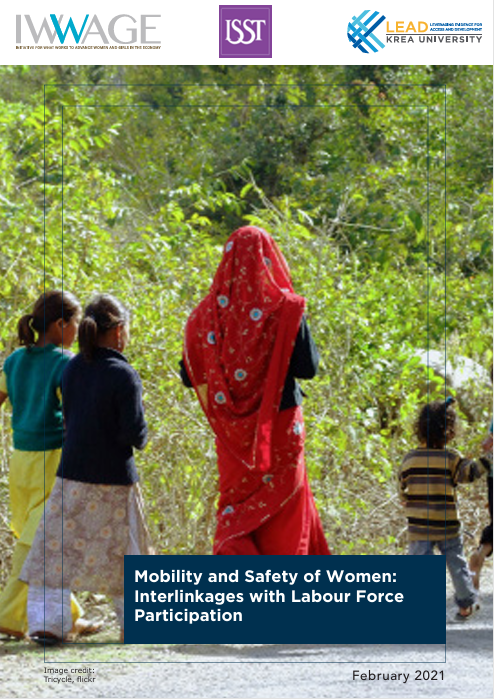
Mobility and Safety of Women

India’s economic growth has not translated into equal economic participation for women. Female labour force participation fell to a historic low of **23.3% in 2017–18**, with only a few countries reporting lower levels. A major barrier is **women’s safety**—fear of sexual violence in public spaces, transport, schools, and workplaces—which restricts mobility and reduces access to education, work, services, and public life. This perceived risk reinforces social norms limiting women’s freedom; for instance, many women require family permission even to visit a health centre. Improving **safe and affordable public transport**, **women-friendly urban infrastructure**, and **inclusive workplace safety laws** can meaningfully enable higher female LFPR.
IWWAGE-ISI-BRIEFS

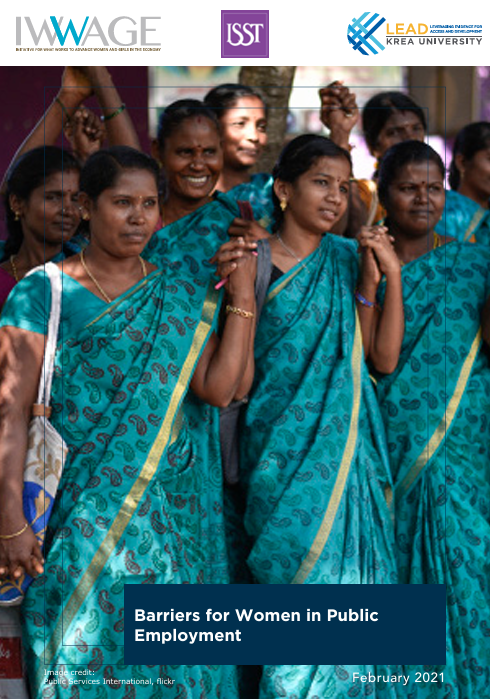
Barriers for Women in Public Employment

Despite strong growth and better health/economic outcomes since the 1990s, women’s labour force participation in India has stagnated or fallen—reaching 17.5% in 2017–18 (PLFS). Even before Covid-19, most working women were in insecure work: 80%+ were self-employed or casual workers, with under 20% in regular salaried jobs. The public sector is the largest source of formal jobs for women—22.6% of female non-agricultural workers are government-employed (about 27% in rural areas). Women also contribute through under-recognised public roles like Anganwadi workers (ICDS) and bank sakhis (NRLM). However, despite more educated young women being ready to work, structural barriers and reduced public hiring are limiting opportunities. With Covid-19 worsening unemployment and recovery needs, removing barriers to women’s public employment is crucial—both for job creation and wider benefits like better service delivery, stronger social protection, and higher household consumption.
Learning note

Women’s Workforce Participation In India: Statewise Trends

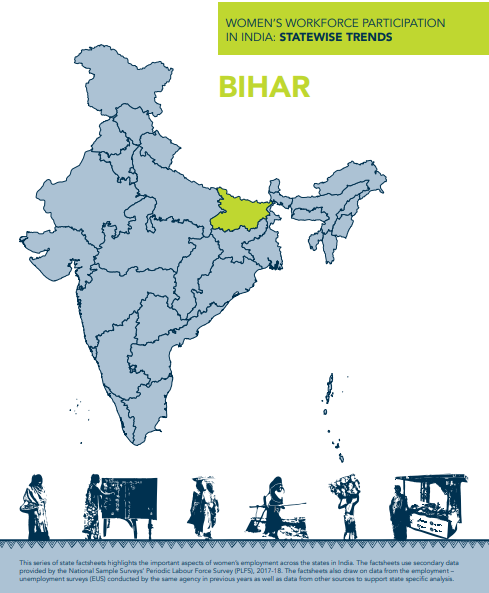
Bihar has the lowest female workforce participation rate (FWPR) among all states at 2.8 percent. The decline in FWPR has been shaper in rural areas as compared to urban areas, pushing a large number of women out of the workforce since 2007-08. With the decline in women workforce, there has been a substantial increase in the share of women in regular employment, in line with the national trend, and a significant decline in the share of self-employed, which is greater than the decline observed at the all India level. Women’s self-employment in Bihar is characterised by high incidence of own account work and low share of unpaid work, in contrast with all India figures.
Learning note

Women’s Workforce Participation In India: Statewise Trends

Women’s labourforce participation rates (LFPR) reveals some interesting trends for Maharashtra. As per the figures from the labourforce surveys, the LFPR is significantly higher than the all-India figures, largely driven by higher than average rural employment. The state also shares a decline in self-employment and casual employment and a shift towards regular wage work for both rural and urban women. In Maharashtra the urban areas witnessed a consistent rise in regular wage work of women since 2004-05. More than 60 percent of women are employed as regular workers 70 percent of which is concentrated in the services sector such as education, health and retail. In rural areas, the share of casual workers is considerably higher at around 42 percent, followed by 52 percent in self-employment. The incidence of unpaid family workers among self-employed women exceed 80 percent. While the urban areas show considerable diversity of women workers across occupations and sectors, women in the rural areas remain concentrated as manual workers in agriculture or within construction work.
Factsheet

Women’s Workforce Participation in India: Statewise Trends

This factsheet highlights Tamil Nadu’s strong economy, with a GSDP of Rs 18,45,853 crores, and impressive social development. The state ranks third in human development and boasts high female labour force participation rates (rural: 35.1%, urban: 23.6%) along with excellent gender indicators, including a low maternal mortality rate and one of the lowest crime rates against women in India.
Report Snapshot

Swayam Process Evaluation: A Year-Long Ethnography Study, Madhya Pradesh & Odisha

This study assesses the impact of training programmes on community change and empowerment among leaders of Self-Help Groups (SHGs), Village Organisations (VOs), and Cluster-Level Federations (CLFs). It also includes interviews with district- and block-level officials from MPSRLM and OLM to examine how line departments collaborate with community institutions to address and resolve complaints.
Report

Swayam Process Evaluation: A Year-Long Ethnography Study, Madhya Pradesh & Odisha

This study assesses the impact of training programmes on community change and empowerment among leaders of Self-Help Groups (SHGs), Village Organisations (VOs), and Cluster-Level Federations (CLFs). It also includes interviews with district- and block-level officials from MPSRLM and OLM to examine how line departments collaborate with community institutions to address and resolve complaints.
Factsheet

Trends in Female Labour and Workforce Participation-Bihar

Bihar, despite being one of India’s fastest-growing states, has the lowest female labour force participation rate, alongside a widening gender gap. Policy focus on girls’ education, skills, entrepreneurship, and social support through schemes such as the Balika Cycle Yojana, Akshar Anchal Yojana, and Kanya Suraksha Yojana have contributed to recent improvements in female participation. Using PLFS data, this factsheet examines trends and key characteristics of women’s employment in Bihar.
Factsheet

Trends in Female Labour Force Participation in Uttar Pradesh

Uttar Pradesh, India’s most populous state, has a large working-age female population but a female labor force participation rate that is well below the national average. Regional disparities, weak infrastructure in eastern UP, restrictive socio-cultural norms, and limited economic opportunities contribute to low participation. Female workforce participation has improved since 2017–18, supported by schemes such as the Mudra Yojana and Deendayal Antyodaya Yojana, which have expanded women’s access to credit, strengthened self-help groups, and promoted women’s economic empowerment across the state.
Factsheet

Trends in Female Labour Force and Workforce Participation- Haryana

Haryana has transitioned from an agrarian to a more industrial economy, characterized by strong agricultural output and growing sectors such as automotive and IT. Despite economic growth, unemployment remains high, particularly among youth and women, due to limited formal job opportunities and structural challenges. This factsheet analyses female labour force participation in Haryana from 2017–18 to 2023–24, highlighting sectoral trends, occupational segregation, and barriers to workforce entry.

Haryana has transitioned from an agrarian to a more industrial economy, characterized by strong agricultural output and growing sectors such as automotive and IT. Despite economic growth, unemployment remains high, particularly among youth and women, due to limited formal job opportunities and structural challenges. This factsheet analyses female labour force participation in Haryana from 2017–18 to 2023–24, highlighting sectoral trends, occupational segregation, and barriers to workforce entry.
Factsheet

Trends in Female Labour Force Participation in Gujrat

Gujarat records a female labour force participation rate above the national average, supported by government policies promoting women’s economic empowerment. Schemes such as Mukhyamantri Mahila Utkars Yojana and Mahila Swavalamban Scheme strengthen financial inclusion, self-help groups, and access to credit for women, especially those below the poverty line. The state also promotes women’s entrepreneurship through targeted training and awareness programmes. Using PLFS 2023–24 data, this factsheet examines women’s employment in Gujarat, focusing on job types, sectoral distribution, and key indicators shaping female workforce participation.

Gujarat records a female labour force participation rate above the national average, supported by government policies promoting women’s economic empowerment. Schemes such as Mukhyamantri Mahila Utkars Yojana and Mahila Swavalamban Scheme strengthen financial inclusion, self-help groups, and access to credit for women, especially those below the poverty line. The state also promotes women’s entrepreneurship through targeted training and awareness programmes. Using PLFS 2023–24 data, this factsheet examines women’s employment in Gujarat, focusing on job types, sectoral distribution, and key indicators shaping female workforce participation.
Scroll to Top