


Publications
Publications
Category
Year
Brief
Gender Samvaad Inaugural Event Report
- April , 2021
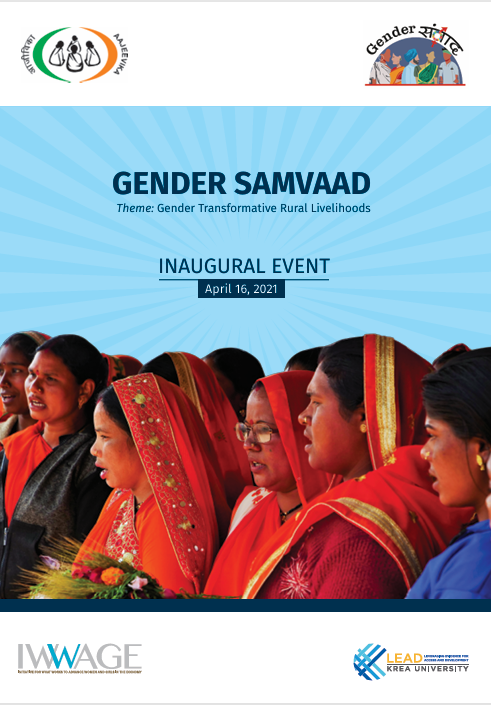
Gender Samvaad is a joint attempt between Deendayal Antyodaya Yojana- National Rural Livelihoods Mission (DAY NRLM) and the Initiative for What Works to Advance Women and Girls in the Economy (IWWAGE) to create a common platform for generating greater awareness on NRLM’s interventions across the country and best practices, with a focus on hearing voices from the states and the field. The event is part of the Azadi Amrut Mahotsav, launched by the Prime Minister of India to commemorate 75 years of India’s independence and share the glorious traditions and progress made in several areas. The Gender Samvaad was launched on April 16, 2021 at 4 PM. The online launch event brought together a distinguished panel of experts, including senior officials of the Ministry of Rural Development. In addition, it included voices of women champions from Andhra Pradesh, Jharkhand and Kerala, who shared their experiences on how gender mainstreaming efforts within the NRLM have helped enhance their agency. A compendium of case studies presenting inspiring stories of SHG members was also released at the event.
Gender Samvaad is a joint attempt between Deendayal Antyodaya Yojana- National Rural Livelihoods Mission (DAY NRLM) and the Initiative for What Works to Advance Women and Girls in the Economy (IWWAGE) to create a common platform for generating greater awareness on NRLM’s interventions across the country and best practices, with a focus on hearing voices from the states and the field. The event is part of the Azadi Amrut Mahotsav, launched by the Prime Minister of India to commemorate 75 years of India’s independence and share the glorious traditions and progress made in several areas. The Gender Samvaad was launched on April 16, 2021 at 4 PM. The online launch event brought together a distinguished panel of experts, including senior officials of the Ministry of Rural Development. In addition, it included voices of women champions from Andhra Pradesh, Jharkhand and Kerala, who shared their experiences on how gender mainstreaming efforts within the NRLM have helped enhance their agency. A compendium of case studies presenting inspiring stories of SHG members was also released at the event.

Brief
COVID-19 and Women’s Labour Crisis
- April , 2021
- Sona Mitra, Dipa Sinha
A pandemic that translates itself into an economic crisis has the potential to push women out of the labour force through several mechanisms. An economic crisis creates pressure on governments to cut down on social sector expenditures which potentially increases the burden of unpaid care and household work for women. As a result, women’s time for engaging in productive work gets reduced, having a negative impact on their labour force participation. The COVID-19 pandemic in India has had an unequal impact on women in a number of ways. In terms of economic opportunity, it has been seen that more women lost jobs compared to men and fewer have been able to rejoin labour force. This is in the context of gendered labour markets where female labour force participation has been low and declining. This paper presents an analysis of the situation of women’s employment pre-lockdown and some indications on what the impact of COVID-19 could be, based on microstudies and other literature available. Further, the adequacy of the social protection and employment generation programmes of the government that are specifically aimed at improving female labour force participation is assessed.
A pandemic that translates itself into an economic crisis has the potential to push women out of the labour force through several mechanisms. An economic crisis creates pressure on governments to cut down on social sector expenditures which potentially increases the burden of unpaid care and household work for women. As a result, women’s time for engaging in productive work gets reduced, having a negative impact on their labour force participation. The COVID-19 pandemic in India has had an unequal impact on women in a number of ways. In terms of economic opportunity, it has been seen that more women lost jobs compared to men and fewer have been able to rejoin labour force. This is in the context of gendered labour markets where female labour force participation has been low and declining. This paper presents an analysis of the situation of women’s employment pre-lockdown and some indications on what the impact of COVID-19 could be, based on microstudies and other literature available. Further, the adequacy of the social protection and employment generation programmes of the government that are specifically aimed at improving female labour force participation is assessed.
Working Paper
Womens Entrepreneurship in India
- April , 2021
- Shiney Chakraborty , Rhitabrita Mukherjee
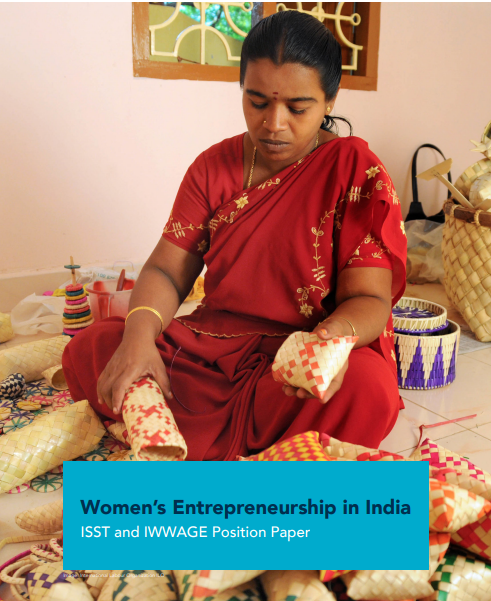
Women’s entrepreneurship has been considered an important instrument in achieving equity in the form of better quality of life for women in the developing world. Empowerment associated with female entrepreneurship changes a woman’s position in the family unit, her community and society, not only through financial independence, but through her acquisition of a position in the national workforce traditionally left to men in developing and underdeveloped regions. Successful women entrepreneurs have been significantly contributing to employment generation, socio-economic development, and further empowerment of the female cohort. But their contribution in India has to a great extent been subject to underlying facilitators and barriers. In India, women are still limited to the micro enterprise sector, both in rural and urban areas. It has become quite clear over the years that the role and contribution of female entrepreneurs in India has been pulled back by a myriad of socio-cultural systems still in place, and perceptions of the community against women leaders and female-headed firms. Of the 13.76 per cent female entrepreneurs reported in India now, most are small business owners rather than real entrepreneurs by definition. Entrepreneurial intention, interests and activities truly suffer in underdeveloped regions which lack physical and human capital and a conducive industrial environment. Therefore, individuals shift from being innovators to imitators, bringing in existing goods or techniques to virgin regions (Burger-Helmchen 2012). However, even such ventures on the part of entrepreneurs can bring about rapid economic development in backward areas. Rural entrepreneurship, which at this time mostly comprised female business owners, when encouraged through government interventions can radically transform the standard of living in such underdeveloped regions.
Women’s entrepreneurship has been considered an important instrument in achieving equity in the form of better quality of life for women in the developing world. Empowerment associated with female entrepreneurship changes a woman’s position in the family unit, her community and society, not only through financial independence, but through her acquisition of a position in the national workforce traditionally left to men in developing and underdeveloped regions. Successful women entrepreneurs have been significantly contributing to employment generation, socio-economic development, and further empowerment of the female cohort. But their contribution in India has to a great extent been subject to underlying facilitators and barriers. In India, women are still limited to the micro enterprise sector, both in rural and urban areas. It has become quite clear over the years that the role and contribution of female entrepreneurs in India has been pulled back by a myriad of socio-cultural systems still in place, and perceptions of the community against women leaders and female-headed firms. Of the 13.76 per cent female entrepreneurs reported in India now, most are small business owners rather than real entrepreneurs by definition. Entrepreneurial intention, interests and activities truly suffer in underdeveloped regions which lack physical and human capital and a conducive industrial environment. Therefore, individuals shift from being innovators to imitators, bringing in existing goods or techniques to virgin regions (Burger-Helmchen 2012). However, even such ventures on the part of entrepreneurs can bring about rapid economic development in backward areas. Rural entrepreneurship, which at this time mostly comprised female business owners, when encouraged through government interventions can radically transform the standard of living in such underdeveloped regions.
Compendium of best practices
Stories of Resilience and Hope
- April , 2021
- Seema Bhaskaran , Kaliat Ammu Sanyal , Prita Dasgupta
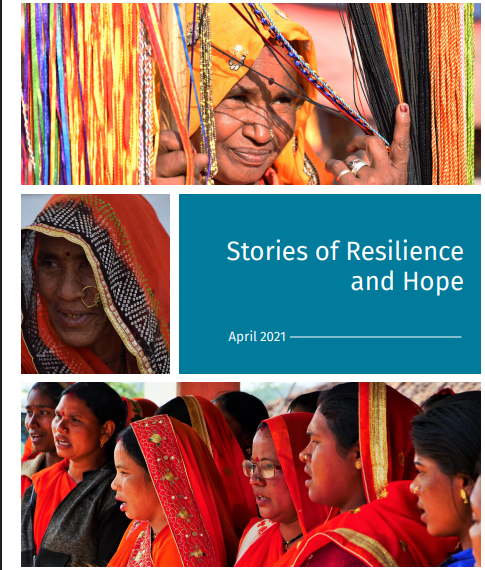
With over 60 million women mobilised to be part of one of India’s largest livelihoods programme, the Deendayal Antayodaya Yojana-National Rural Livelihoods Mission (DAY-NRLM), holds great promise for advancing women’s socio-economic empowerment by organising them into self-help groups (SHGs) and institutions of the rural poor. These platforms are facilitating financial opportunities and livelihood support services for women. The livelihoods programme works exclusively with rural women, and a critical element for its success has been the mission’s commitment towards prioritising women’s perspectives and being responsive to their needs and aspirations. This approach has been embedded across all DAY-NRLM activities with the goal of strengthening women’s agency, identity, well-being, and solidarity, through women’s collectivisation. Through the compendium “Stories of Hope and Resilience the Initiative for What Works to Advance Women and Girls in the Economy (IWWAGE) and the Deendayal Antyodaya Yojana National Rural Livelihood Mission (DAY-NRLM) attempt to showcase the life and experiences of rural women and their gendered disadvantage, struggles and barriers. Released on April 16, 2021 at the launch of the Gender Samvaad initiative by the honourable Secretary Rural Development, Shri Nagandra Nath Sinha, the compendium captures the stories of ten women, across seven states. These Stories of Hope and Resilience weave together narratives of grit, strength, perseverance and hope. These inspiring stories demonstrate the journeys that women have taken to change their circumstances and build better futures for themselves. The compendium of case studies is representative of a number of women around the country who have been supported by Deen Dayal Antyodaya Yojana – National Rural Livelihoods Mission, to overcome their circumstances and to lead more meaningful lives.
With over 60 million women mobilised to be part of one of India’s largest livelihoods programme, the Deendayal Antayodaya Yojana-National Rural Livelihoods Mission (DAY-NRLM), holds great promise for advancing women’s socio-economic empowerment by organising them into self-help groups (SHGs) and institutions of the rural poor. These platforms are facilitating financial opportunities and livelihood support services for women. The livelihoods programme works exclusively with rural women, and a critical element for its success has been the mission’s commitment towards prioritising women’s perspectives and being responsive to their needs and aspirations. This approach has been embedded across all DAY-NRLM activities with the goal of strengthening women’s agency, identity, well-being, and solidarity, through women’s collectivisation. Through the compendium “Stories of Hope and Resilience the Initiative for What Works to Advance Women and Girls in the Economy (IWWAGE) and the Deendayal Antyodaya Yojana National Rural Livelihood Mission (DAY-NRLM) attempt to showcase the life and experiences of rural women and their gendered disadvantage, struggles and barriers. Released on April 16, 2021 at the launch of the Gender Samvaad initiative by the honourable Secretary Rural Development, Shri Nagandra Nath Sinha, the compendium captures the stories of ten women, across seven states. These Stories of Hope and Resilience weave together narratives of grit, strength, perseverance and hope. These inspiring stories demonstrate the journeys that women have taken to change their circumstances and build better futures for themselves. The compendium of case studies is representative of a number of women around the country who have been supported by Deen Dayal Antyodaya Yojana – National Rural Livelihoods Mission, to overcome their circumstances and to lead more meaningful lives.

Working Paper
Women’s Awareness of Sexual Harassment and Labour Market Preferences
- April , 2021
- Karmini Sharma
The paper, Women’s Awareness of Sexual Harassment and Labour Market Preferences, is a part of the working paper series and has been produced with the help of IWWAGE research fellowship to young researchers in 2019.
The paper, Women’s Awareness of Sexual Harassment and Labour Market Preferences, is a part of the working paper series and has been produced with the help of IWWAGE research fellowship to young researchers in 2019.
Learning note
Women’s Workforce Participation in India: Statewise Trends
- April , 2021
- Nidhi Gyan Pandey
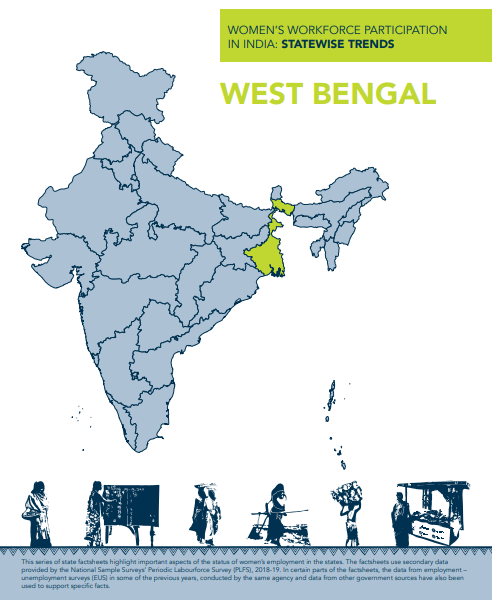
West Bengal, home to 99 million people, is the fourth most populous state in India. With a primarily rural population and agriculture as the main source of employment, women’s work participation rates remain low. Many women in rural areas engage in unpaid agricultural labor, particularly in paddy fields, leading to underreporting of their contributions. The state’s female labour force participation rate (FLFPR) is 17.5%, below the national average. Despite challenges, West Bengal shows strong performance in indicators like maternal mortality and sex ratio, though issues like gender inequality in the labour market and high rates of under-nutrition persist.
West Bengal, home to 99 million people, is the fourth most populous state in India. With a primarily rural population and agriculture as the main source of employment, women’s work participation rates remain low. Many women in rural areas engage in unpaid agricultural labor, particularly in paddy fields, leading to underreporting of their contributions. The state’s female labour force participation rate (FLFPR) is 17.5%, below the national average. Despite challenges, West Bengal shows strong performance in indicators like maternal mortality and sex ratio, though issues like gender inequality in the labour market and high rates of under-nutrition persist.
Working Paper
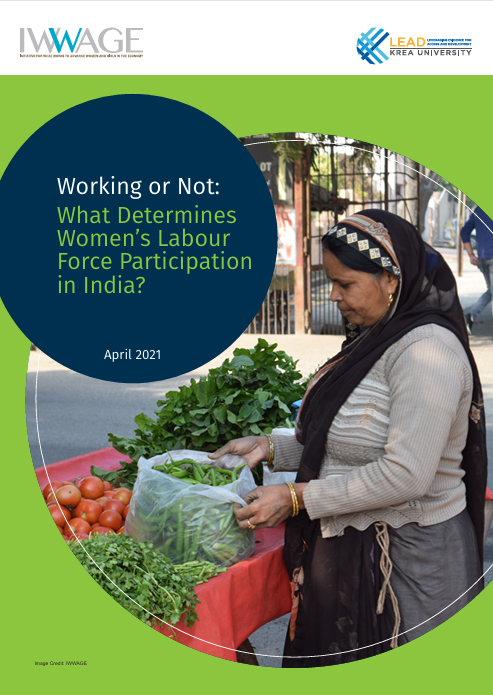
Working or Not: What Determines Women’s Labour Force Participation in India?
- April , 2021
- Ruchika Chaudhary
The working paper Working or Not: What Determines Women’s Labour Force Participation in India? is an output of the research vertical of the Initiative for What Works to Advance Women and Girls in the Economy (IWWAGE), an initiative of LEAD at Krea University.
The working paper Working or Not: What Determines Women’s Labour Force Participation in India? is an output of the research vertical of the Initiative for What Works to Advance Women and Girls in the Economy (IWWAGE), an initiative of LEAD at Krea University.
SWAYAM
Stories of Resilience and Hope
- April , 2021
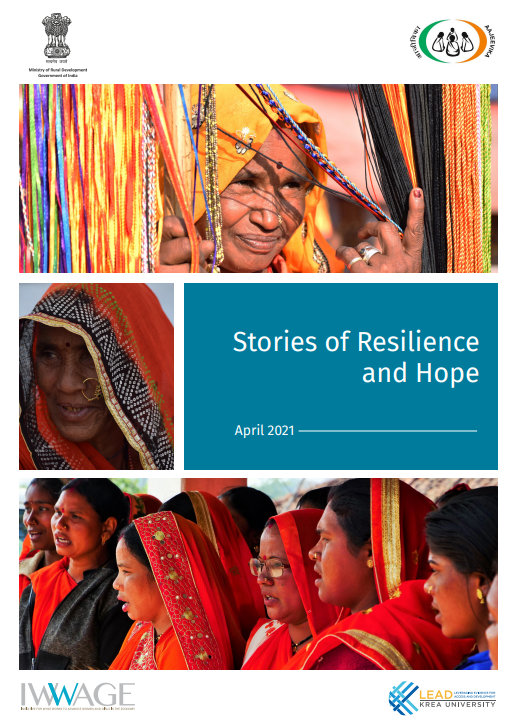
The case studies in this compendium showcase and bring visibility to DAY-NRLM’s programmatic work, the different types of gender initiatives that are being implemented to build women’s capacities and voice, and amplify women’s voices and experiences. The cases have been selected to by the State Rural Livelihood Mission (SRLM) for each state, and underscore the brilliant work currently underway.
The case studies in this compendium showcase and bring visibility to DAY-NRLM’s programmatic work, the different types of gender initiatives that are being implemented to build women’s capacities and voice, and amplify women’s voices and experiences. The cases have been selected to by the State Rural Livelihood Mission (SRLM) for each state, and underscore the brilliant work currently underway.

Learning note
Global Policy Summary: Childcare Crisis
- March , 2021
The COVID-19 pandemic magnified the global childcare crisis, exposing deep inequalities in how care work is valued and distributed. With school closures and limited access to childcare services, unpaid care burdens surged-falling disproportionately on women and girls. This not only undermined progress on gender equality but also strained families, reduced women’s economic participation, and weakened childcare systems globally. To ensure a just, resilient recovery, childcare must be placed at the centre of economic and social policy. Governments, donors, and the private sector must work together to support care systems that enable women’s full participation in the workforce and recognise care as essential to economic growth and social well-being. Guided by the ILO’s 5Rs of Care Framework, the policy summary outlines a roadmap for action for pathways to a stronger, more equitable future.
The COVID-19 pandemic magnified the global childcare crisis, exposing deep inequalities in how care work is valued and distributed. With school closures and limited access to childcare services, unpaid care burdens surged-falling disproportionately on women and girls. This not only undermined progress on gender equality but also strained families, reduced women’s economic participation, and weakened childcare systems globally. To ensure a just, resilient recovery, childcare must be placed at the centre of economic and social policy. Governments, donors, and the private sector must work together to support care systems that enable women’s full participation in the workforce and recognise care as essential to economic growth and social well-being. Guided by the ILO’s 5Rs of Care Framework, the policy summary outlines a roadmap for action for pathways to a stronger, more equitable future.
Learning note
Global Executive Summary: Childcare Crisis
- March , 2021
A year into the pandemic, we are no longer just worrying about progress on women’s equality coming to a standstill. We’re now seeing the possibility of such progress being reversed. Globally, women tend to work in low-paying jobs and in the informal sector’s precarious employment that has been upended by lockdowns and COVID-19 restrictions. Adding another layer to this burden, women’s unpaid care work is soaring. The childcare crisis is at a tipping point. Despite being key to human well-being and to the functioning of the economy, care work remains unrecognised, undervalued, and predominantly performed by women and girls the world over. The pandemic has accelerated the demand for care work and exacerbated entrenched gender inequalities. Childcare must be addressed within our COVID-19 recovery plans both to advance gender equality and because it makes fiscal sense. Bill & Melinda Gates Foundation, the International Development Research Centre (IDRC), and IWWAGE at LEAD have collaborated to undertake an evidence review of the current childcare crisis and the road for post-COVID recovery and resilience. This brief based on the paper released on International Women’s Day, March 8, 2021 outlines the different pathways in which COVID-19 is impacting women’s care burden, with recommendations for policy solutions and measures that could be explored in different contexts by governments, the private sector, and other key development actors, with a focus on low- and middle-income countries (LMICs).
A year into the pandemic, we are no longer just worrying about progress on women’s equality coming to a standstill. We’re now seeing the possibility of such progress being reversed. Globally, women tend to work in low-paying jobs and in the informal sector’s precarious employment that has been upended by lockdowns and COVID-19 restrictions. Adding another layer to this burden, women’s unpaid care work is soaring. The childcare crisis is at a tipping point. Despite being key to human well-being and to the functioning of the economy, care work remains unrecognised, undervalued, and predominantly performed by women and girls the world over. The pandemic has accelerated the demand for care work and exacerbated entrenched gender inequalities. Childcare must be addressed within our COVID-19 recovery plans both to advance gender equality and because it makes fiscal sense. Bill & Melinda Gates Foundation, the International Development Research Centre (IDRC), and IWWAGE at LEAD have collaborated to undertake an evidence review of the current childcare crisis and the road for post-COVID recovery and resilience. This brief based on the paper released on International Women’s Day, March 8, 2021 outlines the different pathways in which COVID-19 is impacting women’s care burden, with recommendations for policy solutions and measures that could be explored in different contexts by governments, the private sector, and other key development actors, with a focus on low- and middle-income countries (LMICs).
Factsheet
Trends in Female Labour Force Participation in Andhra Pradesh
- August , 2026
- Arpita Paul, Bidisha Mondal
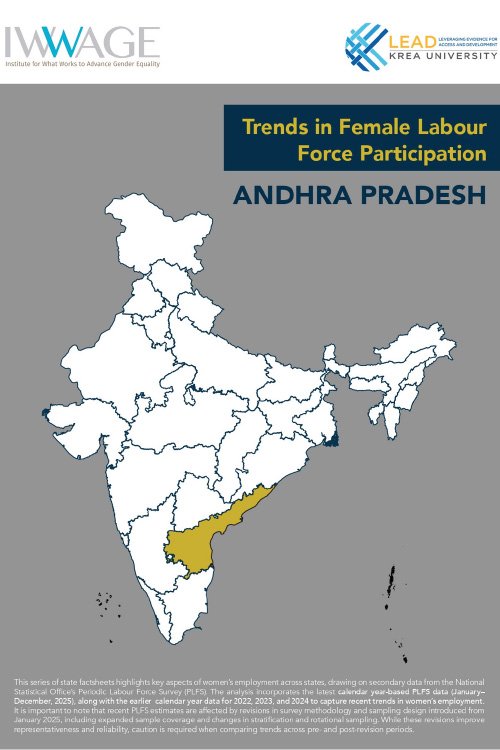
Andhra Pradesh, traditionally an agriculture-based economy, is increasingly transitioning toward manufacturing and services. This factsheet analyses trends in female labour force participation in Andhra Pradesh between 2022 and 2025 using data from the Periodic Labour Force Survey (PLFS). It examines changes in labour force participation and employment rates, employment status, sectoral and occupational distribution, job quality, and the barriers that continue to influence women’s participation in the labour market.
Andhra Pradesh, traditionally an agriculture-based economy, is increasingly transitioning toward manufacturing and services. This factsheet analyses trends in female labour force participation in Andhra Pradesh between 2022 and 2025 using data from the Periodic Labour Force Survey (PLFS). It examines changes in labour force participation and employment rates, employment status, sectoral and occupational distribution, job quality, and the barriers that continue to influence women’s participation in the labour market.
Factsheet
Trends in Female Labour Force Participation in Jharkhand
- July , 2026
- Vidhi Singh, Bidisha Mondal
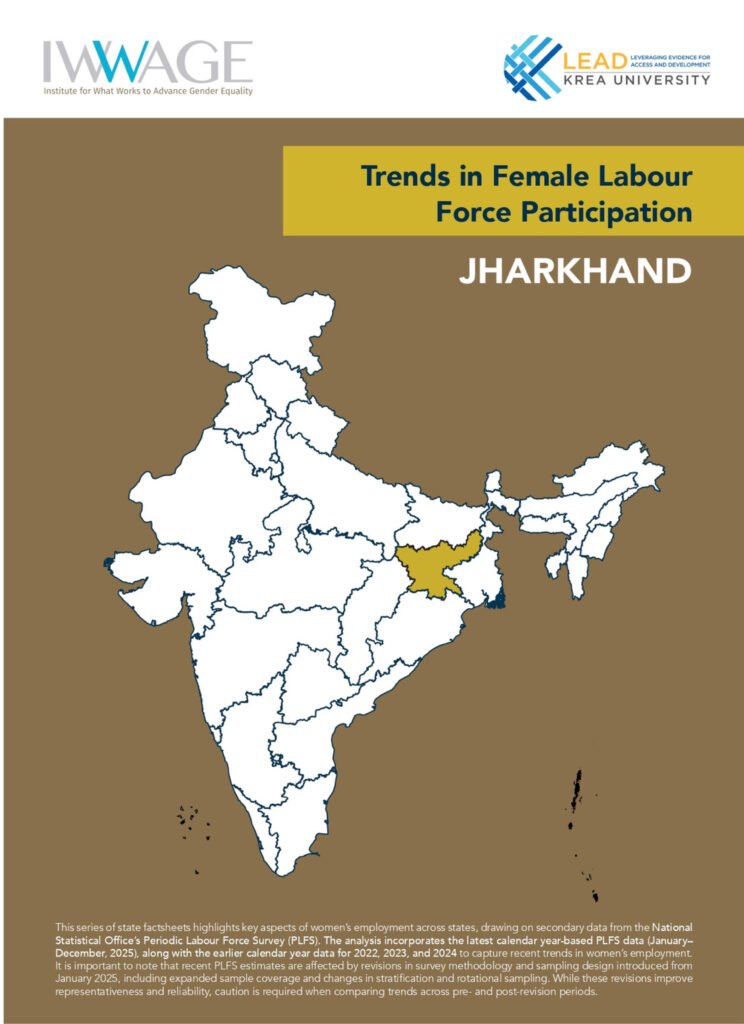
Female labour force participation in Jharkhand has historically remained below the national average. Overall, the literature highlights an employment structure characterised by informality, sectoral concentration, and limited diversification, particularly for women. This factsheet examines the evolving patterns of female labour force participation in Jharkhand, focusing on sectoral distribution, employment status, occupational structure, and the structural barriers shaping women’s engagement in the workforce
Female labour force participation in Jharkhand has historically remained below the national average. Overall, the literature highlights an employment structure characterised by informality, sectoral concentration, and limited diversification, particularly for women. This factsheet examines the evolving patterns of female labour force participation in Jharkhand, focusing on sectoral distribution, employment status, occupational structure, and the structural barriers shaping women’s engagement in the workforce
Factsheet
Trend in Female Labour Force Participation in India
- June , 2026
- Vidhi Singh | Bidisha Mondal
India’s labour market continues to show a marked structural imbalance in female workforce participation, even amid sustained economic growth since liberalisation. This factsheet examines recent trends in women’s labour market participation in India, focusing on sectoral distribution, employment status, occupational patterns, and the quality of employment.
India’s labour market continues to show a marked structural imbalance in female workforce participation, even amid sustained economic growth since liberalisation. This factsheet examines recent trends in women’s labour market participation in India, focusing on sectoral distribution, employment status, occupational patterns, and the quality of employment.
SWAYAM
Nayi Chetna 3.0 Assessment Report
- April , 2026
- Surabhi Awasthi | Arpita Paul | Alpaxee Kashyap | Moumita Sarkar
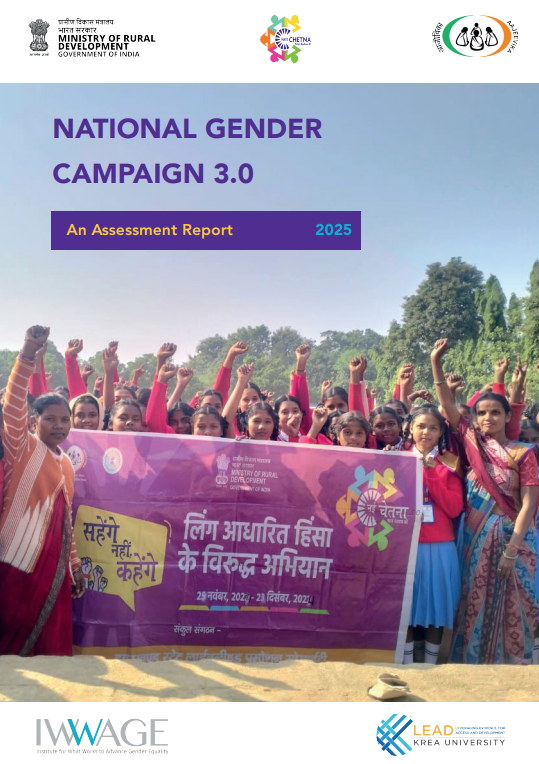
The National Gender Campaign – Nayi Chetna 3.0, implemented under the Deendayal Antyodaya Yojana–National Rural Livelihood Mission (DAY-NRLM), represents effort to institutionalise gender equality and address gender-based violence (GBV) through a community-driven, convergent approach. The report highlights the campaign’s scale and innovation- over 13 lakh activities reaching crores of people nationwide alongside new pathways of engagement with adolescents, youth and men and stronger convergence across departments and community institutions.
The National Gender Campaign – Nayi Chetna 3.0, implemented under the Deendayal Antyodaya Yojana–National Rural Livelihood Mission (DAY-NRLM), represents effort to institutionalise gender equality and address gender-based violence (GBV) through a community-driven, convergent approach. The report highlights the campaign’s scale and innovation- over 13 lakh activities reaching crores of people nationwide alongside new pathways of engagement with adolescents, youth and men and stronger convergence across departments and community institutions.
Brief
Menstrual and Menopausal Health at Work in India
- February , 2026
- Arundati Muralidharan, Aditi Vyas, Sharati Roy, Vidhi Singh
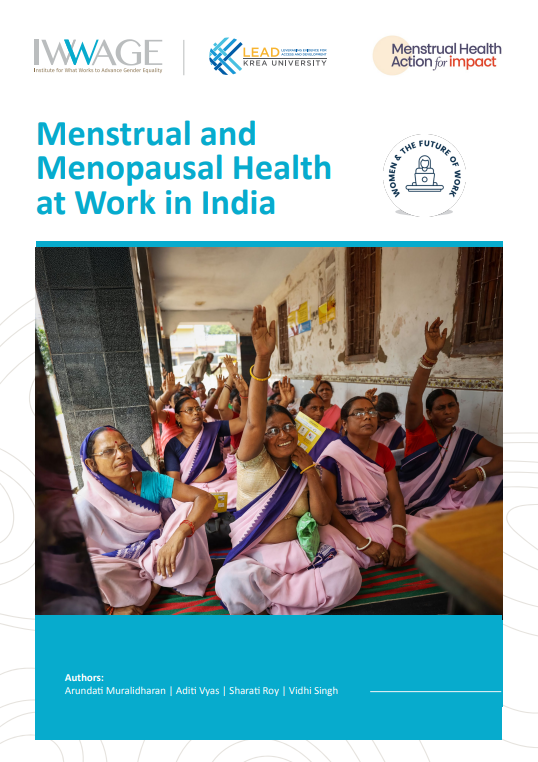
This policy brief highlights that menstrual and menopausal health are not temporary issues but lifelong realities that significantly affect women’s dignity, wellbeing, and participation in the workforce. Despite rising female labour force participation, workplace support for menstrual and menopausal health remains limited, particularly for women in the informal sector. The brief calls for inclusive workplace policies, stronger social protection, and greater awareness to ensure women can work with dignity and access the support they need throughout their lives.
This policy brief highlights that menstrual and menopausal health are not temporary issues but lifelong realities that significantly affect women’s dignity, wellbeing, and participation in the workforce. Despite rising female labour force participation, workplace support for menstrual and menopausal health remains limited, particularly for women in the informal sector. The brief calls for inclusive workplace policies, stronger social protection, and greater awareness to ensure women can work with dignity and access the support they need throughout their lives.

Brief
Union Budget: 2026-27 What It Means for Women’s Economic Empowerment
- February , 2026
This brief examines the Union Budget 2026–27 in the context of the government’s renewed focus on Women’s Economic Empowerment (WEE). The Economic Survey (2025–26) highlights persistent structural barriers that limit women’s entry, retention, and advancement in the labour market, including unpaid care responsibilities, skill gaps, limited infrastructure, and barriers to entrepreneurship. The Gender Budget, the government’s key fiscal tool for addressing these challenges, has increased from ₹3.9 lakh crore in 2025–26 (Revised Estimates) to ₹5 lakh crore in 2026–27 (Budget Estimates). The brief analyses how these allocations align with the policy priorities identified in the Economic Survey and assesses whether current spending effectively addresses the demand- and supply-side barriers shaping women’s economic participation.
This brief examines the Union Budget 2026–27 in the context of the government’s renewed focus on Women’s Economic Empowerment (WEE). The Economic Survey (2025–26) highlights persistent structural barriers that limit women’s entry, retention, and advancement in the labour market, including unpaid care responsibilities, skill gaps, limited infrastructure, and barriers to entrepreneurship. The Gender Budget, the government’s key fiscal tool for addressing these challenges, has increased from ₹3.9 lakh crore in 2025–26 (Revised Estimates) to ₹5 lakh crore in 2026–27 (Budget Estimates). The brief analyses how these allocations align with the policy priorities identified in the Economic Survey and assesses whether current spending effectively addresses the demand- and supply-side barriers shaping women’s economic participation.