Publications

Publications

Category

Year
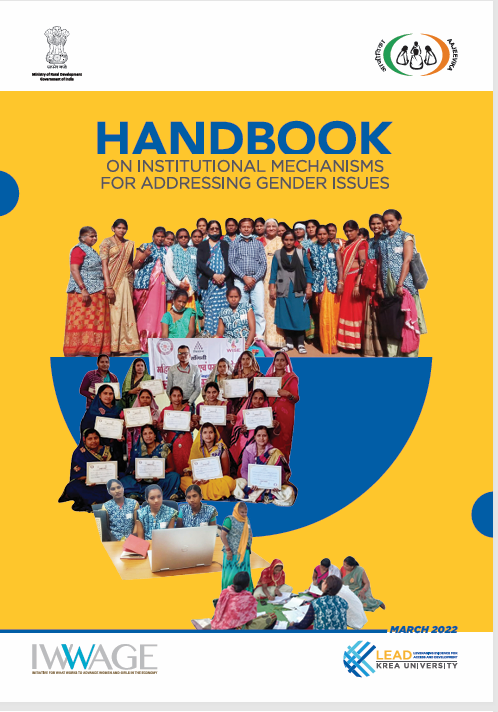
SWAYAM

JEEViKA didi endearing COVID resilience

Newsletter (Gender In Focus)

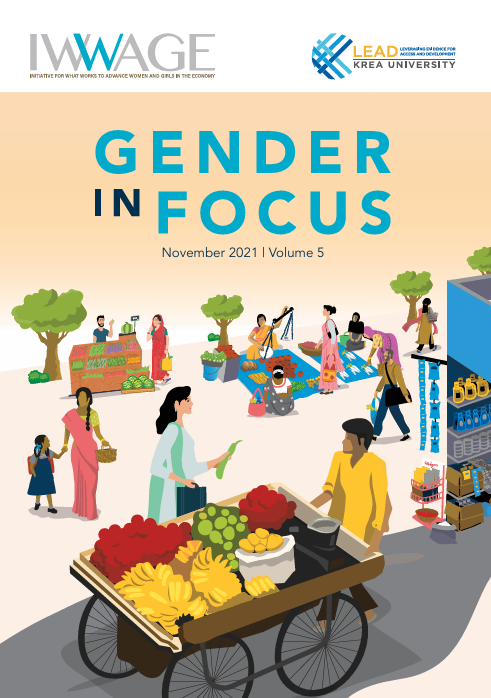
Gender in Focus

Over 90% of India’s workforce is employed informally, comprising 400+ million workers across multiple forms of non-standard work. This informal economy is marked by low earnings, precarious conditions, insecure jobs, and minimal social protection—covering domestic workers, contributing family workers, own-account workers, and contract or temporary workers. COVID-19 has worsened inequalities within this system, with women hit differently and often harder, as they are more concentrated in the most vulnerable and lowest-paid segments of informal work.
Report

From Aspiration to Empowerment: Impact of Women’s Collectives

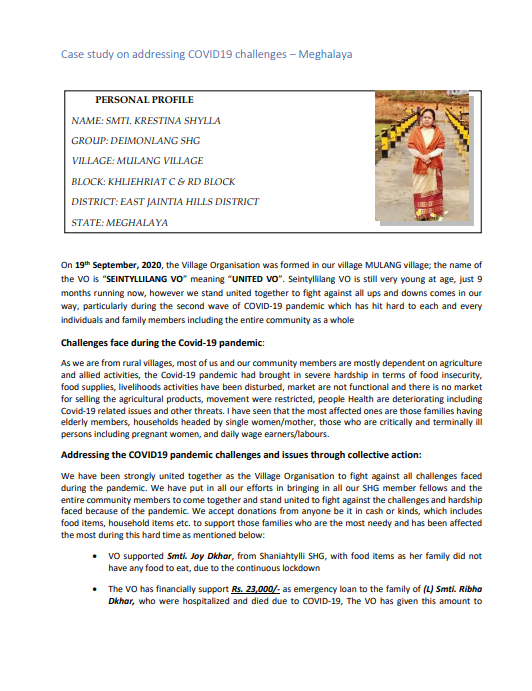
This volume presents case studies of Village Organisation–Social Action Committees (VO-SACs) across states, highlighting their role in addressing complex gender issues at the village level. The stories showcase efforts to improve women’s access to rights, entitlements, property, land ownership, and common resources through collective action. They also cover initiatives on wage parity, reducing drudgery, migrant labour rights, COVID-related gender challenges, and advancing the rights of the girl child, including preventing child marriage, improving school retention, and preventing child abuse.
Working Paper

Working or Not: What Determines Women’s Labour Force Participation in India?

Women’s labour force participation is abysmally low, and persistent gender gaps characterise the Indian labour market. It is alarming to note that women have been continuously dropping out of the labour market since the mid-2000s. Their participation has been declining despite rising GDP, increasing educational attainment, rising household incomes, and declining fertility. Utilising household-level data of Periodic Labour Force Surveys (PLFS) (covering the years 2017-18 and 2018-19), and NSSO’s Employment-Unemployment Surveys (EUS) (various rounds completed in 1993-94, 1999-00, 2004-5, 2009-10, 2011-12), this paper provides systematic evidence on the country’s gender gaps in employment and labour market outcomes. This paper tries to unpack the critical aspects of low female labour force participation in rural and urban India. Findings suggest that women have notably lower employment rates than men, even though their enrolment in schools and colleges have risen. U-shaped relationship between education and women’s labour force participation is seen, which is strongly evident in the case of urban women. Women perform a disproportionate amount of unpaid care work and domestic work and face multiple constraints in society, limiting their mobility and labour market choice, forcing them to take non-wage employment or remain out of the labour force. Our findings suggest that policies supporting women’s entry into the labour market, such as vocational and technical skills, can significantly impact increasing their participation and mitigating persistent inequalities in India’s labour market outcomes. The paper underscores the importance of a comprehensive and integrated approach and suggests investing in gender-responsive policies to break down women’s economic engagement barriers.
Learning note

Women’s Workforce Participation State wise Trends in India

Madhya Pradesh (MP) is the only state in India to have witnessed a rise in workforce participation rates (WPRs) of women in both rural and urban areas between 2011-12 and 2017-18. The increase in women’s WPR in MP was driven largely by increase in self-employment in the rural areas and regular employment in the urban areas. According to the Periodic Labourforce Survey in 2017-18, more than half of the female workforce in the state is self-employed, with a higher incidence of self-employment in rural areas. While approximately 88 percent of the rural self-employed women in MP are engaged in unpaid work, the share of women in own account enterprises is substantially high in urban MP. The distribution of casual women workers suggests very few women engaged under MGNREGA and other public works as 96 percent women in casual employment were engaged in non-public works, with very little security or guarantee of payment
Working Paper

Intersecting Identities, Livelihoods and Affirmative Action: How Social Identity Affects Economic Opportunity for Women in India

This paper presents a landscape assessment of the current state of gender inequality in the economic sphere in India, which is a key facet of overall inequality. The assessment comprises the latest empirical evidence based both on demographic survey data, as well as key results from cutting-edge scholarly literature. Male “female gaps are significant in many dimensions, but the contours of these gaps are shaped by the overlap of gender with other social identities, such as caste, religion or tribal identities. Thus, women from stigmatised and marginalised groups are disadvantaged along two dimensions and have to battle the double stigma of this intersectionality. The paper outlines the trends in overall gender gaps in the areas of labour force participation, self-employment and education over the last couple of decades, but highlights the role of intersectionality that goes into producing structures of advantage and disadvantage. The paper discusses policies such as the National Rural Livelihood Mission designed to encourage self-employment, which have had several other positive impacts, such as increase in empowerment and autonomy, but their record in terms of enhancing livelihoods is mixed at best. Evidence shows that policies such as employment guarantee schemes or transport infrastructure could end up having positive gendered effects, despite their gender-blind design. The paper argues that in order to tackle inequality fundamentally, we need to mainstream evidence-based research on intersectionality, which should be the basic lens informing policy.
Brief

Gender Samvaad Inaugural Event Report

Gender Samvaad is a joint attempt between Deendayal Antyodaya Yojana- National Rural Livelihoods Mission (DAY NRLM) and the Initiative for What Works to Advance Women and Girls in the Economy (IWWAGE) to create a common platform for generating greater awareness on NRLM’s interventions across the country and best practices, with a focus on hearing voices from the states and the field. The event is part of the Azadi Amrut Mahotsav, launched by the Prime Minister of India to commemorate 75 years of India’s independence and share the glorious traditions and progress made in several areas. The Gender Samvaad was launched on April 16, 2021 at 4 PM. The online launch event brought together a distinguished panel of experts, including senior officials of the Ministry of Rural Development. In addition, it included voices of women champions from Andhra Pradesh, Jharkhand and Kerala, who shared their experiences on how gender mainstreaming efforts within the NRLM have helped enhance their agency. A compendium of case studies presenting inspiring stories of SHG members was also released at the event.
Brief

COVID-19 and Women’s Labour Crisis

A pandemic that translates itself into an economic crisis has the potential to push women out of the labour force through several mechanisms. An economic crisis creates pressure on governments to cut down on social sector expenditures which potentially increases the burden of unpaid care and household work for women. As a result, women’s time for engaging in productive work gets reduced, having a negative impact on their labour force participation. The COVID-19 pandemic in India has had an unequal impact on women in a number of ways. In terms of economic opportunity, it has been seen that more women lost jobs compared to men and fewer have been able to rejoin labour force. This is in the context of gendered labour markets where female labour force participation has been low and declining. This paper presents an analysis of the situation of women’s employment pre-lockdown and some indications on what the impact of COVID-19 could be, based on microstudies and other literature available. Further, the adequacy of the social protection and employment generation programmes of the government that are specifically aimed at improving female labour force participation is assessed.
Working Paper

Womens Entrepreneurship in India

Women’s entrepreneurship has been considered an important instrument in achieving equity in the form of better quality of life for women in the developing world. Empowerment associated with female entrepreneurship changes a woman’s position in the family unit, her community and society, not only through financial independence, but through her acquisition of a position in the national workforce traditionally left to men in developing and underdeveloped regions. Successful women entrepreneurs have been significantly contributing to employment generation, socio-economic development, and further empowerment of the female cohort. But their contribution in India has to a great extent been subject to underlying facilitators and barriers. In India, women are still limited to the micro enterprise sector, both in rural and urban areas. It has become quite clear over the years that the role and contribution of female entrepreneurs in India has been pulled back by a myriad of socio-cultural systems still in place, and perceptions of the community against women leaders and female-headed firms. Of the 13.76 per cent female entrepreneurs reported in India now, most are small business owners rather than real entrepreneurs by definition. Entrepreneurial intention, interests and activities truly suffer in underdeveloped regions which lack physical and human capital and a conducive industrial environment. Therefore, individuals shift from being innovators to imitators, bringing in existing goods or techniques to virgin regions (Burger-Helmchen 2012). However, even such ventures on the part of entrepreneurs can bring about rapid economic development in backward areas. Rural entrepreneurship, which at this time mostly comprised female business owners, when encouraged through government interventions can radically transform the standard of living in such underdeveloped regions.
Compendium of best practices

Stories of Resilience and Hope

With over 60 million women mobilised to be part of one of India’s largest livelihoods programme, the Deendayal Antayodaya Yojana-National Rural Livelihoods Mission (DAY-NRLM), holds great promise for advancing women’s socio-economic empowerment by organising them into self-help groups (SHGs) and institutions of the rural poor. These platforms are facilitating financial opportunities and livelihood support services for women. The livelihoods programme works exclusively with rural women, and a critical element for its success has been the mission’s commitment towards prioritising women’s perspectives and being responsive to their needs and aspirations. This approach has been embedded across all DAY-NRLM activities with the goal of strengthening women’s agency, identity, well-being, and solidarity, through women’s collectivisation. Through the compendium “Stories of Hope and Resilience the Initiative for What Works to Advance Women and Girls in the Economy (IWWAGE) and the Deendayal Antyodaya Yojana National Rural Livelihood Mission (DAY-NRLM) attempt to showcase the life and experiences of rural women and their gendered disadvantage, struggles and barriers. Released on April 16, 2021 at the launch of the Gender Samvaad initiative by the honourable Secretary Rural Development, Shri Nagandra Nath Sinha, the compendium captures the stories of ten women, across seven states. These Stories of Hope and Resilience weave together narratives of grit, strength, perseverance and hope. These inspiring stories demonstrate the journeys that women have taken to change their circumstances and build better futures for themselves. The compendium of case studies is representative of a number of women around the country who have been supported by Deen Dayal Antyodaya Yojana – National Rural Livelihoods Mission, to overcome their circumstances and to lead more meaningful lives.
Knowledge series

Migration Climate Change and Gender

Climate change is altering everyday life and livelihoods across India, and its impacts are not felt equally. Women, particularly those from marginalised and low-income communities, are often the first to absorb the effects of climate shocks, whether through disrupted livelihoods, migration, or the pressures of extreme weather. These experiences are shaped by long-standing social and economic inequalities, making it essential to look beyond sectoral solutions. One of the least visible but most affected areas is the care economy. As climate risks intensify, women’s unpaid and poorly paid care work expands, especially during displacement, crises, and recovery. Care work plays a critical role in helping families and communities cope with climate stress, yet it remains largely invisible within climate policy and planning. Looking at climate change through the lens of care helps reveal two connected dynamics: how climate risks reshape care responsibilities, and how the way care is organised influences resilience and adaptation. Recognising care, valuing women’s unpaid labour, and strengthening care systems are therefore not add-ons, but central to effective climate responses. This series of policy briefs, jointly developed by IWWAGE and PDAG, explores these connections in detail. It examines how care work is shaped by climate-related vulnerabilities, labour transitions, and forced mobility, with close attention to gendered outcomes. The series is part of a broader climate–gender conversation that includes work, migration, governance, and energy transitions, while centring experiences from India and the Global South. Through this initiative, we aim to deepen understanding, inform policy choices, and contribute meaningfully to ongoing discussions on climate change, care, and gender equality.
Factsheet

Trends in Female Labour and Workforce Participation – Assam

Assam has seen a sharp rise in female labour force participation since 2021–22, now above the national average (50% vs 42% in PLFS 2023–24). However, the 2022–23 gender gap appears distorted due to an NSSO weighting error in a few villages, which led to underreporting of female participation at district, state, and national levels. In parallel, pro-women initiatives such as Sarothi (interest-subsidised loans) and PMKVY 2.0 (industry-relevant skilling) are believed to have supported this improvement. Future analysis will use corrected PLFS data to better track trends and understand the drivers of rising female employment in Assam.

Assam has seen a sharp rise in female labour force participation since 2021–22, now above the national average (50% vs 42% in PLFS 2023–24). However, the 2022–23 gender gap appears distorted due to an NSSO weighting error in a few villages, which led to underreporting of female participation at district, state, and national levels. In parallel, pro-women initiatives such as Sarothi (interest-subsidised loans) and PMKVY 2.0 (industry-relevant skilling) are believed to have supported this improvement. Future analysis will use corrected PLFS data to better track trends and understand the drivers of rising female employment in Assam.
Report

Swayam Process Evaluation: A Year-Long Ethnography Study, Madhya Pradesh & Odisha

This study assesses the impact of training programmes on community change and empowerment among leaders of Self-Help Groups (SHGs), Village Organisations (VOs), and Cluster-Level Federations (CLFs). It also includes interviews with district- and block-level officials from MPSRLM and OLM to examine how line departments collaborate with community institutions to address and resolve complaints.
Factsheet

Trends in Female Labour and Workforce Participation-Bihar

Bihar, despite being one of India’s fastest-growing states, has the lowest female labour force participation rate, alongside a widening gender gap. Policy focus on girls’ education, skills, entrepreneurship, and social support through schemes such as the Balika Cycle Yojana, Akshar Anchal Yojana, and Kanya Suraksha Yojana have contributed to recent improvements in female participation. Using PLFS data, this factsheet examines trends and key characteristics of women’s employment in Bihar.
Factsheet

Trends in Female Labour Force Participation in Uttar Pradesh

Uttar Pradesh, India’s most populous state, has a large working-age female population but a female labor force participation rate that is well below the national average. Regional disparities, weak infrastructure in eastern UP, restrictive socio-cultural norms, and limited economic opportunities contribute to low participation. Female workforce participation has improved since 2017–18, supported by schemes such as the Mudra Yojana and Deendayal Antyodaya Yojana, which have expanded women’s access to credit, strengthened self-help groups, and promoted women’s economic empowerment across the state.
Factsheet

Trends in Female Labour Force and Workforce Participation- Haryana

Haryana has transitioned from an agrarian to a more industrial economy, characterized by strong agricultural output and growing sectors such as automotive and IT. Despite economic growth, unemployment remains high, particularly among youth and women, due to limited formal job opportunities and structural challenges. This factsheet analyses female labour force participation in Haryana from 2017–18 to 2023–24, highlighting sectoral trends, occupational segregation, and barriers to workforce entry.

Haryana has transitioned from an agrarian to a more industrial economy, characterized by strong agricultural output and growing sectors such as automotive and IT. Despite economic growth, unemployment remains high, particularly among youth and women, due to limited formal job opportunities and structural challenges. This factsheet analyses female labour force participation in Haryana from 2017–18 to 2023–24, highlighting sectoral trends, occupational segregation, and barriers to workforce entry.
Scroll to Top