


Publications
Publications
Category
Year
Report
Voices from the Field
- June , 2020
- Subhalakshmi Nandi , Soumya Kapoor Mehta , Rukmini Tankha
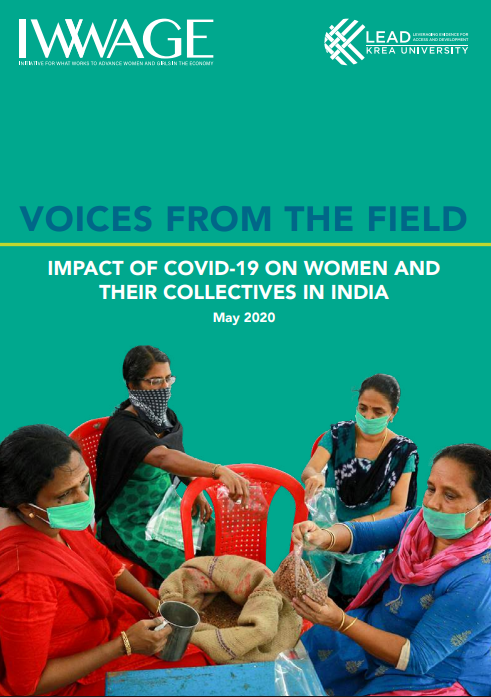
With approximately 67 million women mobilised into Self-Help Groups and federations, owned and represented by women, the Deendayal Antyodaya Yojana-National Rural Livelihoods Mission (DAY-NRLM) holds great promise for advancing women’s socio-economic empowerment and offering them resilience in times of crises such as the current pandemic. SHG federations across India not only offer means for many poor women to build sustainable households, but are also platforms for them to seek support, including financial, social and psychological support that they derive by associating themselves with others who are like them. Stories from the ground during India’s lockdown phase are suggesting that Self Help Groups (SHGs) of women are being involved by state governments in the fight against COVID-19. SHGs across India have worked day and night to manufacture masks, run community kitchens and assist in health checks. They have helped spread awareness about the virus in the local language and in a culturally-sensitive manner within their communities. Yet, SHGs and their members have been impacted both socially and economically, with many reporting intensive losses to their work and livelihoods, increased drudgery and unpaid work burden and rising incidence of domestic violence. In line with IWWAGE’s core mandate of informing the policy agenda on women’s economic empowerment in India, this report presents a summary of insights gained from recent research and conversations around women’s empowerment collectives (WECs) and how women are dealing with the pandemic and lockdown in India. The report attempts to summarise the challenges women and their collectives are facing during the lockdown and concludes with a series of recommendations.
With approximately 67 million women mobilised into Self-Help Groups and federations, owned and represented by women, the Deendayal Antyodaya Yojana-National Rural Livelihoods Mission (DAY-NRLM) holds great promise for advancing women’s socio-economic empowerment and offering them resilience in times of crises such as the current pandemic. SHG federations across India not only offer means for many poor women to build sustainable households, but are also platforms for them to seek support, including financial, social and psychological support that they derive by associating themselves with others who are like them. Stories from the ground during India’s lockdown phase are suggesting that Self Help Groups (SHGs) of women are being involved by state governments in the fight against COVID-19. SHGs across India have worked day and night to manufacture masks, run community kitchens and assist in health checks. They have helped spread awareness about the virus in the local language and in a culturally-sensitive manner within their communities. Yet, SHGs and their members have been impacted both socially and economically, with many reporting intensive losses to their work and livelihoods, increased drudgery and unpaid work burden and rising incidence of domestic violence. In line with IWWAGE’s core mandate of informing the policy agenda on women’s economic empowerment in India, this report presents a summary of insights gained from recent research and conversations around women’s empowerment collectives (WECs) and how women are dealing with the pandemic and lockdown in India. The report attempts to summarise the challenges women and their collectives are facing during the lockdown and concludes with a series of recommendations.
Report
Generating Female Employment through Public Employment: A Scoping Paper
- February , 2020
- Dipa Sinha, Jayati Ghosh, Mohini Gupta, Varsha Gupta
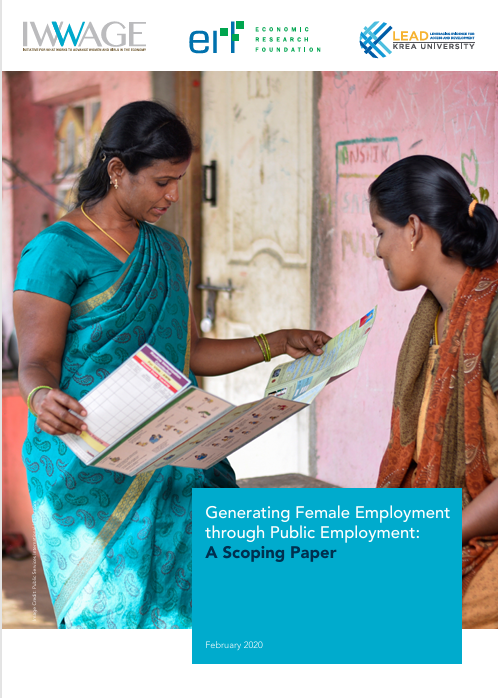
The employment generating potential of growth in India has been on the decline with unemployment and the lack of new job opportunities at their peak. According to the data put together by the State of Working India 2018, the relationship between growth and employment generation in India has weakened over time. A related puzzle is that of declining female workforce participation rates in the country, despite increasing education levels as well as economic growth. A major concern for the direction and pace of economic growth is how work and labour force participation rates of women can be improved. Employment in the government, especially in public services delivery, is a potential area where jobs can be created. An emphasis on creating work opportunities for women in public administration and frontline public services can serve the dual purpose of providing universal access to quality public services and reviving demand in the economy. IWWAGE study, Generating Female Employment through Public Employment aims to estimate the impact of creating and regularising jobs for women within the system of public administration, especially in frontline public services delivery. It considers questions on the activities and working conditions of women workers in frontline public services, assesses the number of such workers, and compares them with international estimates. The study also evaluates whether there is gender stereotyping in certain public sector jobs. Additionally, the study captures women’s perceptions of the benefits and constraints of being employed in such jobs. This scoping paper presents the current status of women employed in various levels by the government, based on data from the National Sample Survey (NSS), analysis of government reports, publications, and responses to queries raised using the Right to Information (RTI).
The employment generating potential of growth in India has been on the decline with unemployment and the lack of new job opportunities at their peak. According to the data put together by the State of Working India 2018, the relationship between growth and employment generation in India has weakened over time. A related puzzle is that of declining female workforce participation rates in the country, despite increasing education levels as well as economic growth. A major concern for the direction and pace of economic growth is how work and labour force participation rates of women can be improved. Employment in the government, especially in public services delivery, is a potential area where jobs can be created. An emphasis on creating work opportunities for women in public administration and frontline public services can serve the dual purpose of providing universal access to quality public services and reviving demand in the economy. IWWAGE study, Generating Female Employment through Public Employment aims to estimate the impact of creating and regularising jobs for women within the system of public administration, especially in frontline public services delivery. It considers questions on the activities and working conditions of women workers in frontline public services, assesses the number of such workers, and compares them with international estimates. The study also evaluates whether there is gender stereotyping in certain public sector jobs. Additionally, the study captures women’s perceptions of the benefits and constraints of being employed in such jobs. This scoping paper presents the current status of women employed in various levels by the government, based on data from the National Sample Survey (NSS), analysis of government reports, publications, and responses to queries raised using the Right to Information (RTI).
Report
Empowering Women Collectives through Digital Initiatives in Chhattisgarh
- January , 2020
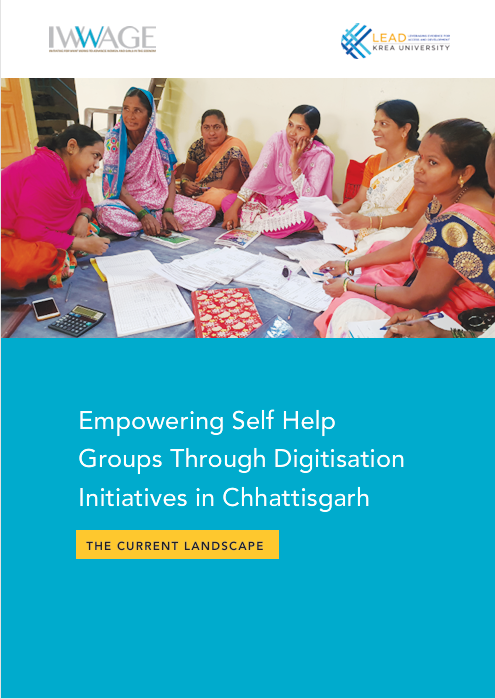
Digital tools offer immense potential for accelerating women’s empowerment, enhancing the impact of ongoing initiatives, and providing women with new avenues to improve knowledge and share information. Over the past year, the Initiative of What Works to Advance Women and Girls in the Economy (IWWAGE), part of LEAD at Krea University, has been collaborating with the Government of Chhattisgarh and other partners to map existing digitisation initiatives aimed at empowering women in the state, evaluate their effectiveness, and explore opportunities for improvement. Many of these initiatives are centred around Self-Help Groups (SHGs), which play a key role in empowering women through social mobilisation and financial inclusion. In Chhattisgarh, the SHG ecosystem is managed by the state chapter of the Deendayal Antyodaya Yojana-National Rural Livelihood Mission (DAY-NRLM), known locally as Bihan. Established in 2012, Bihan serves as a Self-Help Promoting Agency (SHPA), working to strengthen women’s collectives by improving financial and market linkages, promoting access to entitlements, and providing capacity-building support. Additionally, non-governmental SHPAs like PRADAN are active in supporting women’s empowerment in the state. IWWAGE is supporting Bihan’s efforts to enhance the SHG ecosystem by promoting and testing digital solutions that enable women’s collectives to access markets and services more effectively. This initiative focuses on summarising the current digitisation efforts, identifying existing gaps and barriers, and proposing innovative use cases to further drive women’s empowerment in Chhattisgarh.
Digital tools offer immense potential for accelerating women’s empowerment, enhancing the impact of ongoing initiatives, and providing women with new avenues to improve knowledge and share information. Over the past year, the Initiative of What Works to Advance Women and Girls in the Economy (IWWAGE), part of LEAD at Krea University, has been collaborating with the Government of Chhattisgarh and other partners to map existing digitisation initiatives aimed at empowering women in the state, evaluate their effectiveness, and explore opportunities for improvement. Many of these initiatives are centred around Self-Help Groups (SHGs), which play a key role in empowering women through social mobilisation and financial inclusion. In Chhattisgarh, the SHG ecosystem is managed by the state chapter of the Deendayal Antyodaya Yojana-National Rural Livelihood Mission (DAY-NRLM), known locally as Bihan. Established in 2012, Bihan serves as a Self-Help Promoting Agency (SHPA), working to strengthen women’s collectives by improving financial and market linkages, promoting access to entitlements, and providing capacity-building support. Additionally, non-governmental SHPAs like PRADAN are active in supporting women’s empowerment in the state. IWWAGE is supporting Bihan’s efforts to enhance the SHG ecosystem by promoting and testing digital solutions that enable women’s collectives to access markets and services more effectively. This initiative focuses on summarising the current digitisation efforts, identifying existing gaps and barriers, and proposing innovative use cases to further drive women’s empowerment in Chhattisgarh.

Report
Digitisation of Self-Help Groups in India
- August , 2019
- Sharon Buteau | Jithin Jose | Kriti Chouhan
Self Help Groups (SHGs) have become essential for empowering women in India. Digitisation of SHG processes can streamline operations, addressing challenges like inefficient monitoring, data fragmentation, and capacity-building gaps. The Deendayal Antyodaya Yojana-National Rural Livelihoods Mission (DAY-NRLM) and its state chapters have made significant progress in this area. This report provides an assessment and roadmap for State Rural Livelihoods Missions (SRLMs) to digitise SHG processes effectively. It highlights current initiatives, identifies gaps, and suggests ways to address them. While Management Information Systems (MIS) have been digitised to some extent, many SRLMs face challenges such as resource shortages and limited IT capabilities, which hinder progress. Additionally, SHGs often lack clarity on the benefits of digitisation, leading to low community ownership. Most programmes rely on manual data entry, with few using digital tools at the ground level. SHG members and stakeholders beyond SRLMs and banks have limited access to the data. Improved data quality and use are essential for better financial outcomes for SHGs. Digital linkages for livelihoods and markets are underdeveloped, with innovations remaining small and context-dependent. Additionally, digital platforms for learning are underutilised due to limited smartphone and internet access in rural areas. The success of digitisation initiatives depends on partnerships between implementing agencies and Technology Service Providers (TSPs). Flexible models, like those seen in Andhra Pradesh and Jharkhand, offer promising examples for the future. Addressing these challenges will be crucial for the long-term success and sustainability of SHG digitisation efforts.
Self Help Groups (SHGs) have become essential for empowering women in India. Digitisation of SHG processes can streamline operations, addressing challenges like inefficient monitoring, data fragmentation, and capacity-building gaps. The Deendayal Antyodaya Yojana-National Rural Livelihoods Mission (DAY-NRLM) and its state chapters have made significant progress in this area. This report provides an assessment and roadmap for State Rural Livelihoods Missions (SRLMs) to digitise SHG processes effectively. It highlights current initiatives, identifies gaps, and suggests ways to address them. While Management Information Systems (MIS) have been digitised to some extent, many SRLMs face challenges such as resource shortages and limited IT capabilities, which hinder progress. Additionally, SHGs often lack clarity on the benefits of digitisation, leading to low community ownership. Most programmes rely on manual data entry, with few using digital tools at the ground level. SHG members and stakeholders beyond SRLMs and banks have limited access to the data. Improved data quality and use are essential for better financial outcomes for SHGs. Digital linkages for livelihoods and markets are underdeveloped, with innovations remaining small and context-dependent. Additionally, digital platforms for learning are underutilised due to limited smartphone and internet access in rural areas. The success of digitisation initiatives depends on partnerships between implementing agencies and Technology Service Providers (TSPs). Flexible models, like those seen in Andhra Pradesh and Jharkhand, offer promising examples for the future. Addressing these challenges will be crucial for the long-term success and sustainability of SHG digitisation efforts.
Factsheet
Trends in Female Labour Force Participation in Karnataka
- October , 2026
- Vidhi, Bidisha Mondal
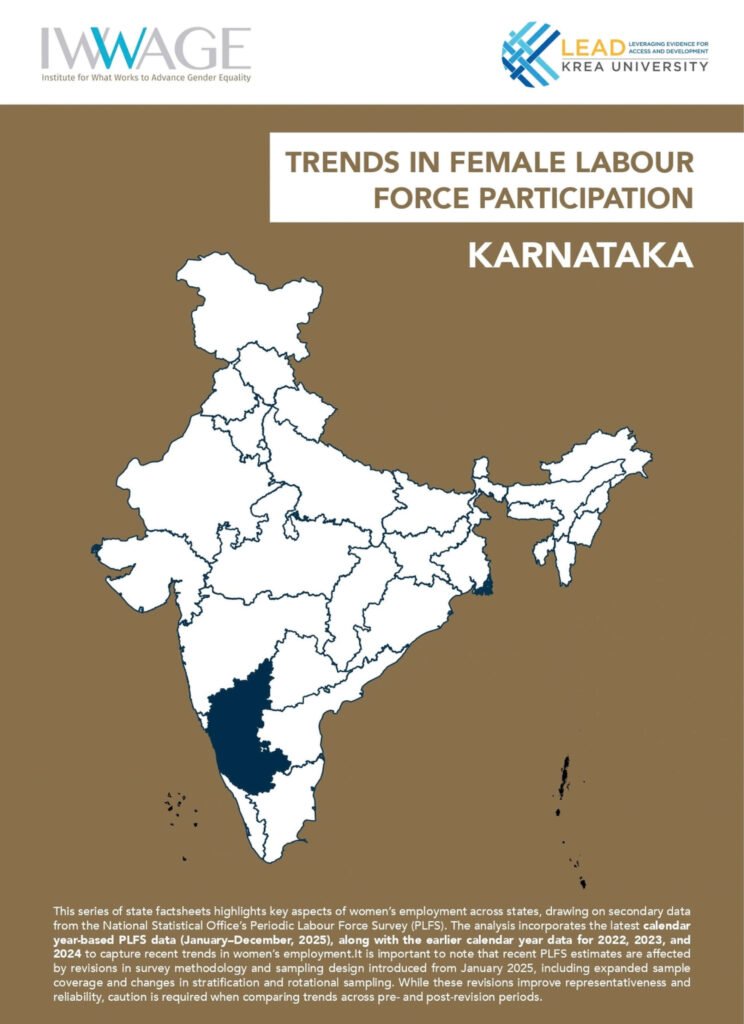
Karnataka occupies a distinctive position in India’s economic landscape, driven by rapid growth in services, technology, and manufacturing sectors.This factsheet examines key trends in women’s labour force participation in Karnataka using PLFS data, with a focus on employment composition, sectoral and occupational distribution, quality of work, and barriers to women’s participation in the labour market.
Karnataka occupies a distinctive position in India’s economic landscape, driven by rapid growth in services, technology, and manufacturing sectors.This factsheet examines key trends in women’s labour force participation in Karnataka using PLFS data, with a focus on employment composition, sectoral and occupational distribution, quality of work, and barriers to women’s participation in the labour market.
Brief
Deconstructing the Care Economy: Measurement, Gendered Outcomes, and Macroeconomic Policy
- September , 2026
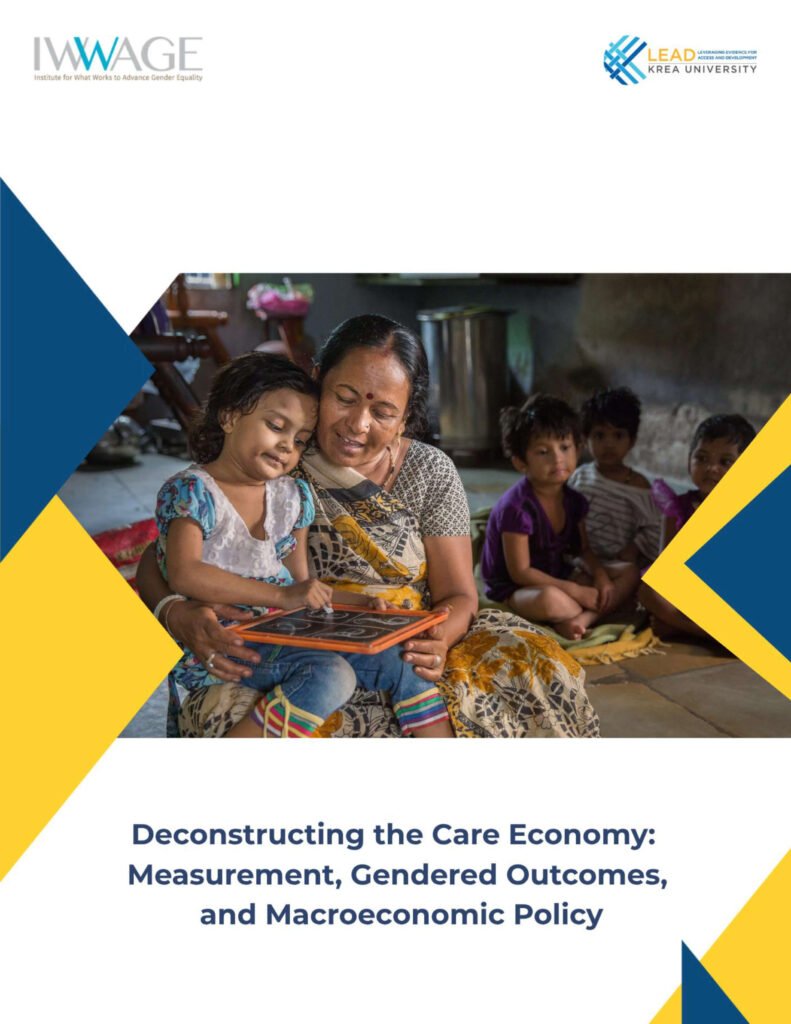
The policy brief examines how unpaid care and domestic work largely undertaken by women remains invisible in conventional economic and labour statistics, while significantly shaping women’s participation and outcomes in the labour market. It highlights how care responsibilities contribute to women’s underemployment, lower-paid and precarious work, and inequalities in platform and hybrid work.
The policy brief examines how unpaid care and domestic work largely undertaken by women remains invisible in conventional economic and labour statistics, while significantly shaping women’s participation and outcomes in the labour market. It highlights how care responsibilities contribute to women’s underemployment, lower-paid and precarious work, and inequalities in platform and hybrid work.
Factsheet
Trends in Female Labour Force Participation in Bihar
- September , 2026
- Vidhi, Bidisha Mondal
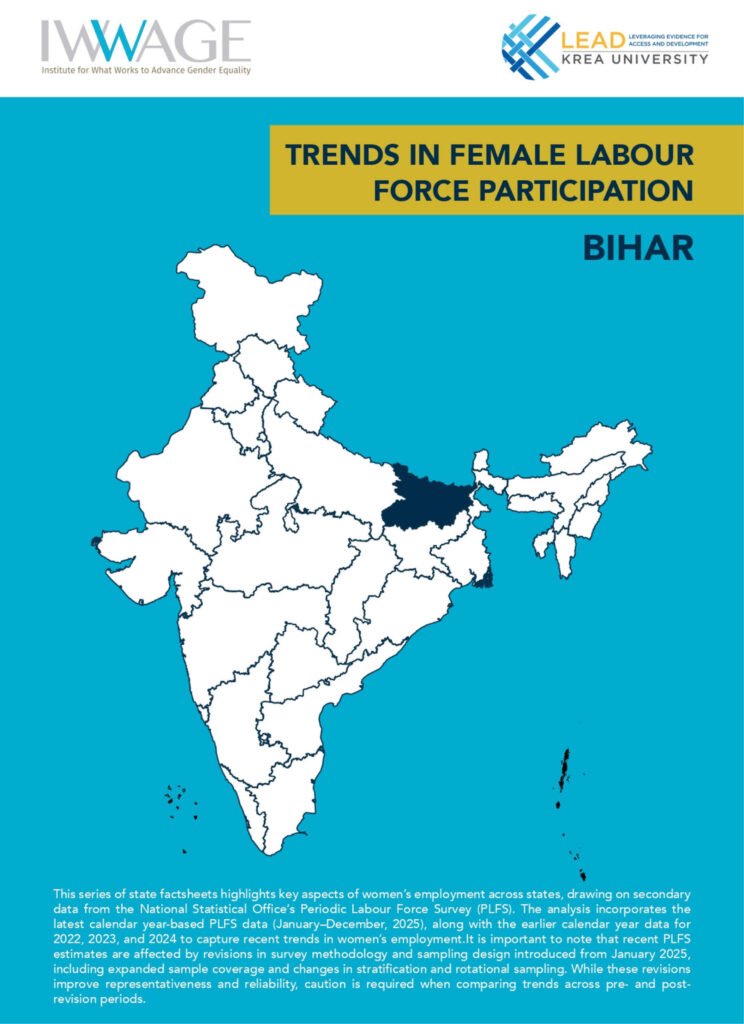
Despite economic growth, Bihar continues to face low female labour force participation, reflecting persistent supply-side constraints and limited access to suitable employment opportunities. Young women, in particular, experience low labour force participation amid high youth unemployment, while employment remains concentrated in agriculture and informal work. Sociocultural norms, limited access to education and skills, mobility constraints, inadequate transport, and care responsibilities further restrict women’s access to employment. Against this backdrop, this factsheet examines trends in female labour force participation, workforce composition, sectoral distribution, and working conditions in Bihar.
Despite economic growth, Bihar continues to face low female labour force participation, reflecting persistent supply-side constraints and limited access to suitable employment opportunities. Young women, in particular, experience low labour force participation amid high youth unemployment, while employment remains concentrated in agriculture and informal work. Sociocultural norms, limited access to education and skills, mobility constraints, inadequate transport, and care responsibilities further restrict women’s access to employment. Against this backdrop, this factsheet examines trends in female labour force participation, workforce composition, sectoral distribution, and working conditions in Bihar.
Report
Women and Work 2025: Megatrends Reshaping Women’s Work in India
- September , 2026
- Divya Singh, Prakriti Sharma, Vidhi Singh, Sharati Roy
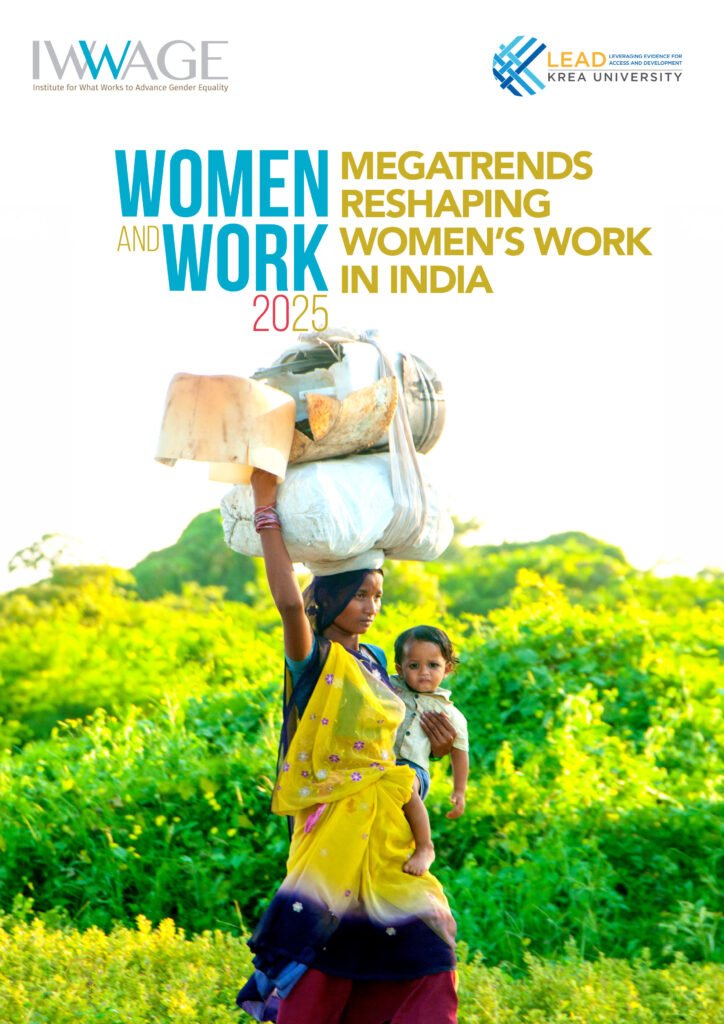
IWWAGE’s flagship report examines the changing landscape of women’s work in India and the forces shaping its future. Women’s labour force participation has risen significantly in recent years. Yet, the headline numbers tell only part of the story. The nature and experience of women’s work continue to be shaped by the quality and security of employment, unpaid care work, digitalisation, artificial intelligence, climate change, and women’s health at work. The report brings together evidence and emerging policy developments across these interconnected forces to examine where women’s work is headed—and what it will take to translate greater participation into greater economic agency, decent work, and protection.
IWWAGE’s flagship report examines the changing landscape of women’s work in India and the forces shaping its future. Women’s labour force participation has risen significantly in recent years. Yet, the headline numbers tell only part of the story. The nature and experience of women’s work continue to be shaped by the quality and security of employment, unpaid care work, digitalisation, artificial intelligence, climate change, and women’s health at work. The report brings together evidence and emerging policy developments across these interconnected forces to examine where women’s work is headed—and what it will take to translate greater participation into greater economic agency, decent work, and protection.
Factsheet
Trends in Female Labour Force Participation in Meghalaya
- August , 2026
- Nabankur Huda, Bidisha Mondal
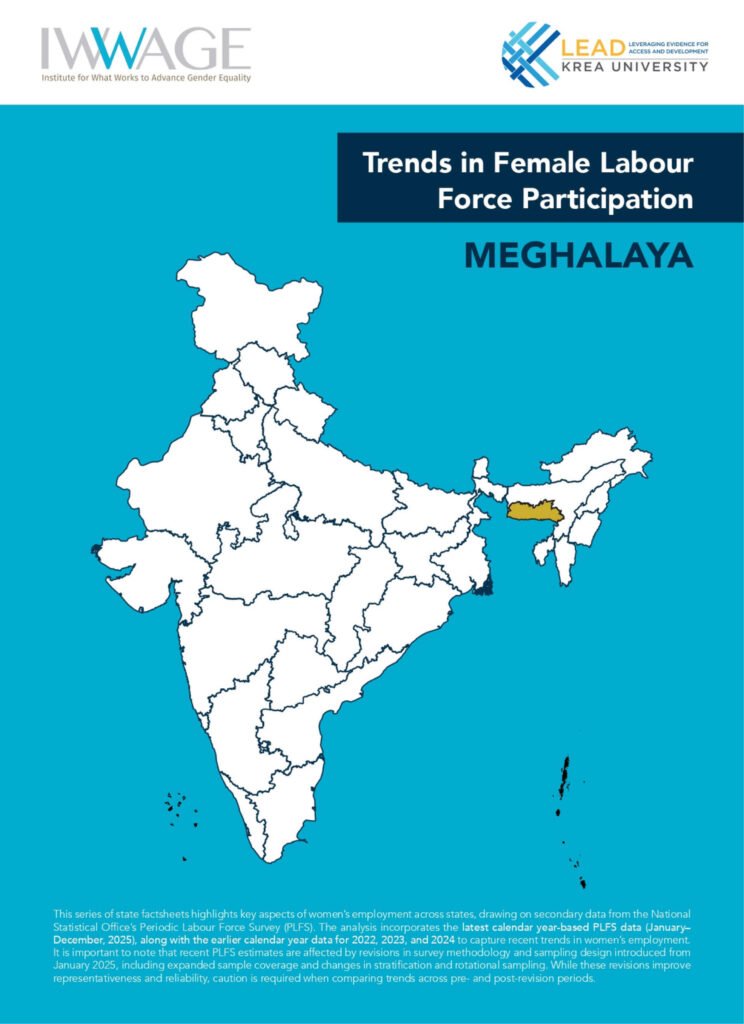
Meghalaya is a small, hilly state in north-east India with a predominantly rural, agrarian economy and one of the country’s most distinctive social structures. The factsheet explores the trends, opportunities and challenges shaping women’s participation in Meghalaya’s labour market, with a focus on how the state’s social structure and economic transformation influence the nature and quality of women’s work.
Meghalaya is a small, hilly state in north-east India with a predominantly rural, agrarian economy and one of the country’s most distinctive social structures. The factsheet explores the trends, opportunities and challenges shaping women’s participation in Meghalaya’s labour market, with a focus on how the state’s social structure and economic transformation influence the nature and quality of women’s work.
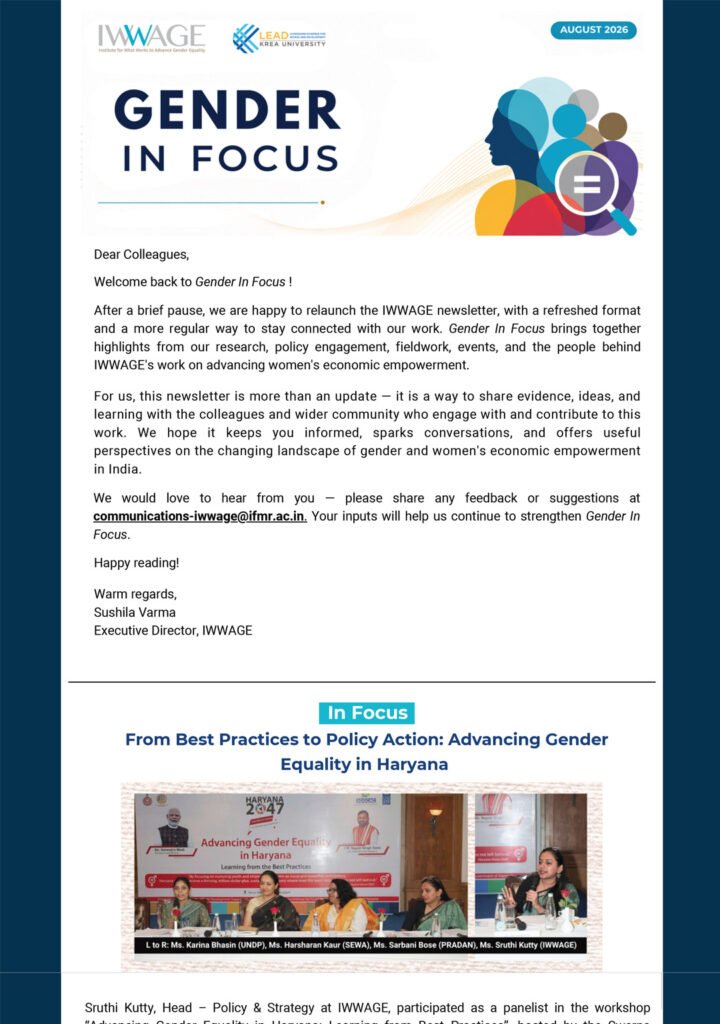
Newsletter (Gender In Focus)
Gender in Focus
- August , 2026
The August 2026 edition features highlights from IWWAGE’s research, policy engagements, fieldwork and knowledge initiatives. It also offers a closer look at emerging trends shaping women’s work and economic participation in India.
The August 2026 edition features highlights from IWWAGE’s research, policy engagements, fieldwork and knowledge initiatives. It also offers a closer look at emerging trends shaping women’s work and economic participation in India.