


Publications
Publications
Category
Year
Report
Stepping Out of Vulnerability
- November , 2022
- Alpaxee Kashyap
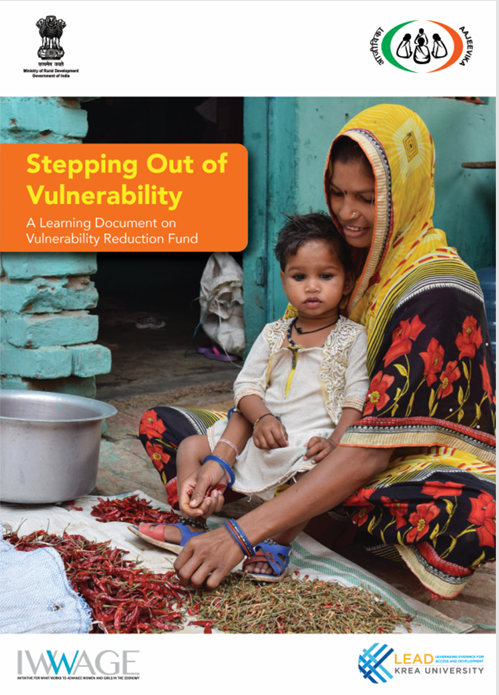
This learning practice document examines how Bihar, Jharkhand, Meghalaya, Odisha, and Tripura have utilised VRFs to support vulnerable households. The case studies highlight diverse applications, including Odisha’s use of VRFs to develop nutrition gardens (Mo Upakari Bagicha), supported by trained women Krishi Mitras who provide agricultural guidance and handholding. The case of Soni illustrates how VRF-supported nutrition gardens helped women sustain livelihoods and earn income during the COVID-19 lockdown.
This learning practice document examines how Bihar, Jharkhand, Meghalaya, Odisha, and Tripura have utilised VRFs to support vulnerable households. The case studies highlight diverse applications, including Odisha’s use of VRFs to develop nutrition gardens (Mo Upakari Bagicha), supported by trained women Krishi Mitras who provide agricultural guidance and handholding. The case of Soni illustrates how VRF-supported nutrition gardens helped women sustain livelihoods and earn income during the COVID-19 lockdown.
Report
Handbook on institutional mechanisms for addressing gender issues
- March , 2022
- Moumita Sarkar | Soya Thomas | Alpaxee Kashyap
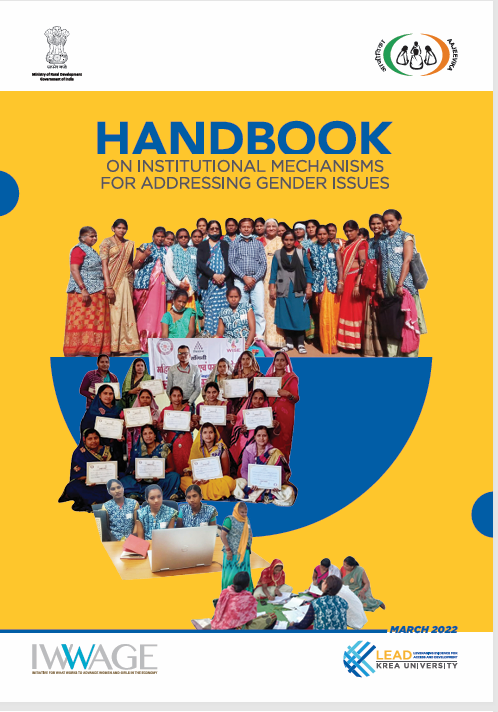
The Deendayal Antyodaya Yojana-National Rural Livelihoods Mission (DAY-NRLM) recognises poverty as multidimensional and addresses the intersectional vulnerabilities women face due to gender, caste, class, and ethnicity. Believing in empowering women through specialised institutions, DAY-NRLM has developed a gender architecture to tackle these challenges. This structure includes platforms such as Gender Forums (GF), Social Action Committees (SAC), Village Organisations (VO), and Cluster-Level Federations (CLF), which raise awareness about women’s rights and connect them to public institutions. Gender Point Persons (GPP) help raise gender issues within Self-Help Groups (SHGs). While progress varies across states, many have successfully used these platforms to secure rights and entitlements for women. This handbook offers guidance on establishing and maintaining these institutions at all levels. It highlights their transformative role in addressing gender inequality, improving access to rights, and fostering stronger state-citizen relationships. The handbook aims to motivate state partners to invest in these models, demonstrating the positive impact they can have on women’s lives.
The Deendayal Antyodaya Yojana-National Rural Livelihoods Mission (DAY-NRLM) recognises poverty as multidimensional and addresses the intersectional vulnerabilities women face due to gender, caste, class, and ethnicity. Believing in empowering women through specialised institutions, DAY-NRLM has developed a gender architecture to tackle these challenges. This structure includes platforms such as Gender Forums (GF), Social Action Committees (SAC), Village Organisations (VO), and Cluster-Level Federations (CLF), which raise awareness about women’s rights and connect them to public institutions. Gender Point Persons (GPP) help raise gender issues within Self-Help Groups (SHGs). While progress varies across states, many have successfully used these platforms to secure rights and entitlements for women. This handbook offers guidance on establishing and maintaining these institutions at all levels. It highlights their transformative role in addressing gender inequality, improving access to rights, and fostering stronger state-citizen relationships. The handbook aims to motivate state partners to invest in these models, demonstrating the positive impact they can have on women’s lives.

Report
Women and Work: How India Fared in 2021
- January , 2022
- IWWAGE , TQH
The year 2021 continued to challenge global recovery efforts, with the second wave of COVID-19 presenting new hurdles. Women and girls were disproportionately impacted, with structural barriers exacerbating the health crisis. As this report is compiled, the Omicron variant remains a threat, highlighting the need for a gender-responsive and equitable recovery. To achieve this, we must design inclusive social safety nets, bridge the gender gap in access to technology, create hybrid work solutions, reduce and redistribute care work, and invest in the care economy. Collecting robust, sex-disaggregated data is crucial to ensure effective, scalable policies and solutions. This report maps the ongoing efforts to bring women back into the workforce and prepare them for the future of work. It highlights key policy and programmatic developments that shaped women’s work in India in 2021. Additionally, the report looks ahead, emphasising new-age skills, entrepreneurship, and non-traditional livelihoods for a self-reliant India. It also sheds light on social indicators influencing women’s workforce participation, including access to resources, health, well-being, and security.
The year 2021 continued to challenge global recovery efforts, with the second wave of COVID-19 presenting new hurdles. Women and girls were disproportionately impacted, with structural barriers exacerbating the health crisis. As this report is compiled, the Omicron variant remains a threat, highlighting the need for a gender-responsive and equitable recovery. To achieve this, we must design inclusive social safety nets, bridge the gender gap in access to technology, create hybrid work solutions, reduce and redistribute care work, and invest in the care economy. Collecting robust, sex-disaggregated data is crucial to ensure effective, scalable policies and solutions. This report maps the ongoing efforts to bring women back into the workforce and prepare them for the future of work. It highlights key policy and programmatic developments that shaped women’s work in India in 2021. Additionally, the report looks ahead, emphasising new-age skills, entrepreneurship, and non-traditional livelihoods for a self-reliant India. It also sheds light on social indicators influencing women’s workforce participation, including access to resources, health, well-being, and security.
Report
From Aspiration to Empowerment: Impact of Women’s Collectives
- June , 2021
- Aasha Ramesh, Kalamani Arumugam, P. Prashanthi
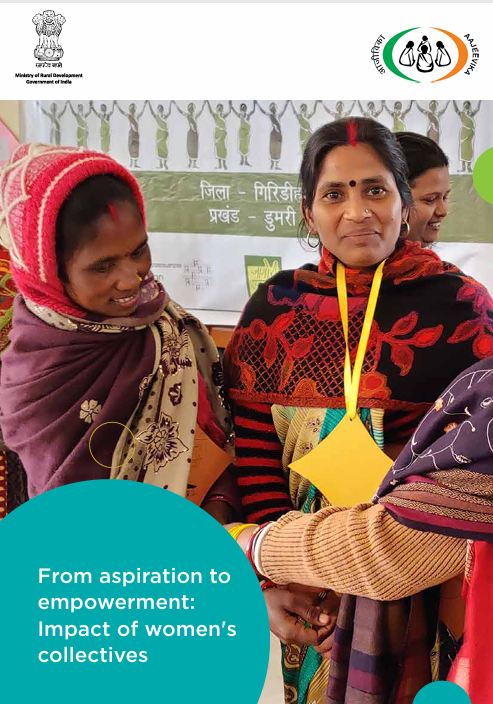
This volume presents case studies of Village Organisation–Social Action Committees (VO-SACs) across states, highlighting their role in addressing complex gender issues at the village level. The stories showcase efforts to improve women’s access to rights, entitlements, property, land ownership, and common resources through collective action. They also cover initiatives on wage parity, reducing drudgery, migrant labour rights, COVID-related gender challenges, and advancing the rights of the girl child, including preventing child marriage, improving school retention, and preventing child abuse.
This volume presents case studies of Village Organisation–Social Action Committees (VO-SACs) across states, highlighting their role in addressing complex gender issues at the village level. The stories showcase efforts to improve women’s access to rights, entitlements, property, land ownership, and common resources through collective action. They also cover initiatives on wage parity, reducing drudgery, migrant labour rights, COVID-related gender challenges, and advancing the rights of the girl child, including preventing child marriage, improving school retention, and preventing child abuse.
Report
Understanding the Market Landscape and Enterprise Readiness for Women-led Home-based Businesses
- January , 2021
- Rigzom Wangchuk , Mridulya Narasimhan , M P Karthick
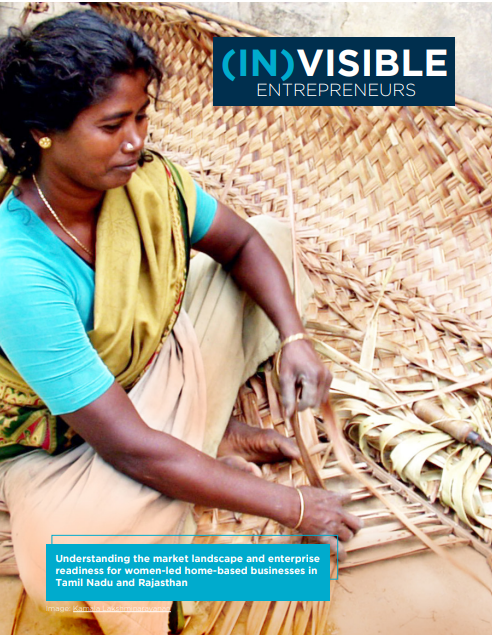
Women entrepreneurs contribute to the Indian economy in terms of GDP and employment. Despite this, they face gender specific barriers in labour force participation, such as, market, mobility, time, and credit constraints. These factors have been the driving forces behind the emergence of home-based businesses led by women especially in the informal sector. As a part of IWWAGE’s strategic vision to facilitate women’s economic empowerment through an evidence-based approach, Part 1 of the study aims to map the market landscape for home-based handicraft and handloom enterprises led by women, and assess their readiness. The subsequent study (Part 2) will look to answer critical questions related to credit access, and alternatives to existing credit scoring mechanisms. To capture a granular perspective on the state of market access and supply chain linkages, 800 home-based women entrepreneurs were surveyed across Rajasthan and Tamil Nadu. The study sheds light on the need for two approaches when designing policy interventions for improving the market landscape of female entrepreneurs. The first is the need for a facilitative and enabling ecosystem for home-based entrepreneurs because the market landscape itself lacks structure and formality with significant variations across the two states. Second, women entrepreneurs should not be approached as a singular segment but instead, need to be segmented according to their nuanced needs and strengths. A targeted approach through looking at personas or the type of entrepreneurs could be a great beginning. Based on insights from the survey, a diagnostic policy framework Business Readiness Scorecard for Women (WBRS) has been developed to identify priority areas for intervention.
Women entrepreneurs contribute to the Indian economy in terms of GDP and employment. Despite this, they face gender specific barriers in labour force participation, such as, market, mobility, time, and credit constraints. These factors have been the driving forces behind the emergence of home-based businesses led by women especially in the informal sector. As a part of IWWAGE’s strategic vision to facilitate women’s economic empowerment through an evidence-based approach, Part 1 of the study aims to map the market landscape for home-based handicraft and handloom enterprises led by women, and assess their readiness. The subsequent study (Part 2) will look to answer critical questions related to credit access, and alternatives to existing credit scoring mechanisms. To capture a granular perspective on the state of market access and supply chain linkages, 800 home-based women entrepreneurs were surveyed across Rajasthan and Tamil Nadu. The study sheds light on the need for two approaches when designing policy interventions for improving the market landscape of female entrepreneurs. The first is the need for a facilitative and enabling ecosystem for home-based entrepreneurs because the market landscape itself lacks structure and formality with significant variations across the two states. Second, women entrepreneurs should not be approached as a singular segment but instead, need to be segmented according to their nuanced needs and strengths. A targeted approach through looking at personas or the type of entrepreneurs could be a great beginning. Based on insights from the survey, a diagnostic policy framework Business Readiness Scorecard for Women (WBRS) has been developed to identify priority areas for intervention.
Report
Impact of COVID-19 on Rural SHG Women in Odisha
- January , 2021
- Kaliat Ammu Sanyal | Sushmita Mukherjee | Biraj Laxmi Sarangi
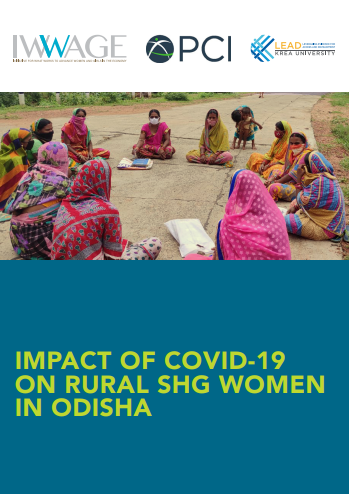
The COVID-19 pandemic and subsequent lockdowns to curb the virus have had far-reaching impacts globally. The situation in India has been particularly difficult, with the country recording over 8.9 million cases as of November 2020. The nation-wide lockdown announced on 24 March 2020 had devastating effects on millions of people, their livelihoods and income generating activities. Given the scale of the crisis, it becomes imperative to focus on the impacts on already disadvantaged groups, and more specifically, on women and girls. Experiences from past disease outbreaks globally, demonstrate the need for a gendered analysis for preparedness and response. This report presents findings from the study, Impact of COVID-19 on Rural SHG Women in Odisha, conducted by the Initiative for What Works to Advance Women and Girls in the Economy (IWWAGE) and Project Concern International (PCI). The main objectives of this study were to (i) study the overall impacts on women’s well-being during and post the lockdown period, and (ii) understand SHG participation in COVID-19 response activities. Overall, the study demonstrates that rural women in Odisha have had to contend with rising stress and anxiety, loss of income, and an increased load of household work. Concomitantly, the SHG movement has proved to be an immense source of strength and support for women. The report concludes with a set of recommendations to strengthen the SHG platforms and state- run gender initiatives, and to invest in digital tools as these have proved to be a means through which women have kept in touch with family and friends in difficult times.
The COVID-19 pandemic and subsequent lockdowns to curb the virus have had far-reaching impacts globally. The situation in India has been particularly difficult, with the country recording over 8.9 million cases as of November 2020. The nation-wide lockdown announced on 24 March 2020 had devastating effects on millions of people, their livelihoods and income generating activities. Given the scale of the crisis, it becomes imperative to focus on the impacts on already disadvantaged groups, and more specifically, on women and girls. Experiences from past disease outbreaks globally, demonstrate the need for a gendered analysis for preparedness and response. This report presents findings from the study, Impact of COVID-19 on Rural SHG Women in Odisha, conducted by the Initiative for What Works to Advance Women and Girls in the Economy (IWWAGE) and Project Concern International (PCI). The main objectives of this study were to (i) study the overall impacts on women’s well-being during and post the lockdown period, and (ii) understand SHG participation in COVID-19 response activities. Overall, the study demonstrates that rural women in Odisha have had to contend with rising stress and anxiety, loss of income, and an increased load of household work. Concomitantly, the SHG movement has proved to be an immense source of strength and support for women. The report concludes with a set of recommendations to strengthen the SHG platforms and state- run gender initiatives, and to invest in digital tools as these have proved to be a means through which women have kept in touch with family and friends in difficult times.
Report
Women and Work: How India fared in 2020
- January , 2021
- Surbhi Singh , Kanika Jha Kingra , Soumya Kapoor Mehta
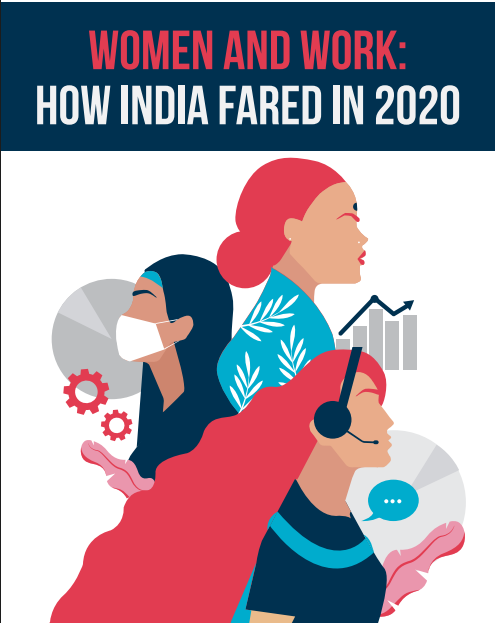
Women and girls across the world have been disproportionately affected in the year of the pandemic, not in terms of impact of the virus, but more so socially and economically. While India was rapidly responding to the health crisis, millions of Indians were grappling with the unintended impacts of lockdown measures on the economy and their livelihoods. Even before the onset of COVID-19, India’s female workforce was largely invisible, underpaid, under-protected and constituted largest segment of the informal workforce, which is among the worst-hit this year. But several opportunities exist in 2021 to ensure that India’s women are not left behind in its recovery plans. Against this backdrop, IWWAGE and The Quantum Hub (TQH) authored a report that draws from various studies, data sources and nationally-representative data sets to look at the key trends and policy developments that came to shape and define the lives of women across India in 2020. This report captures key data on economic and social indicators (like female labour force participation, barriers to work and livelihoods, financial inclusion, digital access, skilling, education and violence against women) that played a central role in determining women’s role in the Indian economy this year.
Women and girls across the world have been disproportionately affected in the year of the pandemic, not in terms of impact of the virus, but more so socially and economically. While India was rapidly responding to the health crisis, millions of Indians were grappling with the unintended impacts of lockdown measures on the economy and their livelihoods. Even before the onset of COVID-19, India’s female workforce was largely invisible, underpaid, under-protected and constituted largest segment of the informal workforce, which is among the worst-hit this year. But several opportunities exist in 2021 to ensure that India’s women are not left behind in its recovery plans. Against this backdrop, IWWAGE and The Quantum Hub (TQH) authored a report that draws from various studies, data sources and nationally-representative data sets to look at the key trends and policy developments that came to shape and define the lives of women across India in 2020. This report captures key data on economic and social indicators (like female labour force participation, barriers to work and livelihoods, financial inclusion, digital access, skilling, education and violence against women) that played a central role in determining women’s role in the Indian economy this year.

Report
Strengthening Socio-Economic Rights of Women in the Informal Economy: The SEWA Approach in West Bengal and Jharkhand
- December , 2020
- Ayushi Gupta , Kanika Jha Kingra
Women working in India’s informal sector face several vulnerabilities and are often denied decent working conditions and wages. This further exacerbates inequities and pushes them towards high risk poverty. The situation is worse for women belonging to socially disadvantaged castes and communities. Evidence from India and other contexts shows that the working poor in the informal economy, particularly women, need to organise themselves to overcome the structural disadvantages they face. Organisation gives these otherwise marginalised workers the power of solidarity and a platform to be seen and heard by decision makers with the power to affect their lives. Since 1972, the Self-Employed Women’s Association (SEWA) is working as an organisation of poor women workers and a movement to create better alternatives. SEWA is currently operative in many states across the country and has a membership base of nearly 2 million women workers in the informal economy, comprising domestic workers, street vendors, agricultural workers, construction labourers, salt workers, beedi and papad rollers and such other vulnerable categories. SEWA’s programme in Jharkhand and West Bengal aims to increase the collective bargaining strength of women, particularly those working as agricultural workers, domestic workers and construction labourers (in the former state) and female beedi rollers in West Bengal. The programme aims to improve women’s access to and understanding of basic services, such as health and sanitation, and also increase their ability to demand local accountability through nurturing of grassroots leadership. The study tries to understand the impact that various components of its programme have had on informal women workers in Jharkhand and West Bengal. The women included in the study were predominantly engaged in beedi rolling, domestic work, construction work, agriculture and street vending.
Women working in India’s informal sector face several vulnerabilities and are often denied decent working conditions and wages. This further exacerbates inequities and pushes them towards high risk poverty. The situation is worse for women belonging to socially disadvantaged castes and communities. Evidence from India and other contexts shows that the working poor in the informal economy, particularly women, need to organise themselves to overcome the structural disadvantages they face. Organisation gives these otherwise marginalised workers the power of solidarity and a platform to be seen and heard by decision makers with the power to affect their lives. Since 1972, the Self-Employed Women’s Association (SEWA) is working as an organisation of poor women workers and a movement to create better alternatives. SEWA is currently operative in many states across the country and has a membership base of nearly 2 million women workers in the informal economy, comprising domestic workers, street vendors, agricultural workers, construction labourers, salt workers, beedi and papad rollers and such other vulnerable categories. SEWA’s programme in Jharkhand and West Bengal aims to increase the collective bargaining strength of women, particularly those working as agricultural workers, domestic workers and construction labourers (in the former state) and female beedi rollers in West Bengal. The programme aims to improve women’s access to and understanding of basic services, such as health and sanitation, and also increase their ability to demand local accountability through nurturing of grassroots leadership. The study tries to understand the impact that various components of its programme have had on informal women workers in Jharkhand and West Bengal. The women included in the study were predominantly engaged in beedi rolling, domestic work, construction work, agriculture and street vending.
Report
Community and Institutional Response to COVID-19 in India: Role of Women’s SHG and NRLM
- December , 2020
- Rukmini Tankha
This publication was developed with support from the Bill & Melinda Gates Foundation. The findings and conclusions in this publication are those of the authors and do not necessarily represent the views of the Bill & Melinda Gates Foundation
This publication was developed with support from the Bill & Melinda Gates Foundation. The findings and conclusions in this publication are those of the authors and do not necessarily represent the views of the Bill & Melinda Gates Foundation
Report
The Future of Work for Women Workers
- August , 2020
- Ruchika Chaudhary , Sona Mitra , Soumya Kapoor Mehta
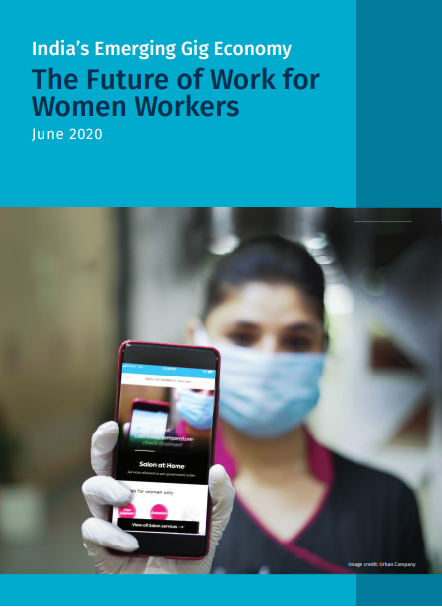
World over, the technology-driven gig economy has been expanding rapidly over the past decade, in which digital platforms connect workers with requesters to facilitate on demand work. While the gig economy has also become a buzzword in India, particularly in the last couple of years, and is attracting millennials by offering alternative employment opportunities. However, literature is scanty when it comes to measuring its impacts on the gendered experiences of gig work or on gig workers. This report aims to provide a comprehensive analytical overview of women’s engagement in platform work, and presents findings from an in-depth study of women’s work in one of India’s leading platform companies. It aims to understand the emerging forms of labour practices and the impact of platform engagement on workers experiences, challenges, and impact on women’s empowerment and agency. The findings are based on interviews with workers, platform managers, and other key informants, and comprehensive literature review. The study presents an in-depth and specialised analysis of the gig economy to explain some of the unique features of the labour practices and consequences of such practices on the overall labour relations. The study also makes specific recommendations and argue that policy makers and platforms have a key role in ensuring access to decent work and social protection for these workers.
World over, the technology-driven gig economy has been expanding rapidly over the past decade, in which digital platforms connect workers with requesters to facilitate on demand work. While the gig economy has also become a buzzword in India, particularly in the last couple of years, and is attracting millennials by offering alternative employment opportunities. However, literature is scanty when it comes to measuring its impacts on the gendered experiences of gig work or on gig workers. This report aims to provide a comprehensive analytical overview of women’s engagement in platform work, and presents findings from an in-depth study of women’s work in one of India’s leading platform companies. It aims to understand the emerging forms of labour practices and the impact of platform engagement on workers experiences, challenges, and impact on women’s empowerment and agency. The findings are based on interviews with workers, platform managers, and other key informants, and comprehensive literature review. The study presents an in-depth and specialised analysis of the gig economy to explain some of the unique features of the labour practices and consequences of such practices on the overall labour relations. The study also makes specific recommendations and argue that policy makers and platforms have a key role in ensuring access to decent work and social protection for these workers.
Factsheet
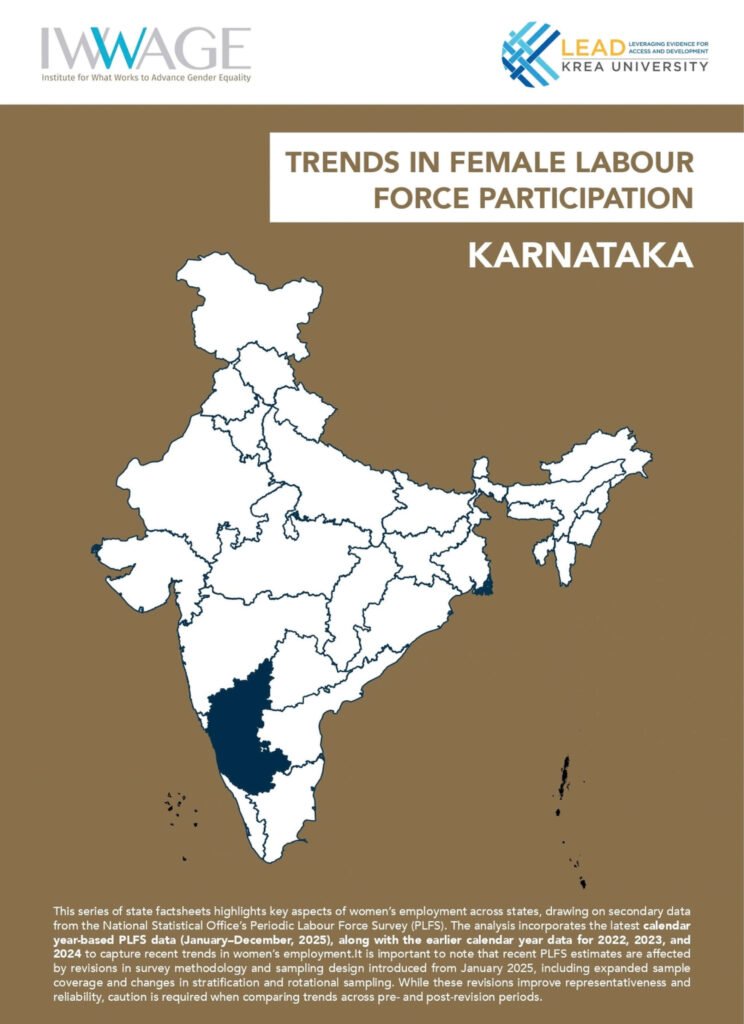
Trends in Female Labour Force Participation in Karnataka
- October , 2026
- Vidhi, Bidisha Mondal
Karnataka occupies a distinctive position in India’s economic landscape, driven by rapid growth in services, technology, and manufacturing sectors.This factsheet examines key trends in women’s labour force participation in Karnataka using PLFS data, with a focus on employment composition, sectoral and occupational distribution, quality of work, and barriers to women’s participation in the labour market.
Karnataka occupies a distinctive position in India’s economic landscape, driven by rapid growth in services, technology, and manufacturing sectors.This factsheet examines key trends in women’s labour force participation in Karnataka using PLFS data, with a focus on employment composition, sectoral and occupational distribution, quality of work, and barriers to women’s participation in the labour market.
Brief
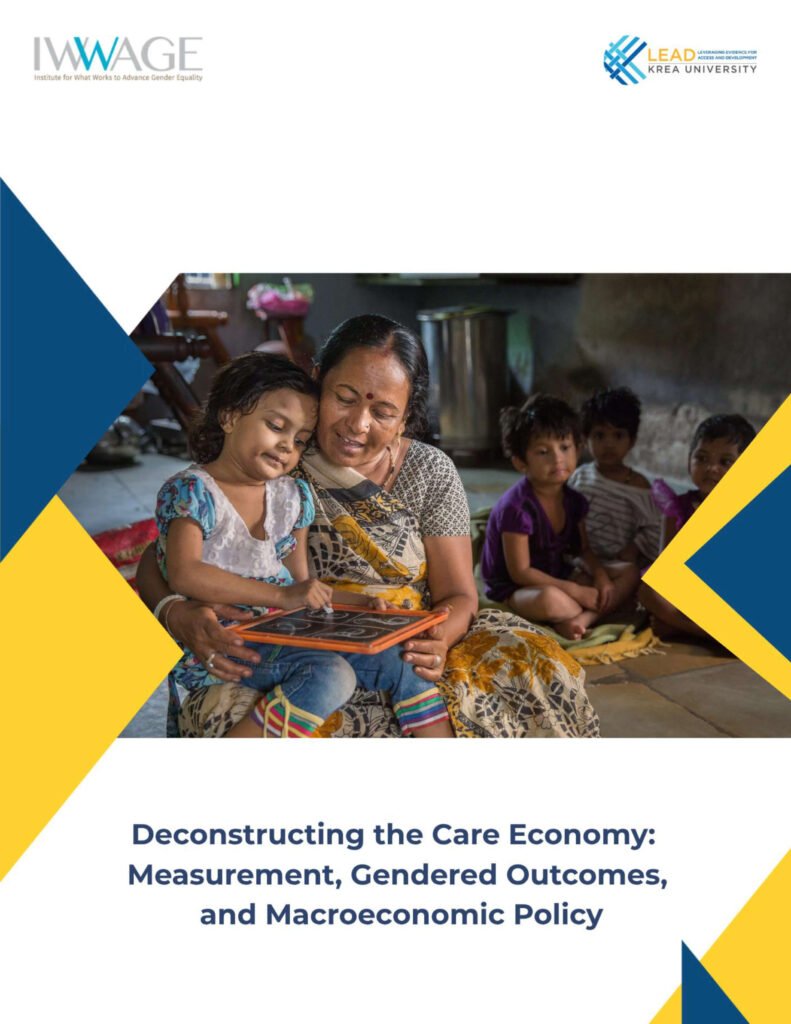
Deconstructing the Care Economy: Measurement, Gendered Outcomes, and Macroeconomic Policy
- September , 2026
The policy brief examines how unpaid care and domestic work largely undertaken by women remains invisible in conventional economic and labour statistics, while significantly shaping women’s participation and outcomes in the labour market. It highlights how care responsibilities contribute to women’s underemployment, lower-paid and precarious work, and inequalities in platform and hybrid work.
The policy brief examines how unpaid care and domestic work largely undertaken by women remains invisible in conventional economic and labour statistics, while significantly shaping women’s participation and outcomes in the labour market. It highlights how care responsibilities contribute to women’s underemployment, lower-paid and precarious work, and inequalities in platform and hybrid work.
Factsheet
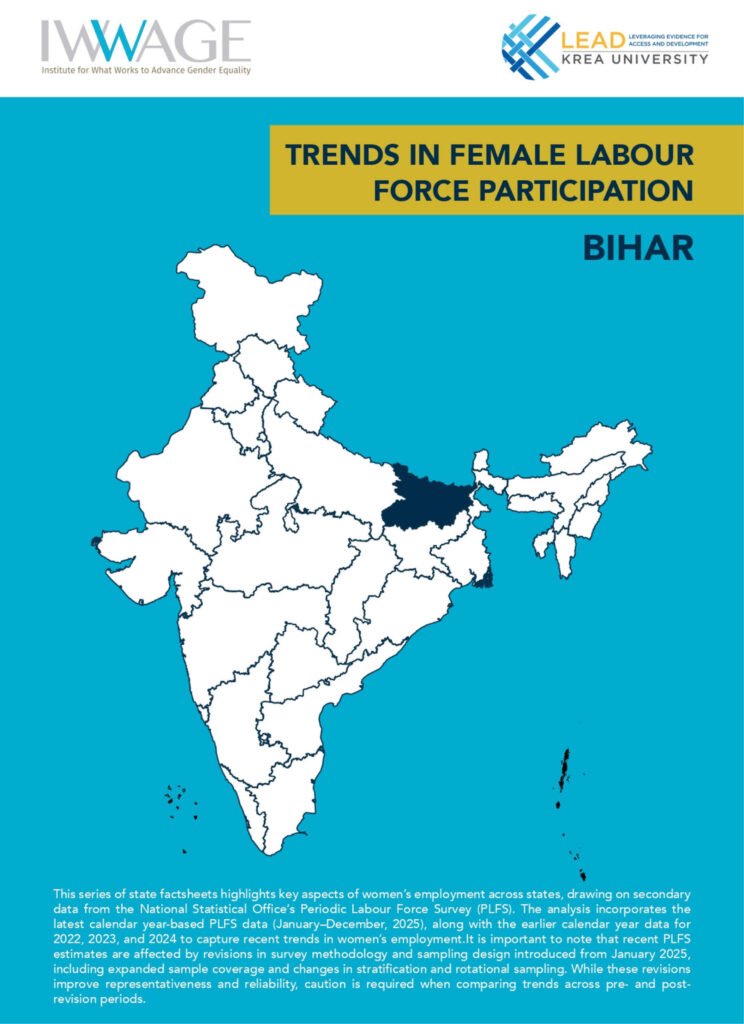
Trends in Female Labour Force Participation in Bihar
- September , 2026
- Vidhi, Bidisha Mondal
Despite economic growth, Bihar continues to face low female labour force participation, reflecting persistent supply-side constraints and limited access to suitable employment opportunities. Young women, in particular, experience low labour force participation amid high youth unemployment, while employment remains concentrated in agriculture and informal work. Sociocultural norms, limited access to education and skills, mobility constraints, inadequate transport, and care responsibilities further restrict women’s access to employment. Against this backdrop, this factsheet examines trends in female labour force participation, workforce composition, sectoral distribution, and working conditions in Bihar.
Despite economic growth, Bihar continues to face low female labour force participation, reflecting persistent supply-side constraints and limited access to suitable employment opportunities. Young women, in particular, experience low labour force participation amid high youth unemployment, while employment remains concentrated in agriculture and informal work. Sociocultural norms, limited access to education and skills, mobility constraints, inadequate transport, and care responsibilities further restrict women’s access to employment. Against this backdrop, this factsheet examines trends in female labour force participation, workforce composition, sectoral distribution, and working conditions in Bihar.
Report
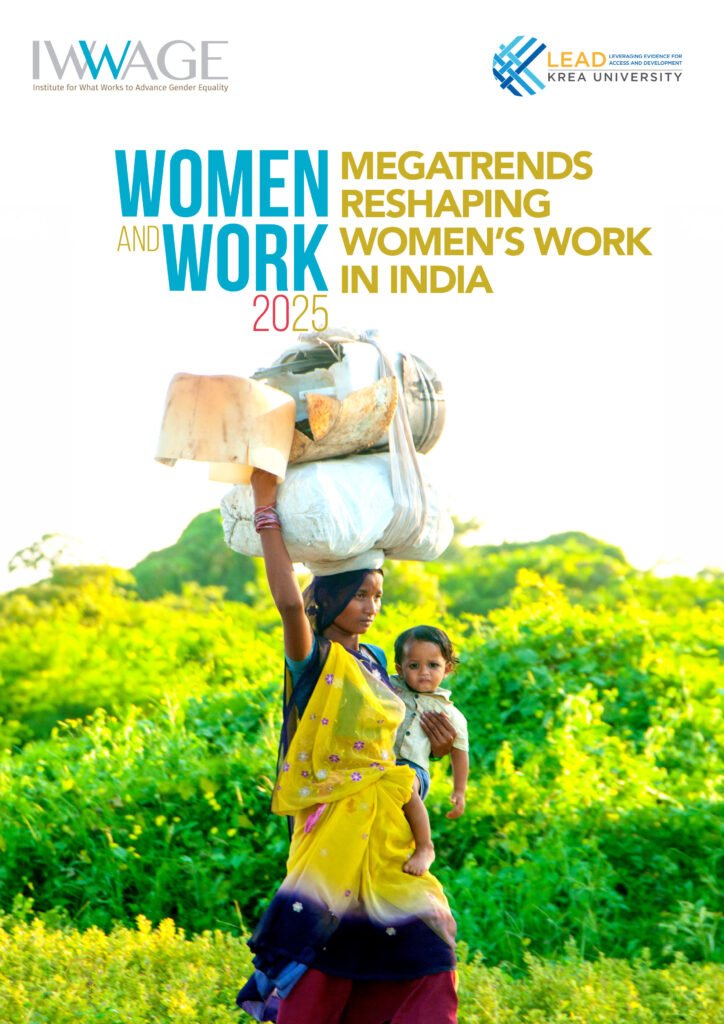
Women and Work 2025: Megatrends Reshaping Women’s Work in India
- September , 2026
- Divya Singh, Prakriti Sharma, Vidhi Singh, Sharati Roy
IWWAGE’s flagship report examines the changing landscape of women’s work in India and the forces shaping its future. Women’s labour force participation has risen significantly in recent years. Yet, the headline numbers tell only part of the story. The nature and experience of women’s work continue to be shaped by the quality and security of employment, unpaid care work, digitalisation, artificial intelligence, climate change, and women’s health at work. The report brings together evidence and emerging policy developments across these interconnected forces to examine where women’s work is headed—and what it will take to translate greater participation into greater economic agency, decent work, and protection.
IWWAGE’s flagship report examines the changing landscape of women’s work in India and the forces shaping its future. Women’s labour force participation has risen significantly in recent years. Yet, the headline numbers tell only part of the story. The nature and experience of women’s work continue to be shaped by the quality and security of employment, unpaid care work, digitalisation, artificial intelligence, climate change, and women’s health at work. The report brings together evidence and emerging policy developments across these interconnected forces to examine where women’s work is headed—and what it will take to translate greater participation into greater economic agency, decent work, and protection.
Factsheet
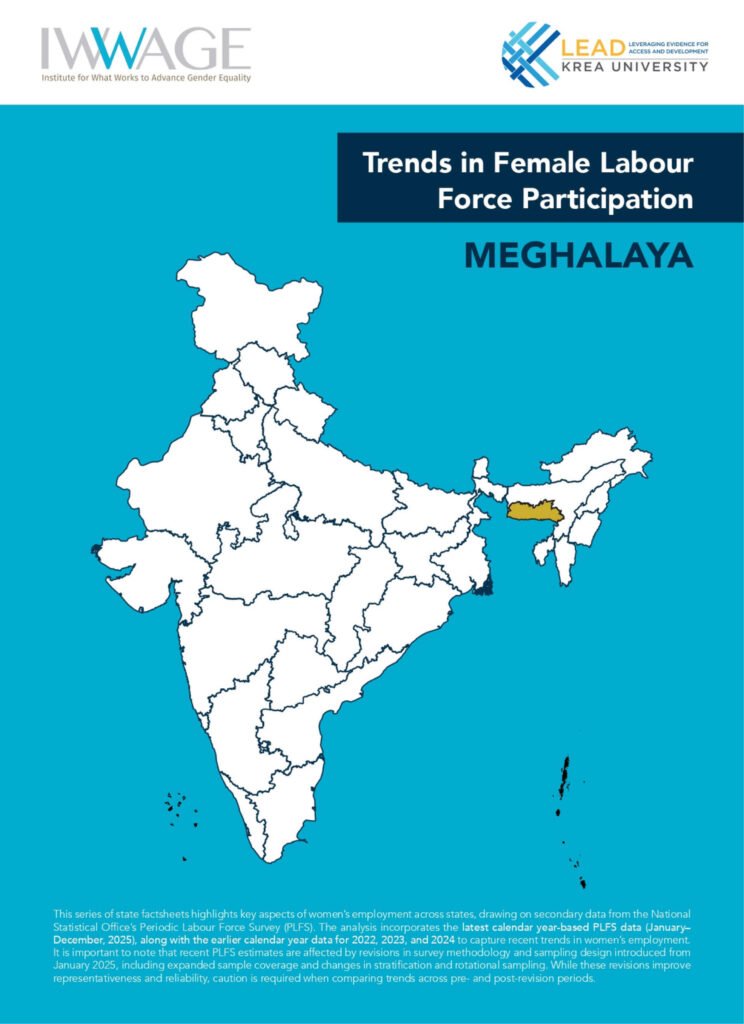
Trends in Female Labour Force Participation in Meghalaya
- August , 2026
- Nabankur Huda, Bidisha Mondal
Meghalaya is a small, hilly state in north-east India with a predominantly rural, agrarian economy and one of the country’s most distinctive social structures. The factsheet explores the trends, opportunities and challenges shaping women’s participation in Meghalaya’s labour market, with a focus on how the state’s social structure and economic transformation influence the nature and quality of women’s work.
Meghalaya is a small, hilly state in north-east India with a predominantly rural, agrarian economy and one of the country’s most distinctive social structures. The factsheet explores the trends, opportunities and challenges shaping women’s participation in Meghalaya’s labour market, with a focus on how the state’s social structure and economic transformation influence the nature and quality of women’s work.
Newsletter (Gender In Focus)
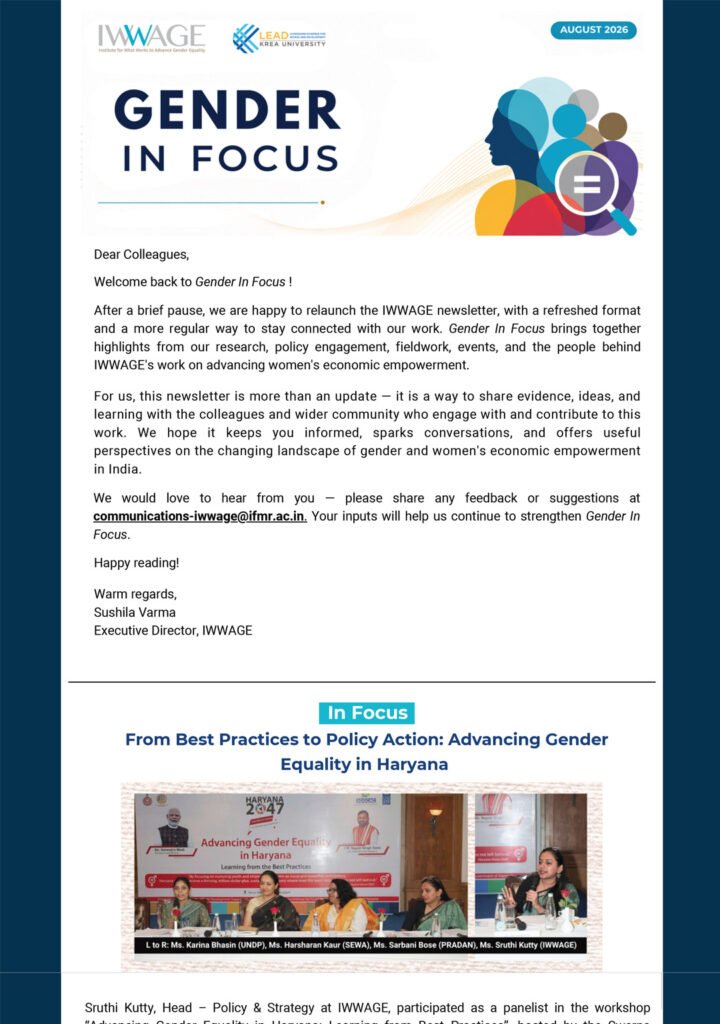
Gender in Focus
- August , 2026
The August 2026 edition features highlights from IWWAGE’s research, policy engagements, fieldwork and knowledge initiatives. It also offers a closer look at emerging trends shaping women’s work and economic participation in India.
The August 2026 edition features highlights from IWWAGE’s research, policy engagements, fieldwork and knowledge initiatives. It also offers a closer look at emerging trends shaping women’s work and economic participation in India.