


Publications
Publications
Category
Year
IWWAGE-ISST-BRIEFS
Barriers for Women in Public Employment
- March , 2021
- Steven Walker | Sarojini Ganju Thakur
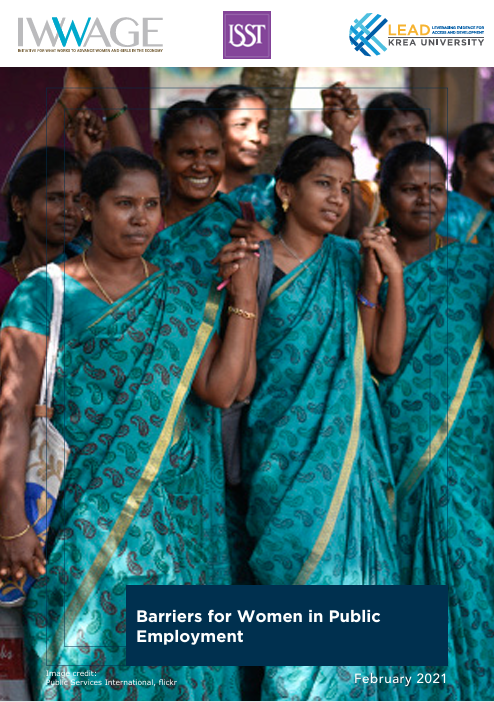
India’s female labour force participation (FLFP) remains among the lowest globally, falling to 17.5% in 2017-18. Despite more women gaining education and work readiness, access to secure jobs-especially in the public sector-remains limited due to structural and social barriers. The public sector is a vital source of formal employment for women, with nearly one in four female non-agricultural workers employed by the government. Yet women still account for just 30% of all government employees and are less likely than men to hold regular salaried roles or access social security benefits. Public employment offers more stability and benefits for women than most sectors, but widening their participation requires targeted reforms. These include: Investing in women’s education and challenging social norms; – Strengthening childcare and basic service infrastructure; – Formalising roles like Anganwadi workers and bank sakhis; – Creating promotion pathways and leadership opportunities; – Filling vacancies with gender-sensitive recruitment practices; – And investing in evidence to inform policy action. Expanding access to public sector jobs can drive economic recovery, reduce gender gaps, and build a more inclusive and resilient workforce.
India’s female labour force participation (FLFP) remains among the lowest globally, falling to 17.5% in 2017-18. Despite more women gaining education and work readiness, access to secure jobs-especially in the public sector-remains limited due to structural and social barriers. The public sector is a vital source of formal employment for women, with nearly one in four female non-agricultural workers employed by the government. Yet women still account for just 30% of all government employees and are less likely than men to hold regular salaried roles or access social security benefits. Public employment offers more stability and benefits for women than most sectors, but widening their participation requires targeted reforms. These include: Investing in women’s education and challenging social norms; – Strengthening childcare and basic service infrastructure; – Formalising roles like Anganwadi workers and bank sakhis; – Creating promotion pathways and leadership opportunities; – Filling vacancies with gender-sensitive recruitment practices; – And investing in evidence to inform policy action. Expanding access to public sector jobs can drive economic recovery, reduce gender gaps, and build a more inclusive and resilient workforce.
IWWAGE-ISST-BRIEFS
Women’s Entrepreneurship in India: Harnessing the Gender Dividend
- March , 2021
- Sanjana Vijay , Mridulya Narasimhan
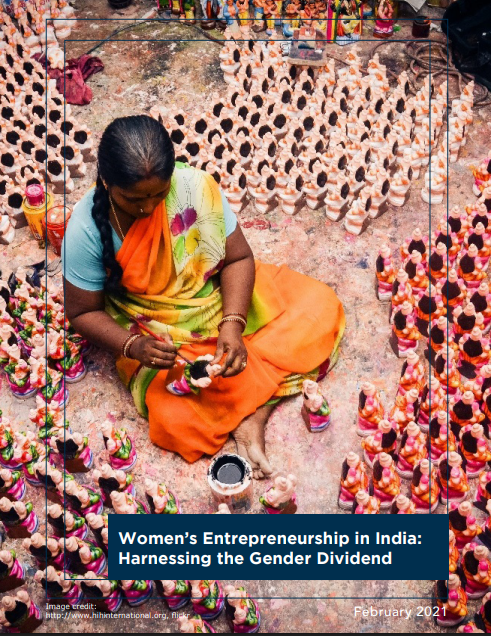
India’s economic growth has largely bypassed its smallest enterprises-particularly those led by women. Despite an increase in the number of micro, small, and medium enterprises (MSMEs), only 21.5% were owned by women as of 2018-19. Even more concerning is the stagnation in growth: between 2010 and 2015, the share of women-led enterprises and their gross value added (GVA) remained static, while the share of workers in these enterprises declined. Women entrepreneurs face layered barriers-from deep-rooted social norms and gender biases to unequal access to education, credit, and networks. For many women, entrepreneurship is not a path to scale but a survivalist response to limited employment opportunities, wage inequality, and inflexible work conditions. India ranked 49th out of 57 countries in the 2020 Mastercard Index of Women Entrepreneurs-a stark reflection of the odds stacked against women in the entrepreneurial landscape. To enable women to thrive as entrepreneurs, we must address structural and cultural challenges. Key recommendations include: – Challenging restrictive gender norms and stereotypes; – Ensuring better access to education and digital literacy; – Expanding affordable and inclusive financing mechanisms; – Creating women-friendly business networks and incubators; – Leveraging technology to connect women to markets, mentorship, and information. Enabling women to realise their entrepreneurial ambitions is not only a matter of equity-it is essential for India’s inclusive and sustainable economic growth.
India’s economic growth has largely bypassed its smallest enterprises-particularly those led by women. Despite an increase in the number of micro, small, and medium enterprises (MSMEs), only 21.5% were owned by women as of 2018-19. Even more concerning is the stagnation in growth: between 2010 and 2015, the share of women-led enterprises and their gross value added (GVA) remained static, while the share of workers in these enterprises declined. Women entrepreneurs face layered barriers-from deep-rooted social norms and gender biases to unequal access to education, credit, and networks. For many women, entrepreneurship is not a path to scale but a survivalist response to limited employment opportunities, wage inequality, and inflexible work conditions. India ranked 49th out of 57 countries in the 2020 Mastercard Index of Women Entrepreneurs-a stark reflection of the odds stacked against women in the entrepreneurial landscape. To enable women to thrive as entrepreneurs, we must address structural and cultural challenges. Key recommendations include: – Challenging restrictive gender norms and stereotypes; – Ensuring better access to education and digital literacy; – Expanding affordable and inclusive financing mechanisms; – Creating women-friendly business networks and incubators; – Leveraging technology to connect women to markets, mentorship, and information. Enabling women to realise their entrepreneurial ambitions is not only a matter of equity-it is essential for India’s inclusive and sustainable economic growth.

IWWAGE-ISST-BRIEFS
Women and Unpaid Work
- March , 2021
- Monika Banerjee , Ahana Chakrabarti
Women’s workforce participation in India has been consistently low-and steadily declining over the last 15 years, as recorded by official surveys like those conducted by the National Sample Survey Office (NSSO) and the Periodic Labour Force Survey (PLFS). However, these numbers fail to capture the full extent of women’s economic contributions, largely because they exclude unpaid work-domestic chores, caregiving, and community roles-that women perform on a daily basis. Feminist scholars have long advocated for the recognition, reduction, and redistribution of unpaid work as essential steps toward achieving gender equality. If the definition of work is expanded to include these invisible activities, it becomes evident that many more women are contributing to the economy than current statistics suggest. The COVID-19 pandemic further exacerbated these inequalities. As homes transformed into sites of both work and survival, women’s unpaid workload increased significantly. A Rapid Assessment Survey conducted by the Institute of Social Studies Trust (ISST) in Delhi found that women in urban informal sectors-such as domestic work, waste picking, street vending, and construction-reported a significant rise in unpaid responsibilities, including childcare, eldercare, and food provisioning. Despite other family members being at home, women continued to shoulder the majority of domestic work, often with little or no help. To build a more inclusive and equitable economy, it is critical to recognise and value unpaid labour and ensure that data and policy frameworks reflect the full spectrum of women’s work.
Women’s workforce participation in India has been consistently low-and steadily declining over the last 15 years, as recorded by official surveys like those conducted by the National Sample Survey Office (NSSO) and the Periodic Labour Force Survey (PLFS). However, these numbers fail to capture the full extent of women’s economic contributions, largely because they exclude unpaid work-domestic chores, caregiving, and community roles-that women perform on a daily basis. Feminist scholars have long advocated for the recognition, reduction, and redistribution of unpaid work as essential steps toward achieving gender equality. If the definition of work is expanded to include these invisible activities, it becomes evident that many more women are contributing to the economy than current statistics suggest. The COVID-19 pandemic further exacerbated these inequalities. As homes transformed into sites of both work and survival, women’s unpaid workload increased significantly. A Rapid Assessment Survey conducted by the Institute of Social Studies Trust (ISST) in Delhi found that women in urban informal sectors-such as domestic work, waste picking, street vending, and construction-reported a significant rise in unpaid responsibilities, including childcare, eldercare, and food provisioning. Despite other family members being at home, women continued to shoulder the majority of domestic work, often with little or no help. To build a more inclusive and equitable economy, it is critical to recognise and value unpaid labour and ensure that data and policy frameworks reflect the full spectrum of women’s work.
IWWAGE-ISST-BRIEFS
Women in the Indian Informal Economy
- March , 2021
- Shiney Chakraborty
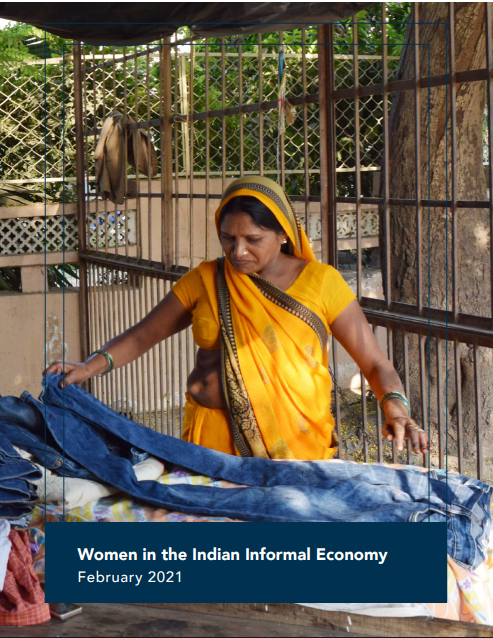
Globally, the informal economy employs over two billion people aged 15 and above-accounting for 61.2 per cent of total employment. In India, a slightly higher proportion of women than men are engaged in informal employment, despite the absolute numbers being lower. Informality often reflects a lack of socio-economic development and education, with workers possessing limited or no formal qualifications being more vulnerable to informal work. In India, women are extensively engaged in productive and reproductive activities, yet much of this labour remains invisible. They are concentrated in low-skilled, low-paid informal jobs with minimal or no social protection-working as domestic workers, self-employed home-based workers, or in other precarious roles. These challenges are further compounded by caste- and religion-based discrimination, revealing the layered nature of women’s marginalisation. The COVID-19 pandemic exacerbated existing gender inequalities within the informal sector. With the collapse of livelihoods during the lockdown, women bore a disproportionate burden of job losses and increased household responsibilities. The economic shock reinforced pre-existing gaps in employment, wages, and access to social security. To address these inequities, the following policy recommendations are key: – Expand employment opportunities through direct public investment and job generation, including reservation for women in these initiatives. – Improve working conditions in the informal sector by recognising all types of work (including home-based), enforcing minimum wages, and reducing gender wage gaps. – Strengthen access to social protection, especially old-age pensions and healthcare, including occupational health services for women in often-overlooked sectors. – Invest in gender-sensitive infrastructure, such as safe public transport, crèche facilities, and accessible toilets. – Support collective organising among informal women workers to strengthen their bargaining power and representation. Addressing informality through a gendered lens is crucial for building an inclusive and equitable economy.
Globally, the informal economy employs over two billion people aged 15 and above-accounting for 61.2 per cent of total employment. In India, a slightly higher proportion of women than men are engaged in informal employment, despite the absolute numbers being lower. Informality often reflects a lack of socio-economic development and education, with workers possessing limited or no formal qualifications being more vulnerable to informal work. In India, women are extensively engaged in productive and reproductive activities, yet much of this labour remains invisible. They are concentrated in low-skilled, low-paid informal jobs with minimal or no social protection-working as domestic workers, self-employed home-based workers, or in other precarious roles. These challenges are further compounded by caste- and religion-based discrimination, revealing the layered nature of women’s marginalisation. The COVID-19 pandemic exacerbated existing gender inequalities within the informal sector. With the collapse of livelihoods during the lockdown, women bore a disproportionate burden of job losses and increased household responsibilities. The economic shock reinforced pre-existing gaps in employment, wages, and access to social security. To address these inequities, the following policy recommendations are key: – Expand employment opportunities through direct public investment and job generation, including reservation for women in these initiatives. – Improve working conditions in the informal sector by recognising all types of work (including home-based), enforcing minimum wages, and reducing gender wage gaps. – Strengthen access to social protection, especially old-age pensions and healthcare, including occupational health services for women in often-overlooked sectors. – Invest in gender-sensitive infrastructure, such as safe public transport, crèche facilities, and accessible toilets. – Support collective organising among informal women workers to strengthen their bargaining power and representation. Addressing informality through a gendered lens is crucial for building an inclusive and equitable economy.
Factsheet
Trends in Female Labour Force Participation in Karnataka
- October , 2026
- Vidhi, Bidisha Mondal
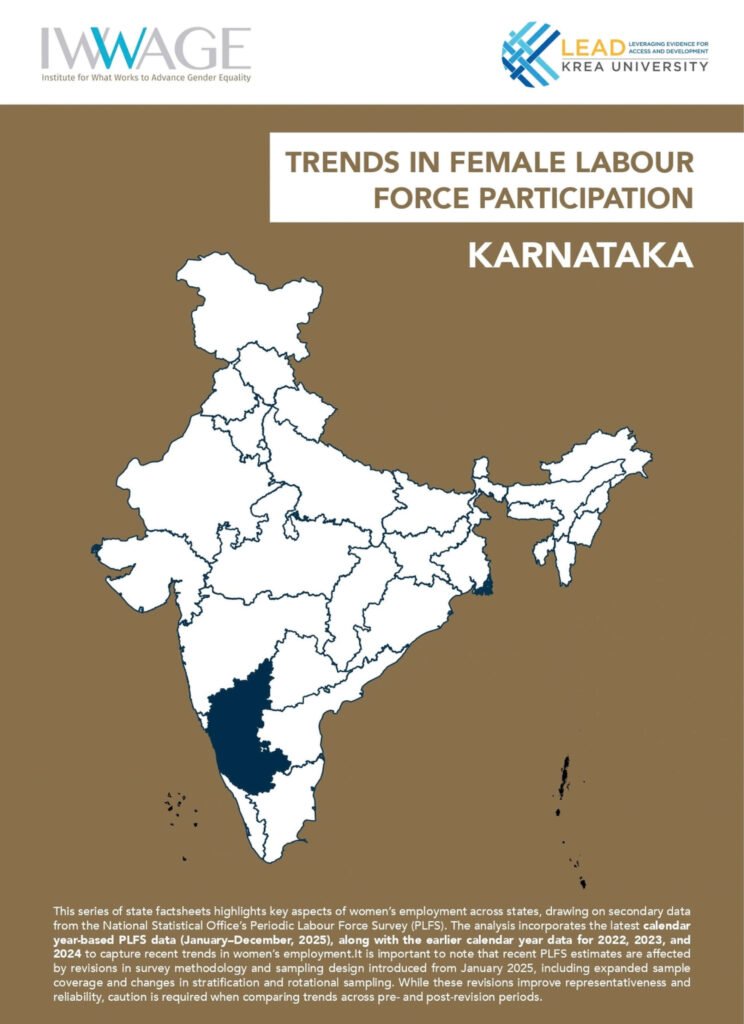
Karnataka occupies a distinctive position in India’s economic landscape, driven by rapid growth in services, technology, and manufacturing sectors.This factsheet examines key trends in women’s labour force participation in Karnataka using PLFS data, with a focus on employment composition, sectoral and occupational distribution, quality of work, and barriers to women’s participation in the labour market.
Karnataka occupies a distinctive position in India’s economic landscape, driven by rapid growth in services, technology, and manufacturing sectors.This factsheet examines key trends in women’s labour force participation in Karnataka using PLFS data, with a focus on employment composition, sectoral and occupational distribution, quality of work, and barriers to women’s participation in the labour market.
Brief
Deconstructing the Care Economy: Measurement, Gendered Outcomes, and Macroeconomic Policy
- September , 2026
The policy brief examines how unpaid care and domestic work largely undertaken by women remains invisible in conventional economic and labour statistics, while significantly shaping women’s participation and outcomes in the labour market. It highlights how care responsibilities contribute to women’s underemployment, lower-paid and precarious work, and inequalities in platform and hybrid work.
The policy brief examines how unpaid care and domestic work largely undertaken by women remains invisible in conventional economic and labour statistics, while significantly shaping women’s participation and outcomes in the labour market. It highlights how care responsibilities contribute to women’s underemployment, lower-paid and precarious work, and inequalities in platform and hybrid work.
Factsheet
Trends in Female Labour Force Participation in Bihar
- September , 2026
- Vidhi, Bidisha Mondal
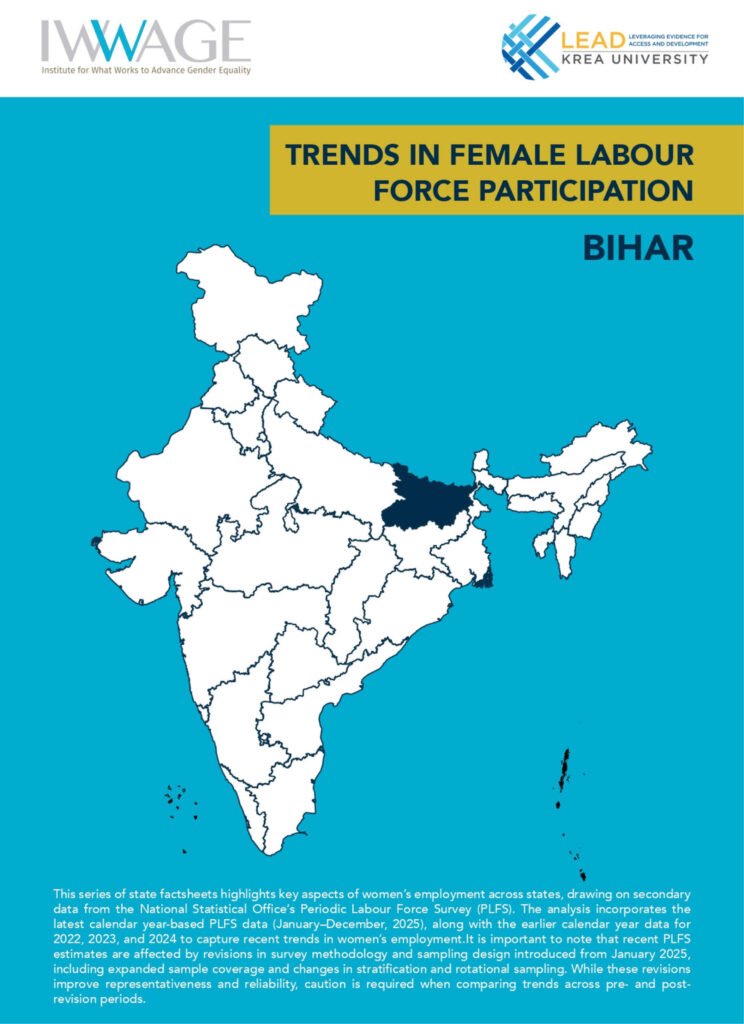
Despite economic growth, Bihar continues to face low female labour force participation, reflecting persistent supply-side constraints and limited access to suitable employment opportunities. Young women, in particular, experience low labour force participation amid high youth unemployment, while employment remains concentrated in agriculture and informal work. Sociocultural norms, limited access to education and skills, mobility constraints, inadequate transport, and care responsibilities further restrict women’s access to employment. Against this backdrop, this factsheet examines trends in female labour force participation, workforce composition, sectoral distribution, and working conditions in Bihar.
Despite economic growth, Bihar continues to face low female labour force participation, reflecting persistent supply-side constraints and limited access to suitable employment opportunities. Young women, in particular, experience low labour force participation amid high youth unemployment, while employment remains concentrated in agriculture and informal work. Sociocultural norms, limited access to education and skills, mobility constraints, inadequate transport, and care responsibilities further restrict women’s access to employment. Against this backdrop, this factsheet examines trends in female labour force participation, workforce composition, sectoral distribution, and working conditions in Bihar.
Report
Women and Work 2025: Megatrends Reshaping Women’s Work in India
- September , 2026
- Divya Singh, Prakriti Sharma, Vidhi Singh, Sharati Roy
IWWAGE’s flagship report examines the changing landscape of women’s work in India and the forces shaping its future. Women’s labour force participation has risen significantly in recent years. Yet, the headline numbers tell only part of the story. The nature and experience of women’s work continue to be shaped by the quality and security of employment, unpaid care work, digitalisation, artificial intelligence, climate change, and women’s health at work. The report brings together evidence and emerging policy developments across these interconnected forces to examine where women’s work is headed—and what it will take to translate greater participation into greater economic agency, decent work, and protection.
IWWAGE’s flagship report examines the changing landscape of women’s work in India and the forces shaping its future. Women’s labour force participation has risen significantly in recent years. Yet, the headline numbers tell only part of the story. The nature and experience of women’s work continue to be shaped by the quality and security of employment, unpaid care work, digitalisation, artificial intelligence, climate change, and women’s health at work. The report brings together evidence and emerging policy developments across these interconnected forces to examine where women’s work is headed—and what it will take to translate greater participation into greater economic agency, decent work, and protection.
Factsheet
Trends in Female Labour Force Participation in Meghalaya
- August , 2026
- Nabankur Huda, Bidisha Mondal
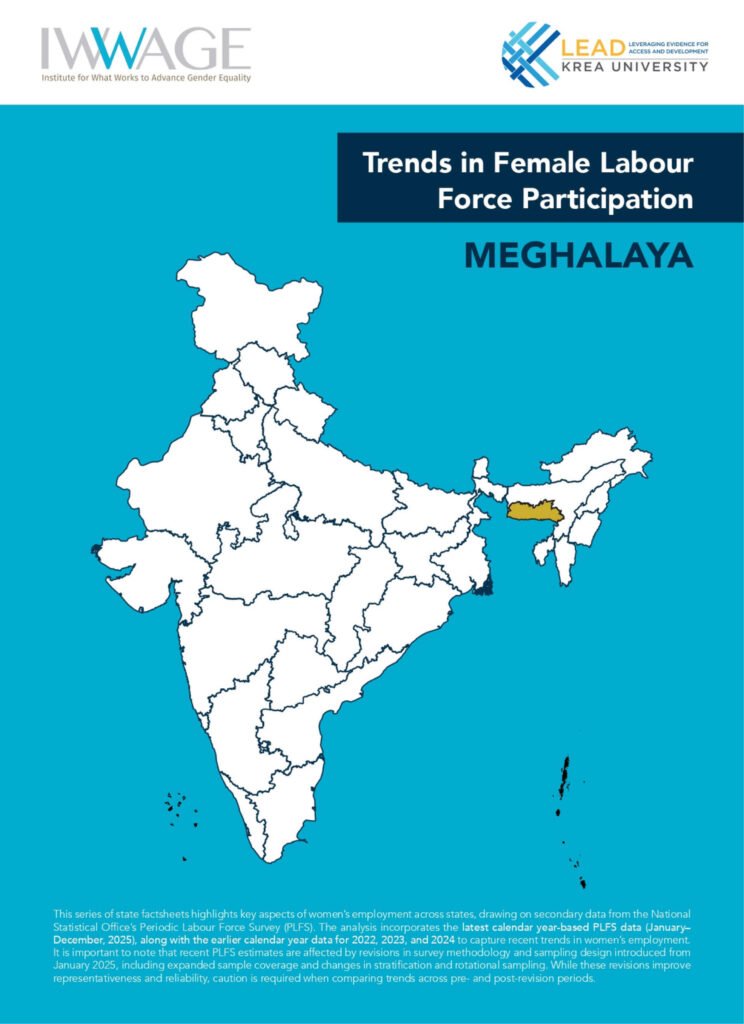
Meghalaya is a small, hilly state in north-east India with a predominantly rural, agrarian economy and one of the country’s most distinctive social structures. The factsheet explores the trends, opportunities and challenges shaping women’s participation in Meghalaya’s labour market, with a focus on how the state’s social structure and economic transformation influence the nature and quality of women’s work.
Meghalaya is a small, hilly state in north-east India with a predominantly rural, agrarian economy and one of the country’s most distinctive social structures. The factsheet explores the trends, opportunities and challenges shaping women’s participation in Meghalaya’s labour market, with a focus on how the state’s social structure and economic transformation influence the nature and quality of women’s work.
Newsletter (Gender In Focus)
Gender in Focus
- August , 2026
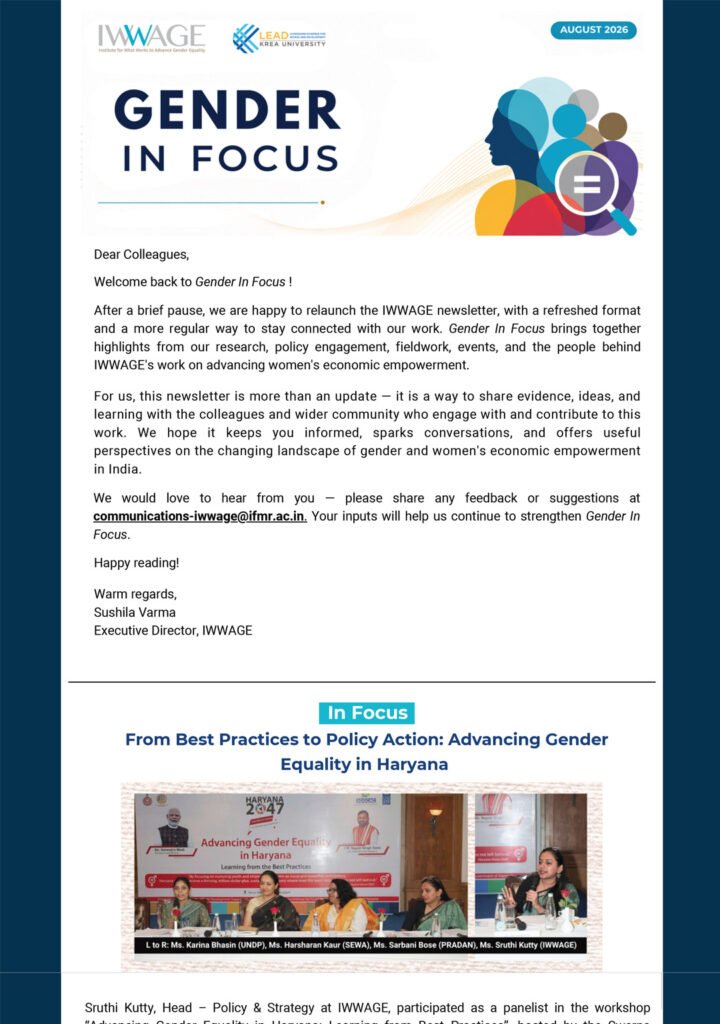
The August 2026 edition features highlights from IWWAGE’s research, policy engagements, fieldwork and knowledge initiatives. It also offers a closer look at emerging trends shaping women’s work and economic participation in India.
The August 2026 edition features highlights from IWWAGE’s research, policy engagements, fieldwork and knowledge initiatives. It also offers a closer look at emerging trends shaping women’s work and economic participation in India.